Mount Kailash rises in southwestern Tibet near the borders with India and Nepal, close to Lake Manasarovar. Its snow-covered peak is recognizable in photographs, but the mountain’s significance cannot be reduced to a single description. The Associated Press reports that Hinduism, Buddhism, Jainism, and Tibetan Bon each hold Kailash sacred, with distinct beliefs and histories attached to it. A shared place does not make those traditions interchangeable. Each brings its own accounts of sacred geography, spiritual power, and the meaning of a journey toward the mountain.
From the journal
Kailash Across Traditions
Mount Kailash is a shared sacred landscape, but not a shared single theology. Hindu, Buddhist, Jain and Bon traditions associate the mountain with different sacred histories, while pilgrimage practices bring distinct ways of moving around it into view.
In the same city · Ngari ↗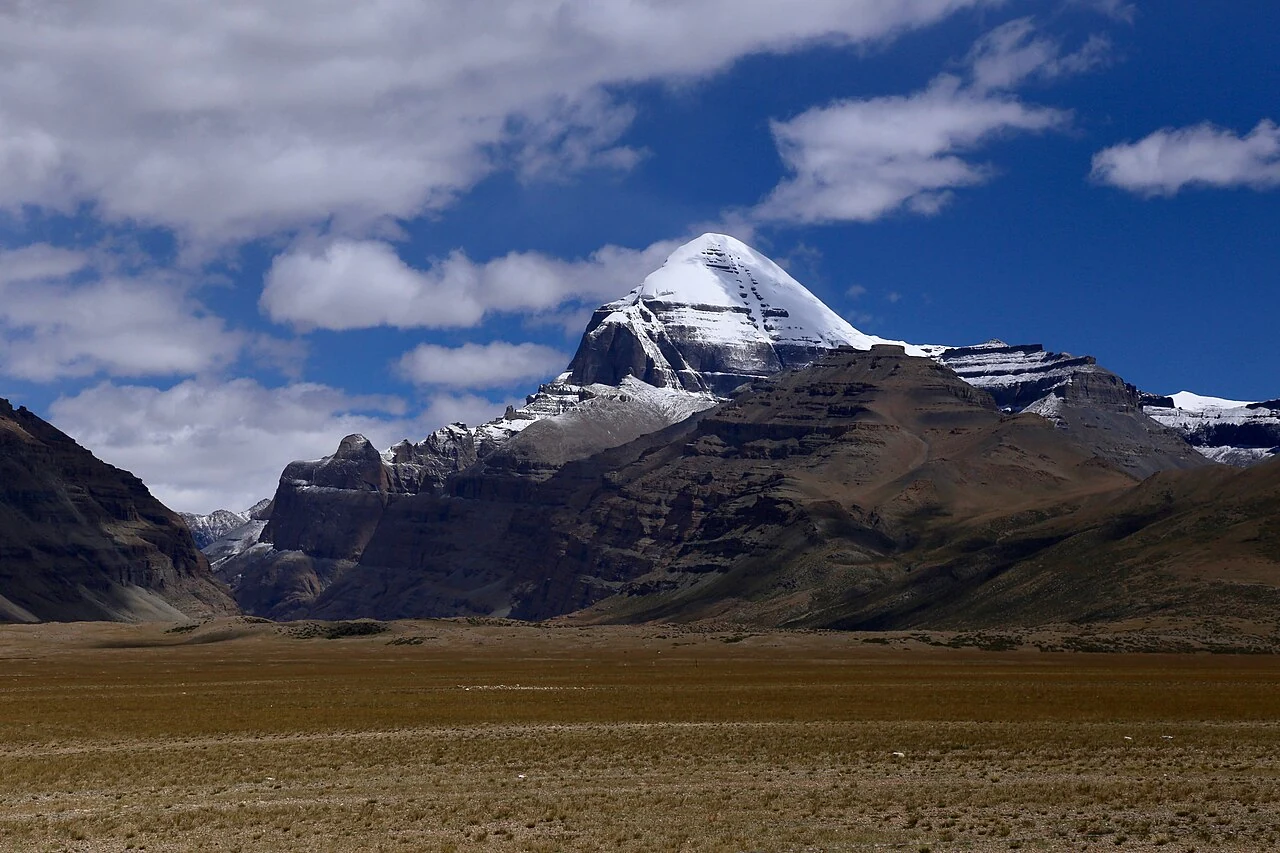
A mountain with more than one name
Walking around, not up
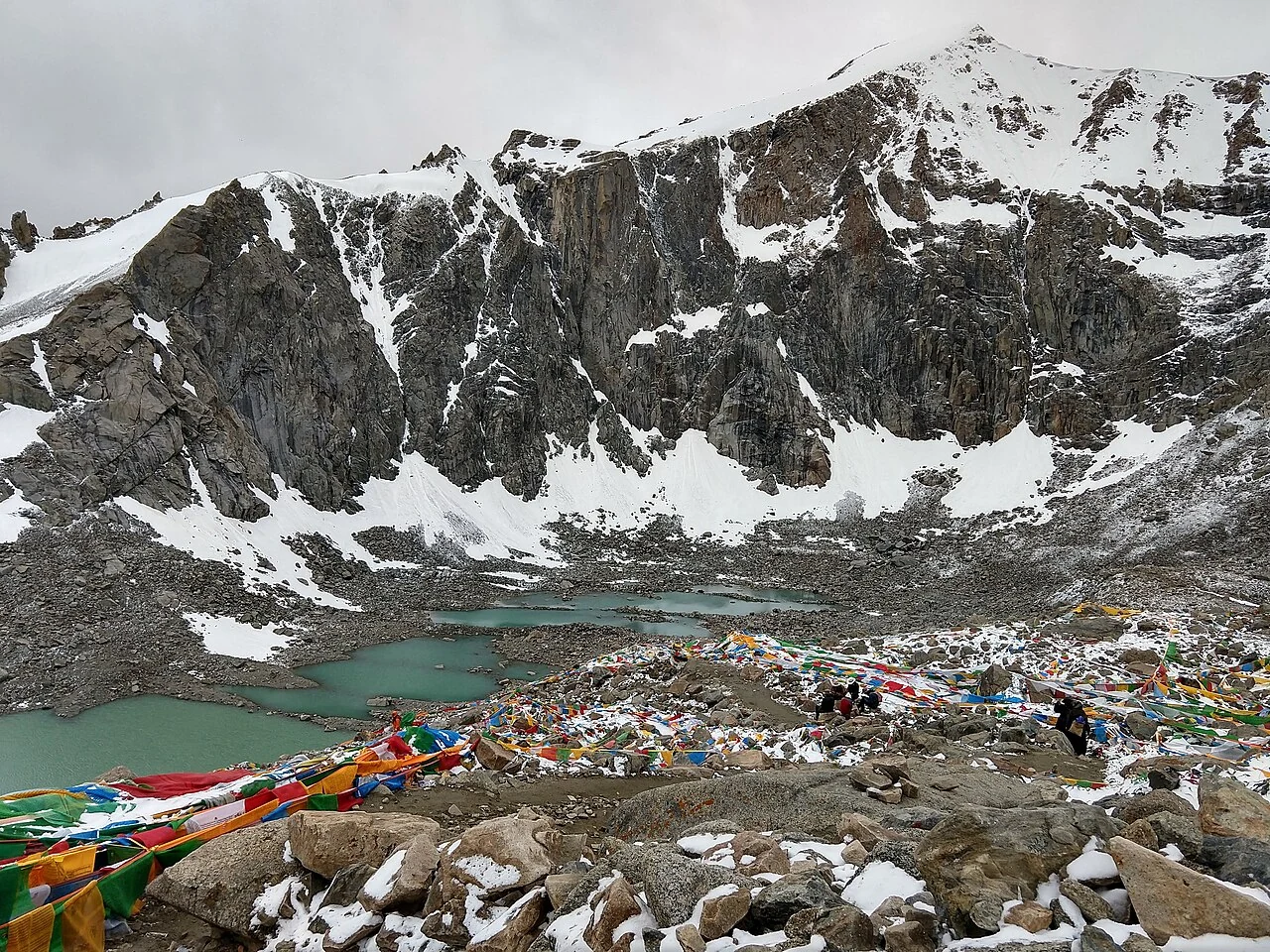
Pilgrims traditionally travel around Kailash rather than climb it. The circuit is about 53 kilometres, a journey whose physical effort becomes part of its religious meaning. Hindus and Buddhists traditionally circle clockwise; Bon pilgrims travel counterclockwise, according to the AP’s synthesis of the pilgrimage traditions. Direction is not a decorative detail: it shows how the same path can be walked within distinct ritual worlds. For an outside observer, the route may look like a loop around a peak. For pilgrims, it is a practice with inherited meanings, undertaken in relation to the mountain rather than as an attempt to reach its summit.
A landscape of sacred neighbours
The mountain and Manasarovar are often described together, yet the lake has its own ecology and religious associations. Some Hindu pilgrims bathe in its waters as a ritual of purification; other traditions hold different accounts of the surrounding landscape. The lake itself is part of a high-altitude wetland system that includes the saline Lhanag-tso and marshes. These neighbouring places make the pilgrimage landscape more than a dramatic peak and a route. Water, shore, monastery and mountain each enter the journey in a different way. Keeping those places distinct helps show how a sacred geography is experienced across a whole region.
Many traditions, one slope
A careful account of Kailash begins by refusing to translate one tradition into another. A Hindu account of Shiva’s abode, a Buddhist cosmological association, Jain sacred history, and Bon understandings of the mountain are not versions of one story. Pilgrimage brings these traditions into a shared geography without erasing their differences. The route is therefore both physical and interpretive: a person walking the circuit follows a path through high mountain terrain and a tradition’s own map of significance. The mountain remains the same visible mass of rock and ice, while the sacred worlds around it remain plural.