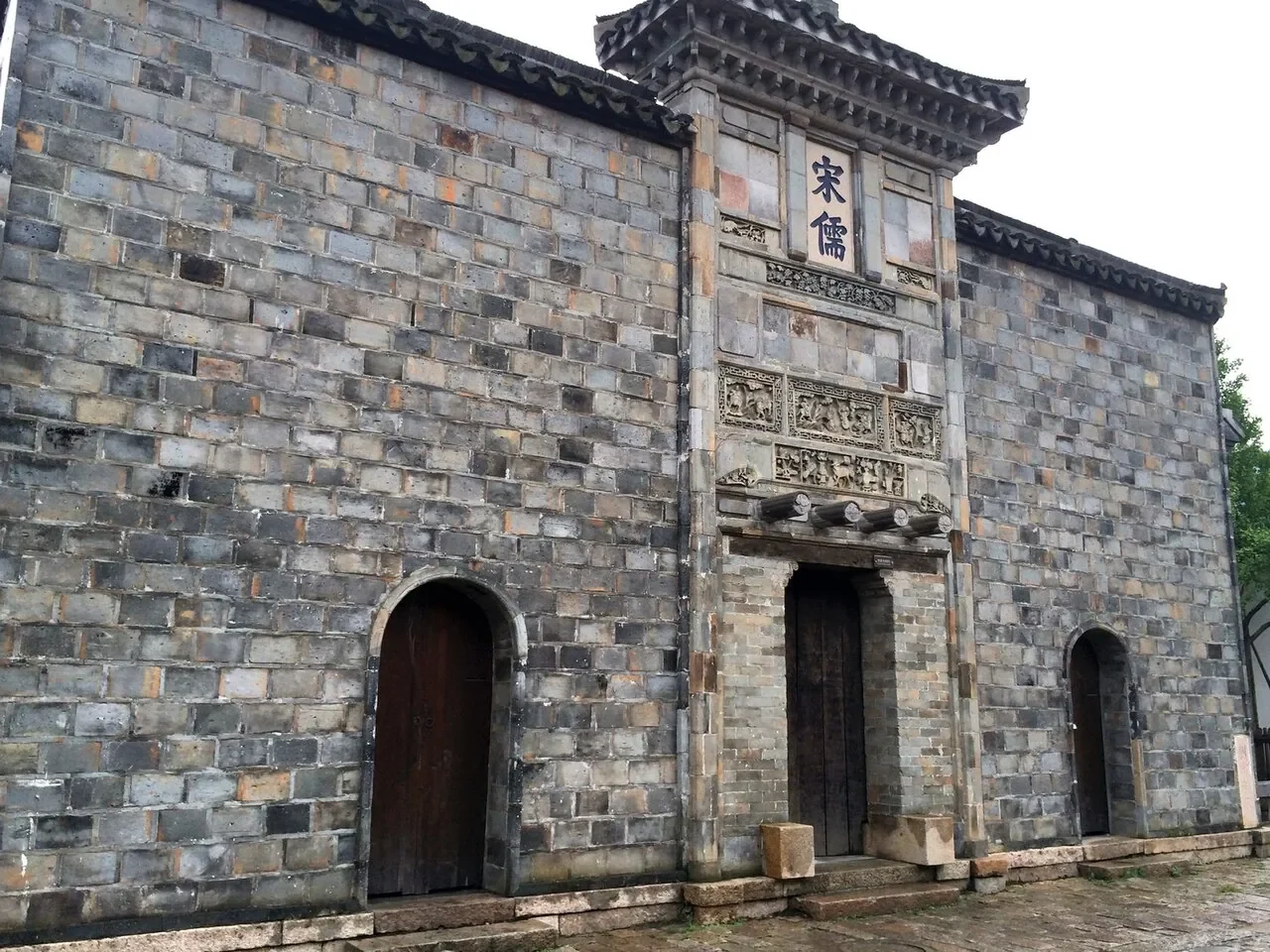
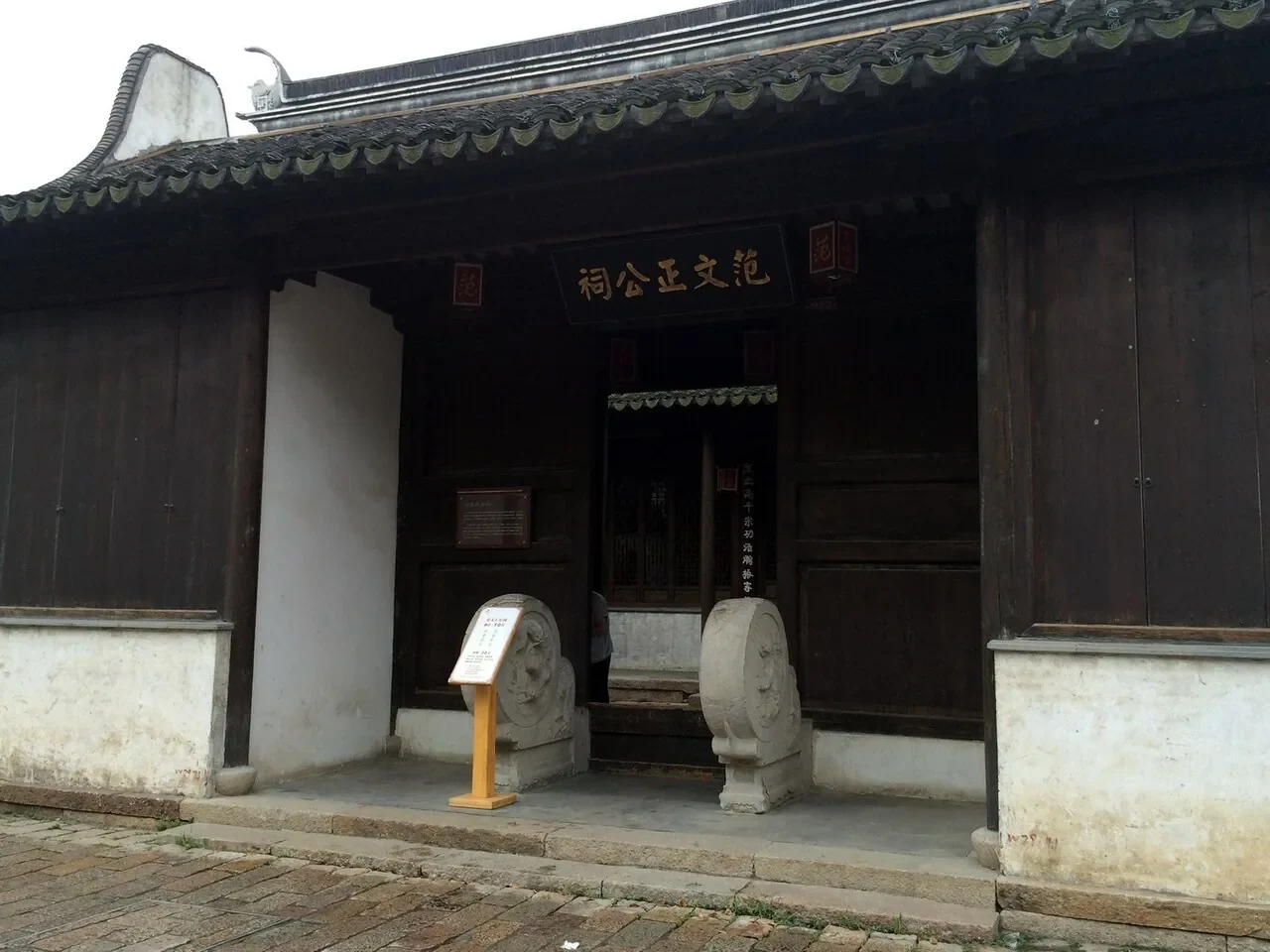
Huishan’s ancestral halls can blur into an attractive procession of doorways unless you first ask whom each building commemorates. The town includes halls associated with figures such as Sima Guang and Fan Zhongyan, alongside the memories of local lineages. A commemorated person and the family maintaining a hall are not automatically the same historical story. Nor does a famous name prove that its owner lived in the building. Begin with the inscription or interpretation panel and establish that relationship. One identified person is a better starting point than a dozen photographed facades with no names attached.
Wuxi
Reading Family Memory in Huishan’s Ancestral Halls
Tablets, genealogies, a hybrid facade and a low stone bridge reveal how Huishan makes different forms of remembrance visible.
In the same city · Wuxi ↗Start with a name, not a roofline
A tablet is part of a social arrangement
Memorial tablets give remembrance a physical focus. Wuxi’s account of Huishan ceremonies describes offerings, recited family mottos and gatherings of people sharing a surname. Look for how objects and space work together: where a tablet is placed, what faces it, and where people could assemble. A genealogy answers who belongs; a motto expresses the conduct a family wants to uphold. These are different kinds of evidence, even when displayed in the same room. Approach any active ceremony as someone else’s family observance. Its significance does not depend on being staged for visitors or explained on demand.
The Lyu family makes continuity tangible
Continuity can involve rebuilding. Lyu Donglai Hall commemorates the Southern Song scholar Lu Zuqian. Jiangsu Broadcasting dates its reconstruction to 2013; a later Wuxi report describes family support for renewed genealogies, portraits and a library. That makes a useful test of the word “old.” A newly repaired beam may shelter an older institution; a recently printed family book may preserve and reorganise inherited information. Look for dates attached to both structures and records. The question is not simply whether everything is original, but what was lost, who chose to restore it and which memories were given a place in the renewed building.
Yang Oufang’s hall complicates the picture
Along the Longtou River, Yang Oufang Ancestral Hall introduces another register. The municipal description identifies a combination of Chinese and Western architectural styles in a building commemorating an industrial pioneer. Compare the facade’s parts rather than assigning the whole street to a single timeless style. The nearby Renjie Diling Archway also turns civic praise into a conspicuous object in public space. Across this riverfront, names, bridges and elevations organise the visitor’s attention. Ask which elements announce prestige, which invite passage, and which direct the eye toward water. An ancestral quarter can record modern ambition as well as inherited obligation.
In Jichang Garden, memory becomes sensory
The wider Huishan scenic area includes Jichang Garden, a separate garden experience rather than another ancestral hall. Its Qin-family associations and imperial visits add different layers of status. Two details are particularly useful for close looking. Seven-Star Bridge uses seven yellow-stone slabs set low above the water: its effect depends on restraint rather than height. Bayinjian, a rocky watercourse, asks you to listen as well as look. Water striking stone gives the garden an acoustic dimension. Compare these devices with the halls’ written names and records. The garden communicates through bodily experience, changing your pace, viewpoint and attention.
Leave room for the present
Huishan’s newer cultural uses are also part of what you see. The Yingyueli riverfront includes a museum devoted to Ah Bing and his music, alongside contemporary leisure spaces. Such changes deserve observation rather than an automatic verdict that a place has either survived perfectly or lost all authenticity. Compare what different settings preserve: a lineage hall may sustain genealogical memory, a music museum may foreground an individual artist, and a garden may conserve a designed relationship between stone and water. Read the date and purpose of each setting separately. Huishan becomes richer when its many forms of remembrance are allowed to remain distinct.