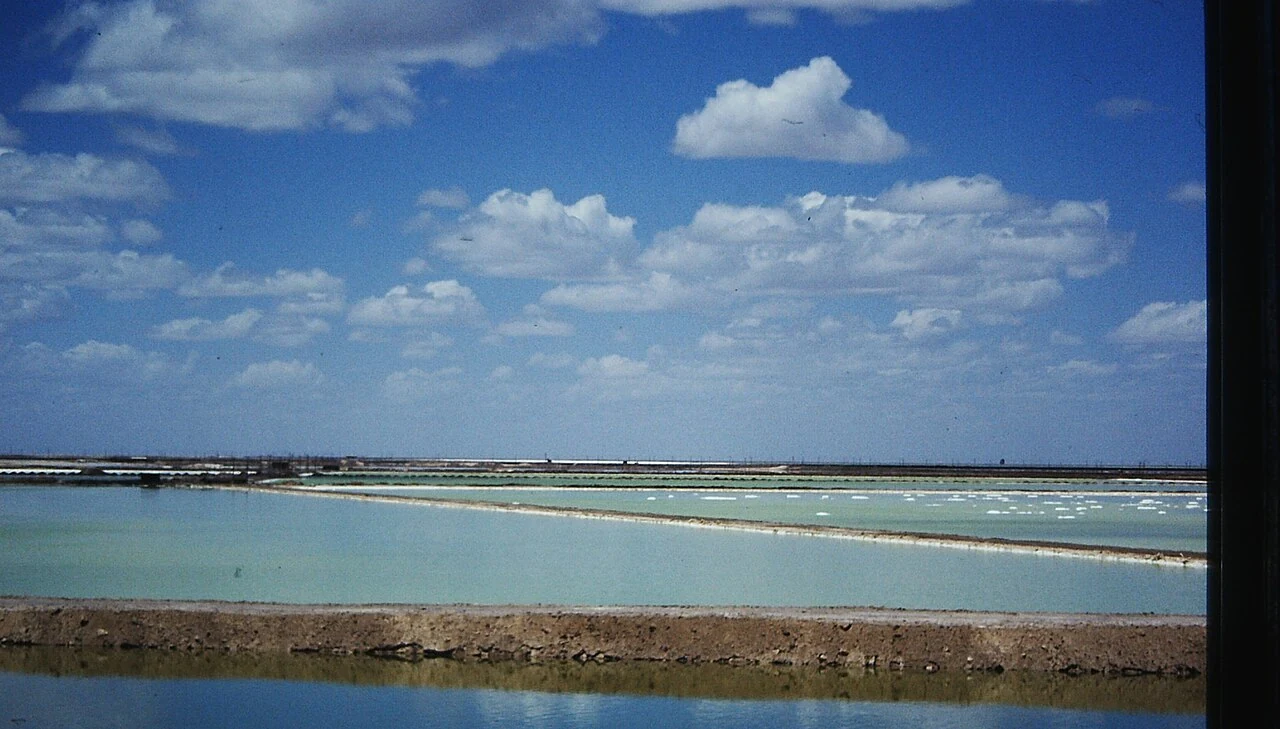
A 2023 field report describes clear brine at Qarhan Salt Lake, salt crystals catching the light and collecting boats moving slowly across the water. “Salt flowers” names the crystalline shapes that catch the eye, but the landscape is also a working source of potash. The same report follows the brine from the lake toward a processing workshop, connecting the surface view to the material moving below it.
From the journal
Salt Flowers in the Potash Landscape of Qarhan
At Qarhan Salt Lake, visible salt forms sit beside an industrial process that sends brine through concentration, purification and crystallization.
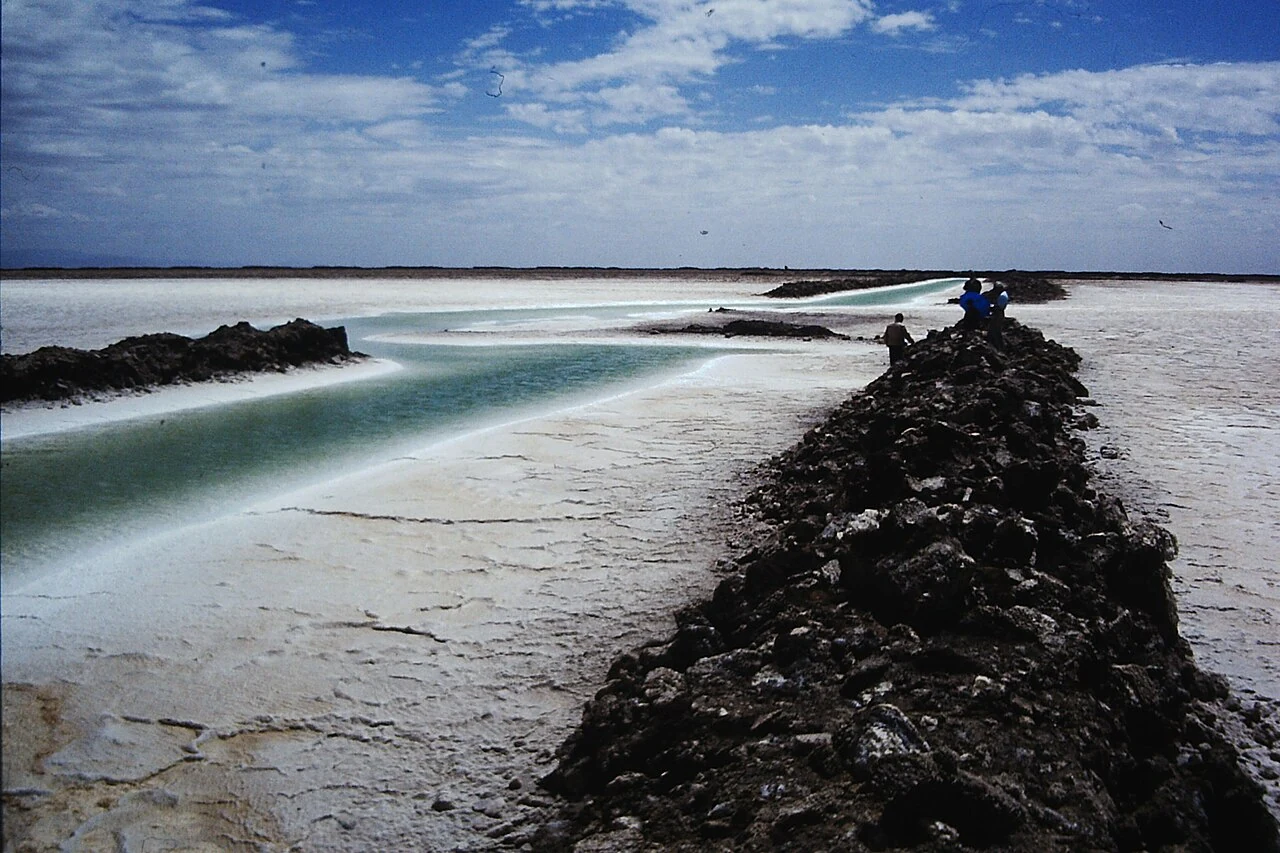
Crystals on the brine
From brine to fertilizer
The article outlines a sequence of evaporation and concentration, purification, crystallization and drying to extract potassium chloride. Each step changes the brine’s concentration and separates a useful mineral product. The finished fertilizer leaves by rail for factories and farms far from Golmud. In this account, the salt landscape is both a geological sight and the first stage in a long supply chain, with crystalline forms and industrial chemistry meeting in the same lake basin.