An old neighborhood put to new uses
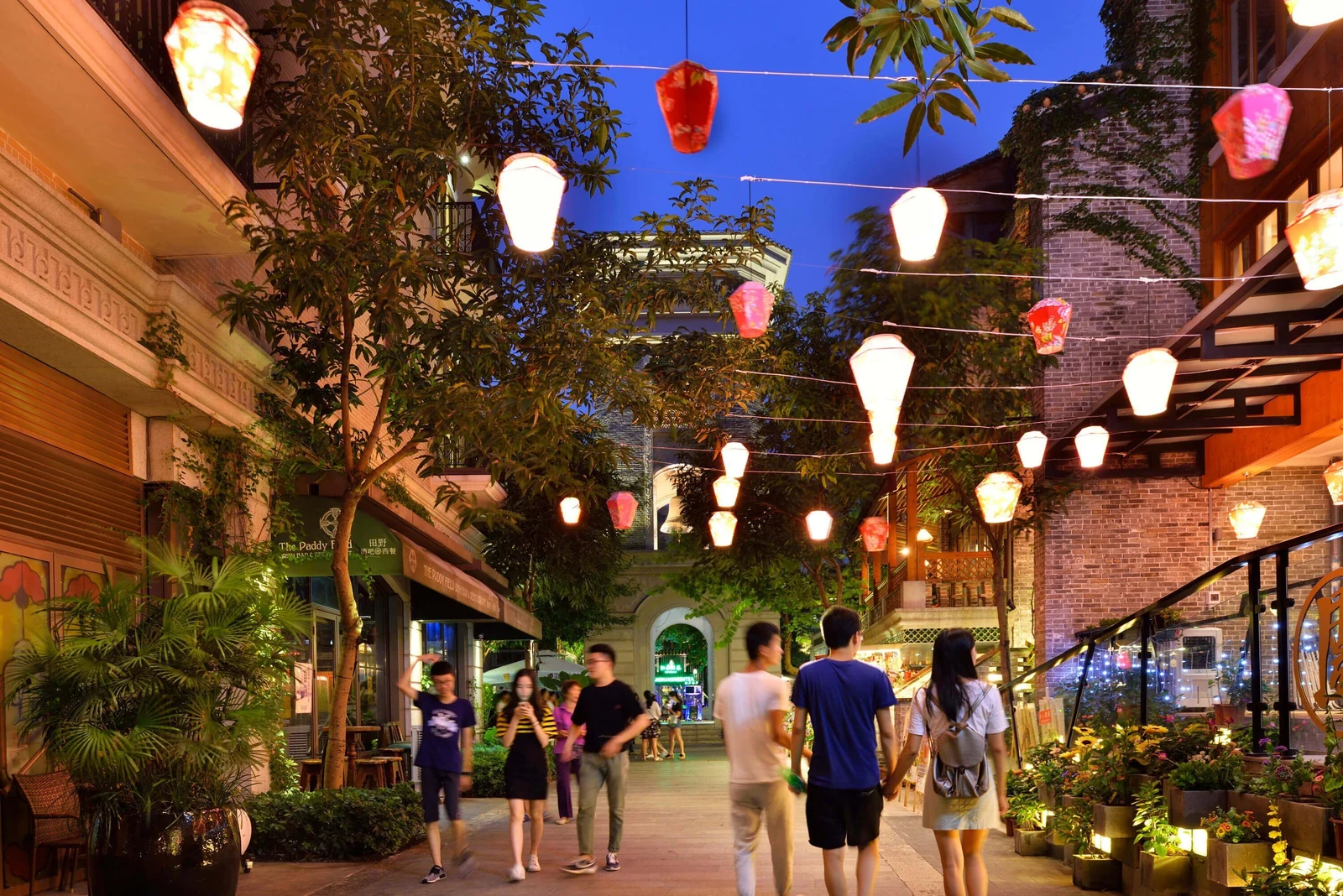
Lingnan Tiandi brings shops, food and cultural spaces into a historic part of central Foshan beside Zumiao. The district opened in 2012. Its reuse project encompasses protected sites and historic buildings, giving older streets and structures new roles within the contemporary city.
By 2024, the project was described as adapting 22 protected sites and 128 historic buildings. Those figures indicate a neighborhood-scale undertaking. Its interest lies in the individual spaces within that larger area: a doorway, a courtyard or an old institution can become part of another kind of urban activity.
A reading space in a poetry society
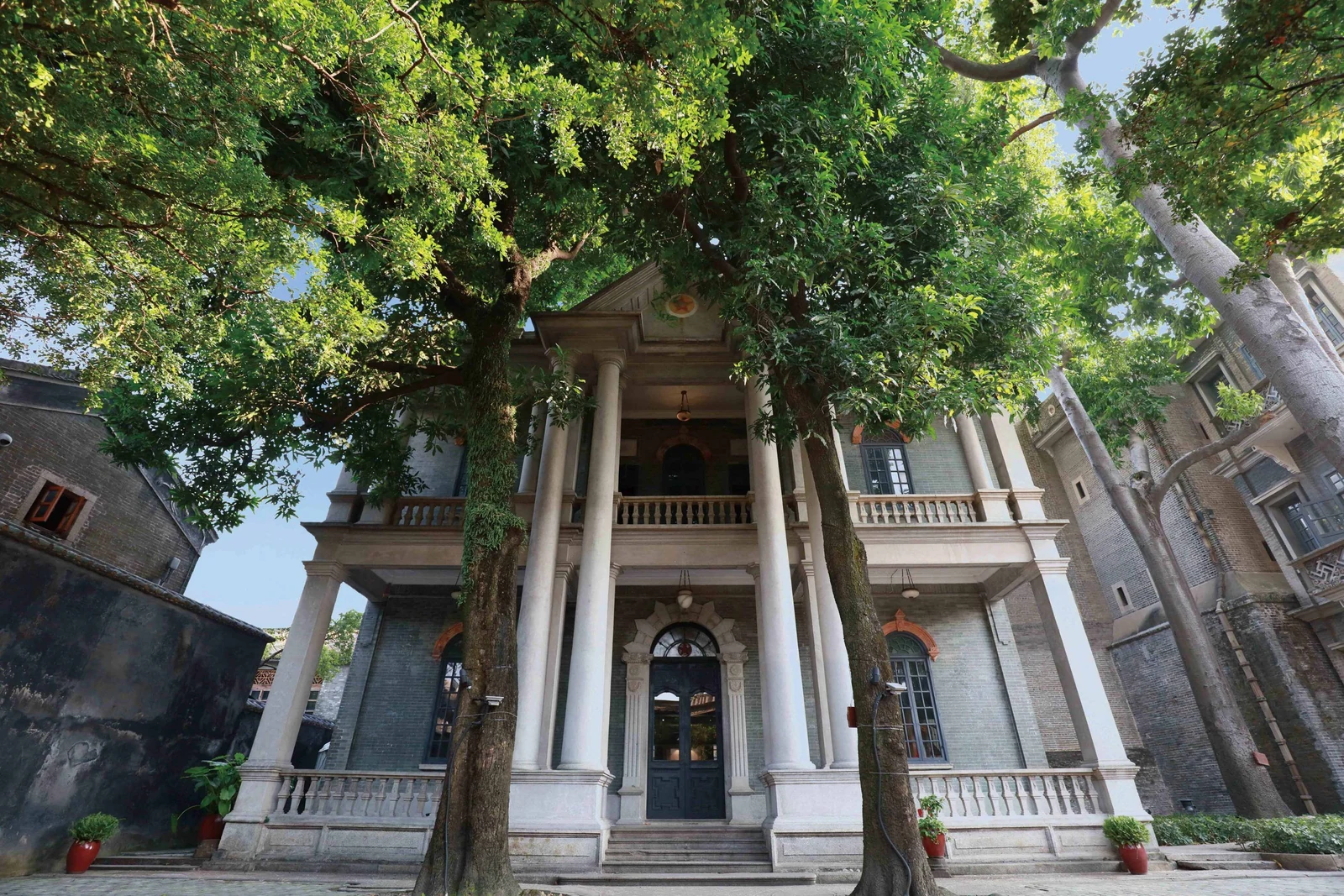
The century-old Longtang Poetry Society became one example of that change, accommodating a reading space. An institution associated with literary activity acquired a new public use while keeping its historical identity in the neighborhood.
The surrounding district combines such cultural spaces with commercial ones. Eating, shopping and reading bring different reasons to enter an old building. The uses change, while the buildings continue to shape how people move through the quarter.
Donghuali, a short street away
Nearby Donghuali is a distinct protected Qing-era lane. Its restoration involved recovering old water-milled blue bricks and white-clay floor tiles from demolished buildings, then cleaning and fitting them into the existing structures. Workers also gradually straightened walls without taking them down.
The proximity of these places allows two scales of reuse to be seen together. Lingnan Tiandi works across a district; Donghuali preserves the more compact sequence of an old lane. The particular work of repair matters within the larger transformation of central Foshan.