At the Reshui cemetery in Dulan County, the 2018 Xuewei No. 1 tomb was excavated between 2018 and 2020 by a joint archaeological team. The Peking University account describes a burial disturbed before excavation, with a cemetery enclosure above ground and a multi-room structure below. Its rooms contained evidence of different uses: a side chamber held silk and leather, while another included a stone mill, lacquerware, pottery and charred plant remains. The excavation recorded thousands of objects, from metalwork and textiles to glass and jade.
From the journal
How Archaeologists Read the Reshui Tombs
A complex tomb at Dulan’s Reshui cemetery became a historical argument built from architecture, timber dating, an inscribed seal and written records.
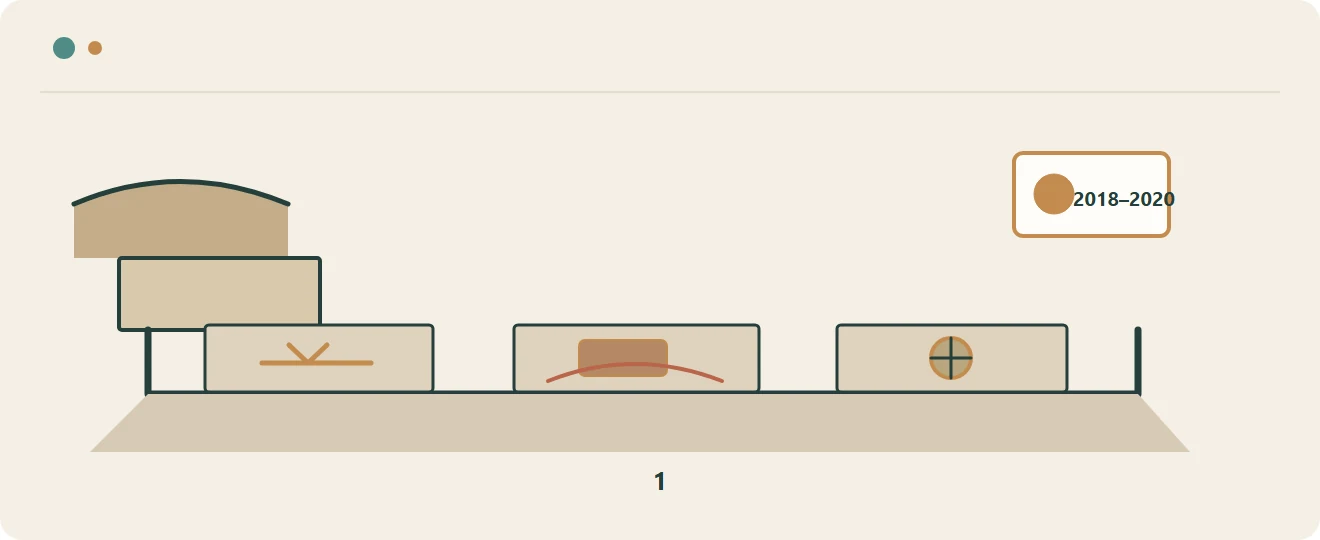
A tomb with rooms above and below ground
The seal and a carefully framed identity
One small object became central to interpreting the burial: a square silver-and-gold-alloy seal bearing a camel and an inscription in Old Tibetan. Archaeologists read the inscription alongside timber dating and historical documents from Dunhuang. The university account describes the result as a preliminary identification of the tomb’s occupant as a Tuyuhun king under Tibetan rule, rather than a certainty detached from its evidence. In this case, a cemetery’s architecture, the date of its wood and a few lines on a seal all contribute to a larger account of political life along the Qinghai route.