A house of blocks
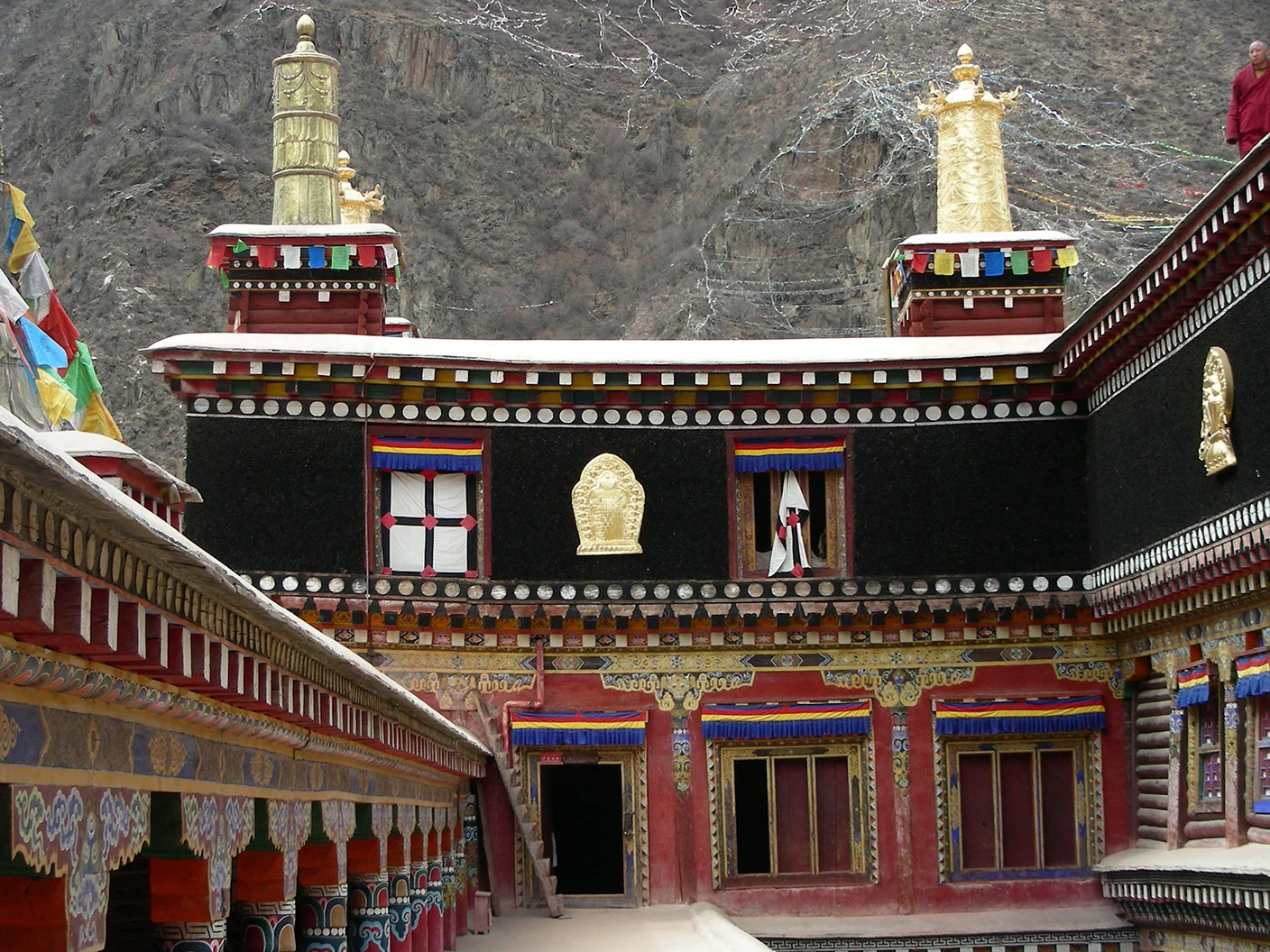
The printing house was established in 1729, although the Dege rulers had been commissioning blocks and printing since 1703. It became the first of the three great printing houses of the Tibetan region. The building is tall and narrow, with open galleries around a courtyard. Blocks are stored on shelves that run from floor to ceiling, sorted by text. The air smells of ink, old wood and dust. Light comes in from the courtyard, because the galleries are too narrow for windows.
Paper from a poisonous root
The paper is made from the root of Stellera chamaejasme, a plant that is toxic to insects. The fibre is cooked, beaten and poured into a frame, a method described as a poured-paper system. The result is light, strong and resistant to insects. Blocks are cut from red birch, seasoned, smoked, boiled and dried, then carved in deep relief. The depth allows a block to be inked and printed many times without losing the text. The materials are not romantic details; they are the reason the books survive.
Ink, roller and a steady hand
Printing is done in pairs: one person inks the block, another lays the paper and presses it with a roller, then lifts the sheet. The work is fast and quiet. The house was closed for about twenty years from 1958 and reopened in 1979; the craft was listed as national intangible heritage in 2006. Today a small team keeps the process alive, and the house also produces sutras and histories for monasteries and libraries. It is a workshop, not a demonstration.