A rhythm made visible
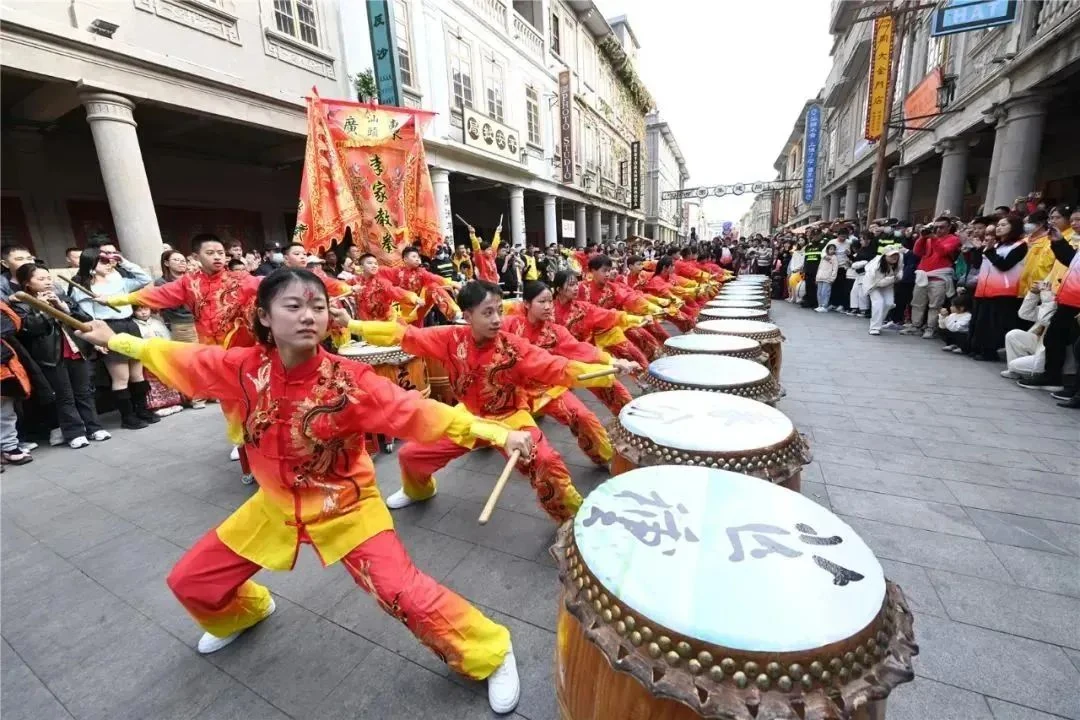
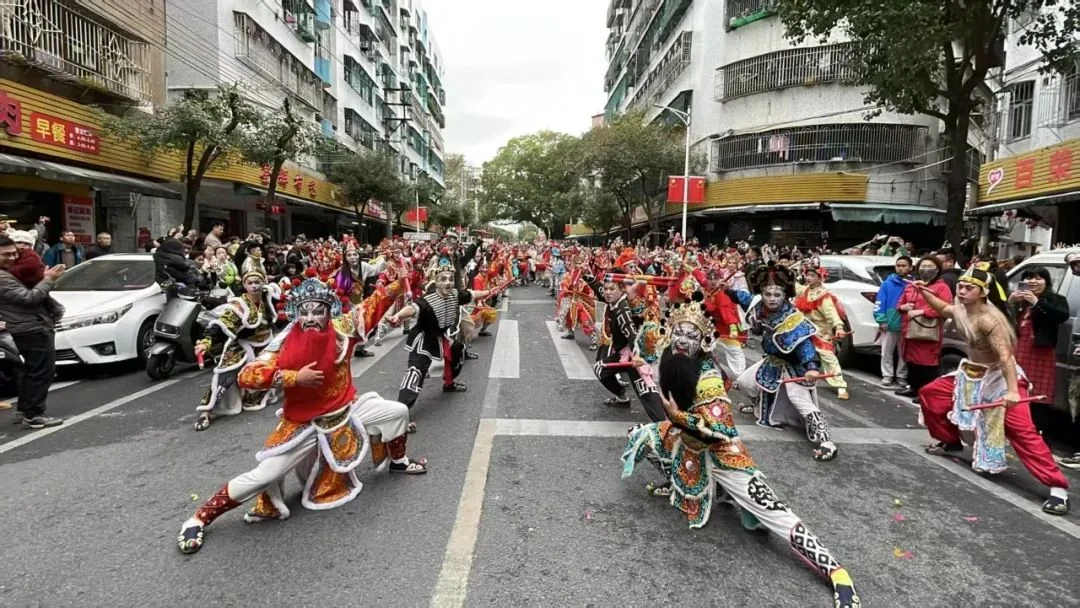
Yingge is often recognized first through sound and formation. Performers move in groups, striking paired batons as they step and turn; rhythm travels through the beat and the shape of the team. Shantou government reporting documents local teams in a 2024 Spring Festival procession, while a Shantou Polytechnic project gathers historical and form-related material. Chaoyang’s teams give this performance a distinct local shape within the wider Yingge tradition.
Each performer’s movement joins the group’s pattern. Batons make rhythm visible, while changing formations carry the team through public space. Coordination and shared timing let the pattern hold as the dancers move.
A local tradition with layered origins
Accounts of Yingge’s origins differ, reflecting a tradition with a long history and a wide regional reach. In contemporary records, Chaoyang’s teams carry it forward as a living folk performance recognized within China’s intangible-heritage system.
The local setting gives the dance a concrete identity. Chaoyang teams take part in community events and public processions; a 2024 city report names a gathering of team representatives. Their costumes, rhythms, narratives and formations can vary, giving each team room to shape the shared art in its own way.
The street as a performance space
Yingge’s movement depends on a public route. Unlike a performance framed only by a proscenium, a procession shares space with streets, spectators and the changing distance between performers. Formation becomes a way to occupy and move through the neighborhood. In 2024, multiple Chaoyang teams—including male and female groups—joined the public procession, showing the variety within this local tradition.
Yingge names a wider regional art, while team practice belongs to particular communities. Chaoyang’s beat and baton work carry the dance through its own streets and gatherings.
As the team moves through the streets, drumbeats and baton strikes draw people into the same moment. Spectators pause along the route while the performers turn, gather and move on. Yingge becomes both a dance and a shared festival experience in the neighborhood’s public space.