Mianyang's research institutes arrived with the First Five-Year Plan and the Third Front. The city shows that history at road scale and keeps the laboratories closed.
Words by IFreeing Editors3 min readMianyang Science City · Mianyang
Red at the exit
A red sculpture stands at the Mianyang South expressway exit. It is called Fission, and it does the work a city gate used to do: it tells you what kind of place you have entered. Mianyang's public identity is scientific. The sculpture refers to the research history that put institutes in the city, and it is placed where every driver coming off the highway will pass it. That is the first thing to understand about Science City. The science is not hidden behind a wall; its sign is on the road, in red, at the point of arrival. A landmark at that speed makes one argument only, and this one makes it clearly.
Two waves of institutes
The institutes arrived in two waves. During the First Five-Year Plan and then the Third Front period, the state placed research bodies in Mianyang, among them the China Academy of Engineering Physics, the China Aerodynamics Research and Development Center and the AECC Sichuan Gas Turbine Research Institute. A prefecture city acquired a population of engineers and a set of campuses that had little to do with its old street plan. The city grew around them rather than the other way round. That inheritance is why Mianyang speaks of talent, technology transfer and new industries in the same breath as its history. That is the physical form of the Third Front: institutions placed first, the city arranged afterwards.
Two decisions
In September 2000 the central government decided to build Mianyang Science City. In 2022 the city was designated a pilot zone for scientific and technological innovation. Those two decisions explain the shape of the public story: research institutes, talent, technology transfer, new industries. It is a story told in plans and in figures, and it is told mostly to people who might invest, move there, or send a child to a university nearby. The visitor is not the audience. That is unusual among the places in this journal, most of which are organised around looking. The pilot zone is the latest name for the same arrangement: a state decision, a local administration and a long horizon.
What is shown
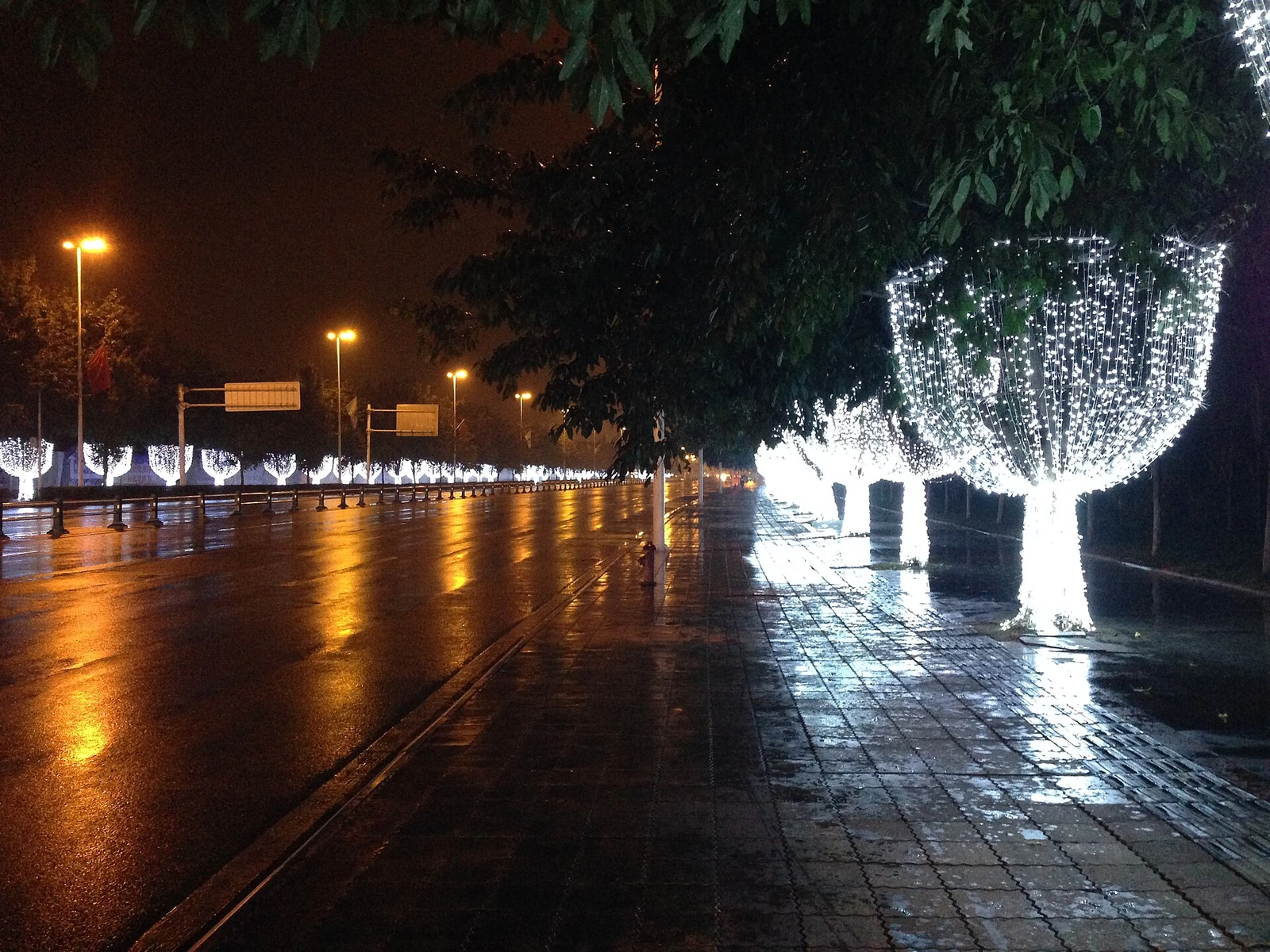
What can be seen is the ordinary surface of an institutional city: roads built at a larger scale than the traffic needs, campuses with their own gates, technology parks, and the sculpture at the exit. What cannot be seen is not a secret waiting to be uncovered. Laboratories are workplaces with their own rules, and a city that lives off them does not open them to tourists. The honest way to read Science City is from the road, as a place where the boundary between what is shown and what is kept is itself the subject. That boundary is not hypocrisy. It is how a research city stays a city.