From the journal

Three Streets Hall: A Meeting Place under Guan Yu’s Gaze

Three Streets Hall began as a meeting place for merchants in Macao’s old commercial quarter and later became widely known as a Guan Yu temple.

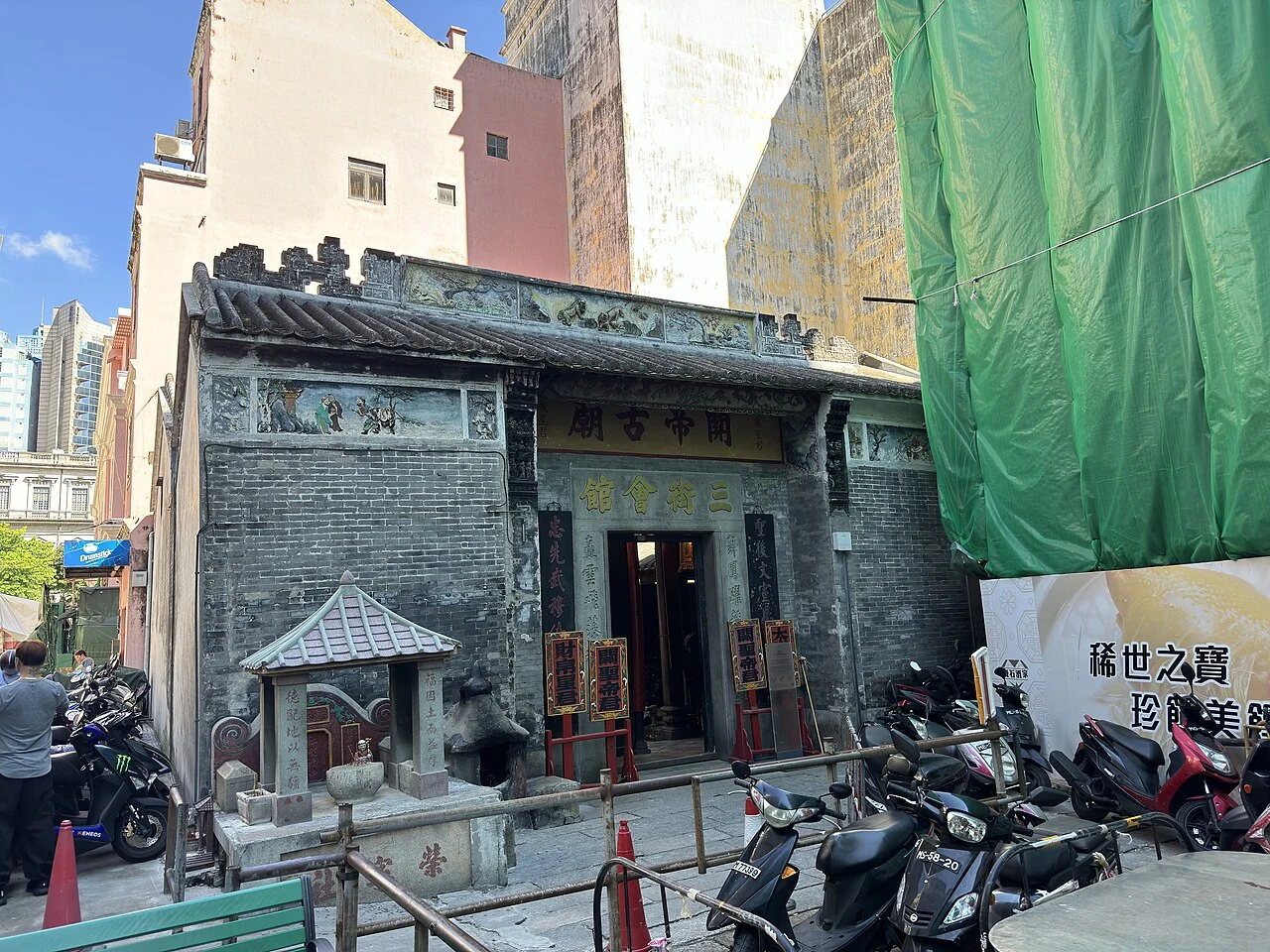
Sam Kai Vui Kun, the small Kuan Tai Temple in Macao’s former commercial district.

A hall for business discussions

Three Streets Hall stood near Rua dos Mercadores, Rua das Estalagens and Rua de Cinco de Outubro, streets that formed an old commercial center. Merchants met here to exchange market information, discuss business and stabilize prices. Earlier, traders often used existing temples for meetings; the dedicated hall answered the need for a closer common place.

Its exact founding year is unknown, though the building existed by the Qianlong period. A major repair in 1792 enlarged the structure. Later repairs in 1804 and 1835 altered its scale and added a separate meeting room beside the temple. The building grew with the commercial community that used it.
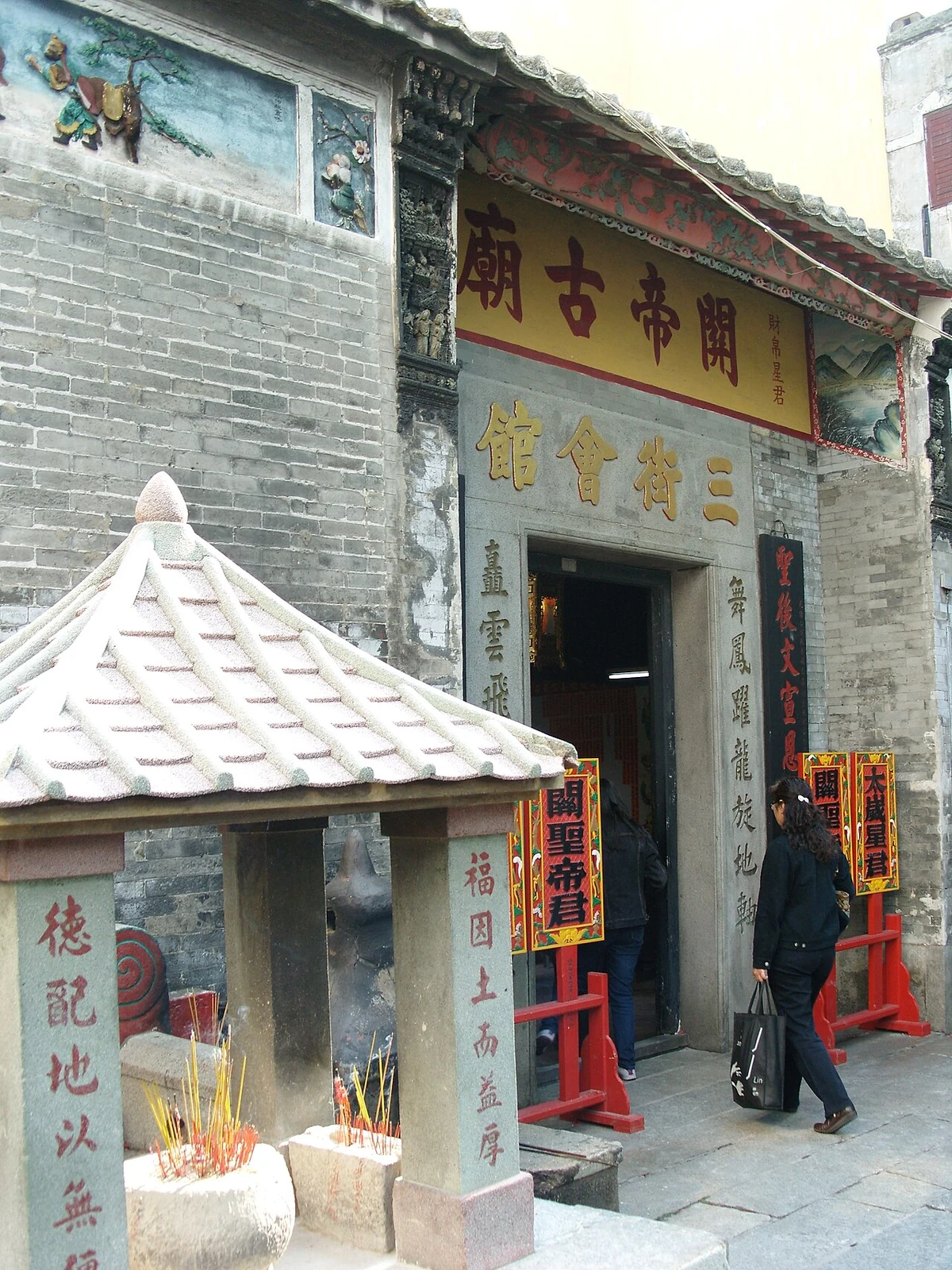
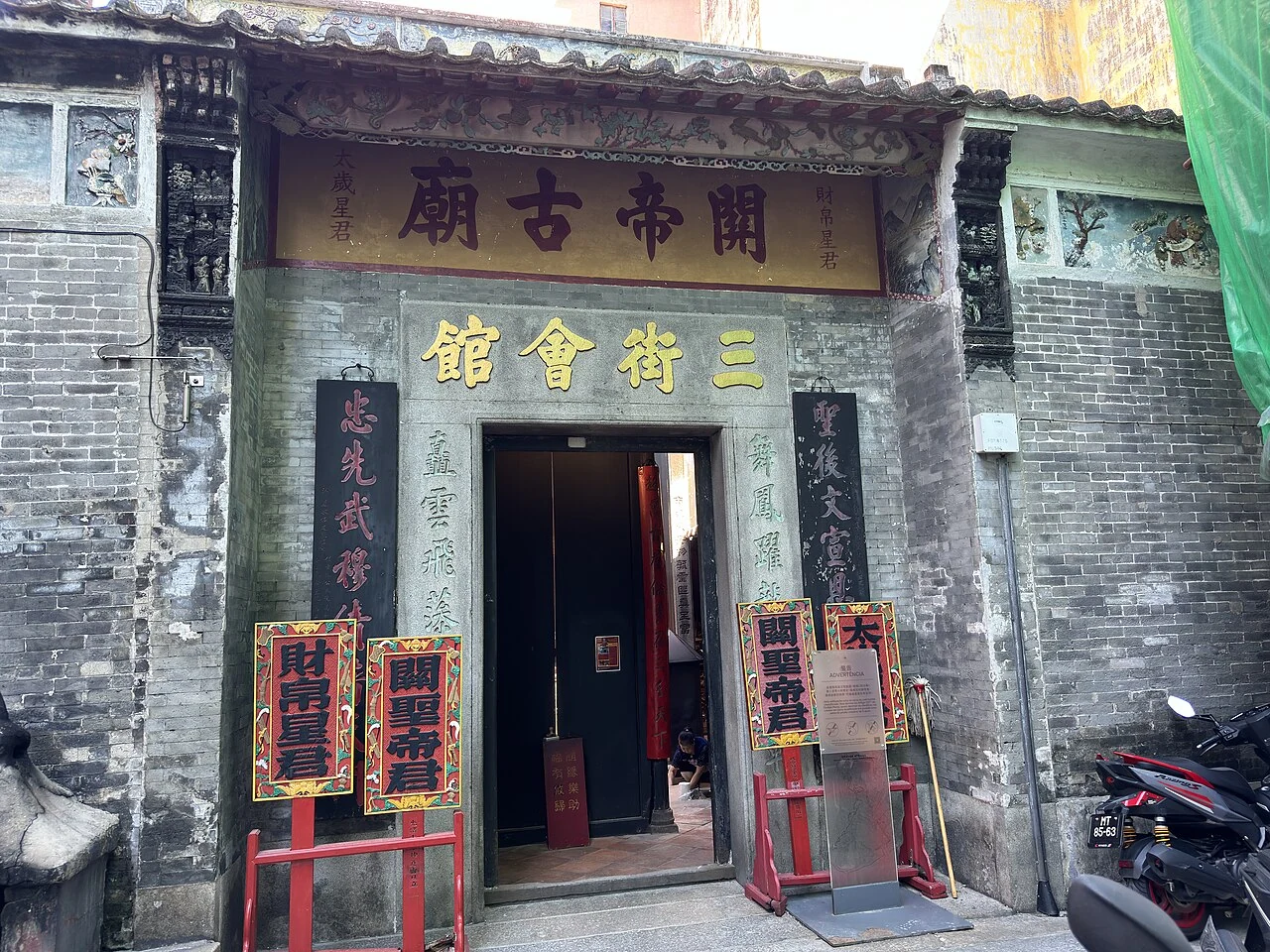
Sam Kai Vui Kun, the small Kuan Tai Temple in Macao’s former commercial district.

Why people call it a temple

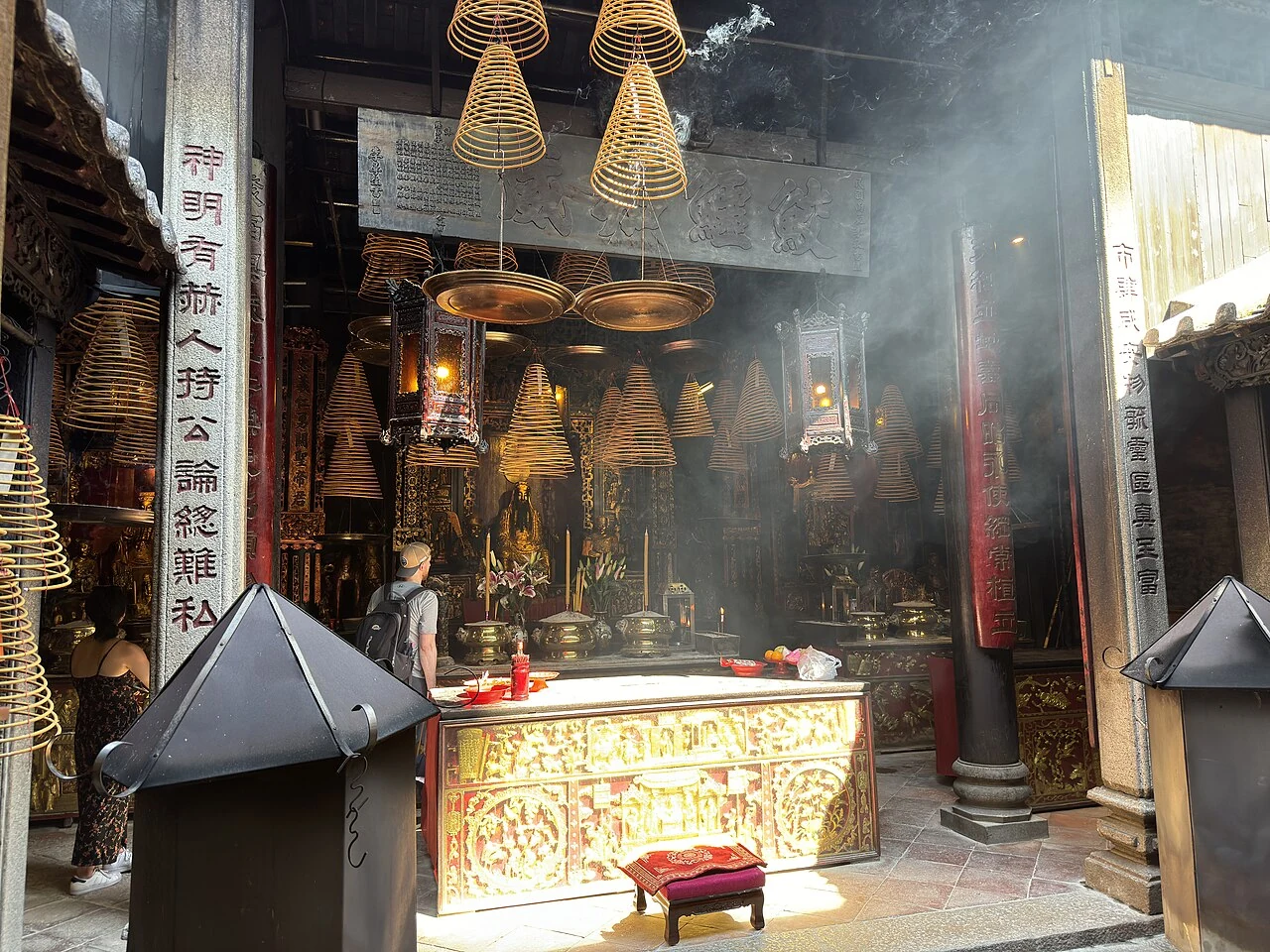
The hall also contains shrines to Guan Yu and the God of Wealth. As more people entered to pray, the public increasingly called the building Guan Yu Temple, and its original identity as a merchants’ association faded from everyday speech.

The names remain together above the entrance: a high plaque honors Guan Yu, while the lintel still reads “Three Streets Hall.” The building is a two-bay, three-room structure of blue brick, with a hard-gable roof, wooden frame and an inner court. Its small scale makes the double role especially visible: business discussion and worship occupied the same neighborhood address.

Trade, worship and the old quarter

The building’s setting among three old commercial streets connects it to Macao’s trading history. Inside, the altars keep a different kind of collective life visible. The hall was a place to deliberate; the temple became a place to honor Guan Yu and seek auspiciousness associated with wealth.

The doorway and name plaque matter because they preserve this double character. Visitors can understand the building as a commercial association and as a temple without forcing one purpose to erase the other. It is a small, local example of how institutions change when a neighborhood continues to use them.

Sam Kai Vui Kun, the small Kuan Tai Temple in Macao’s former commercial district.
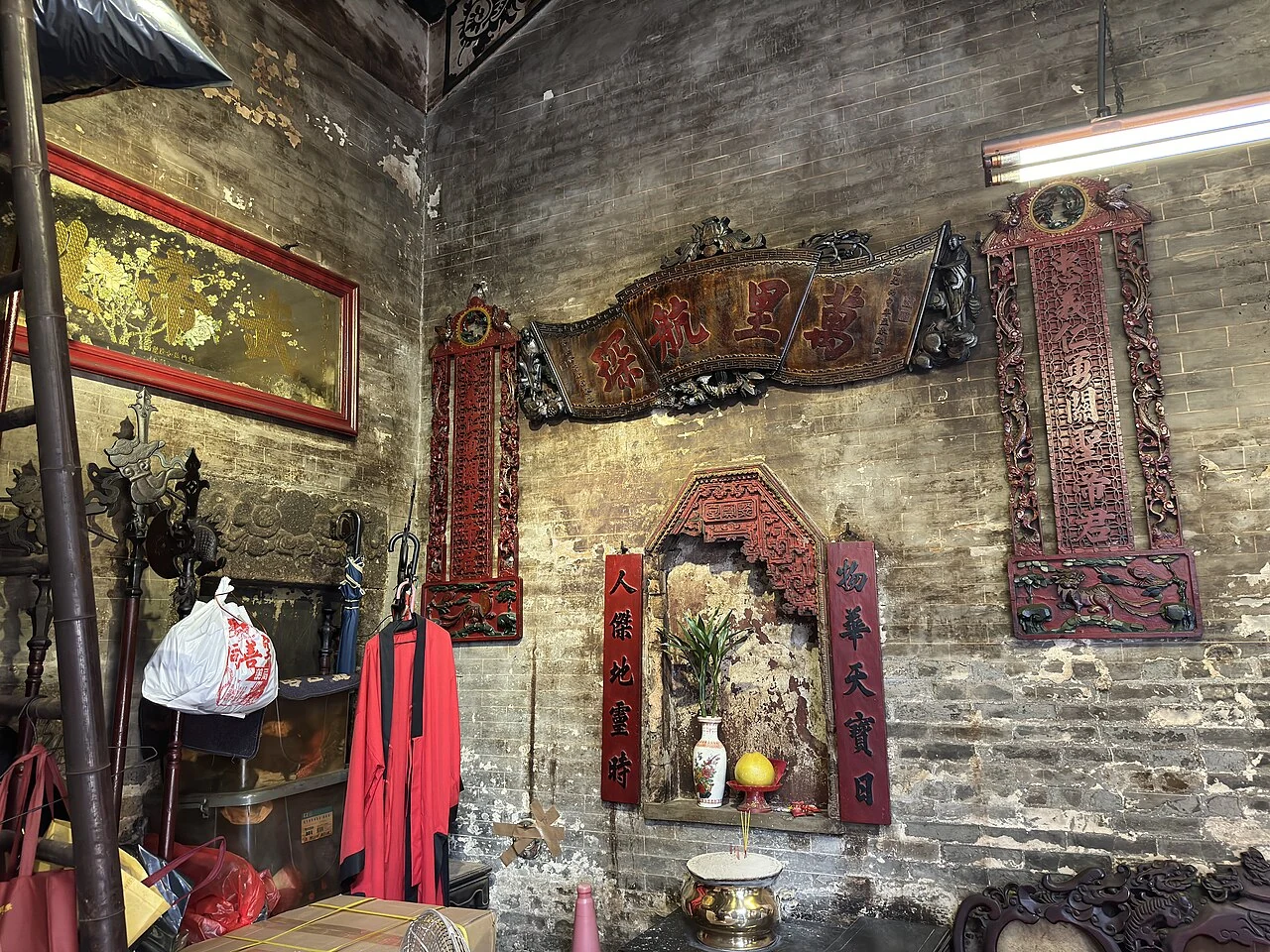
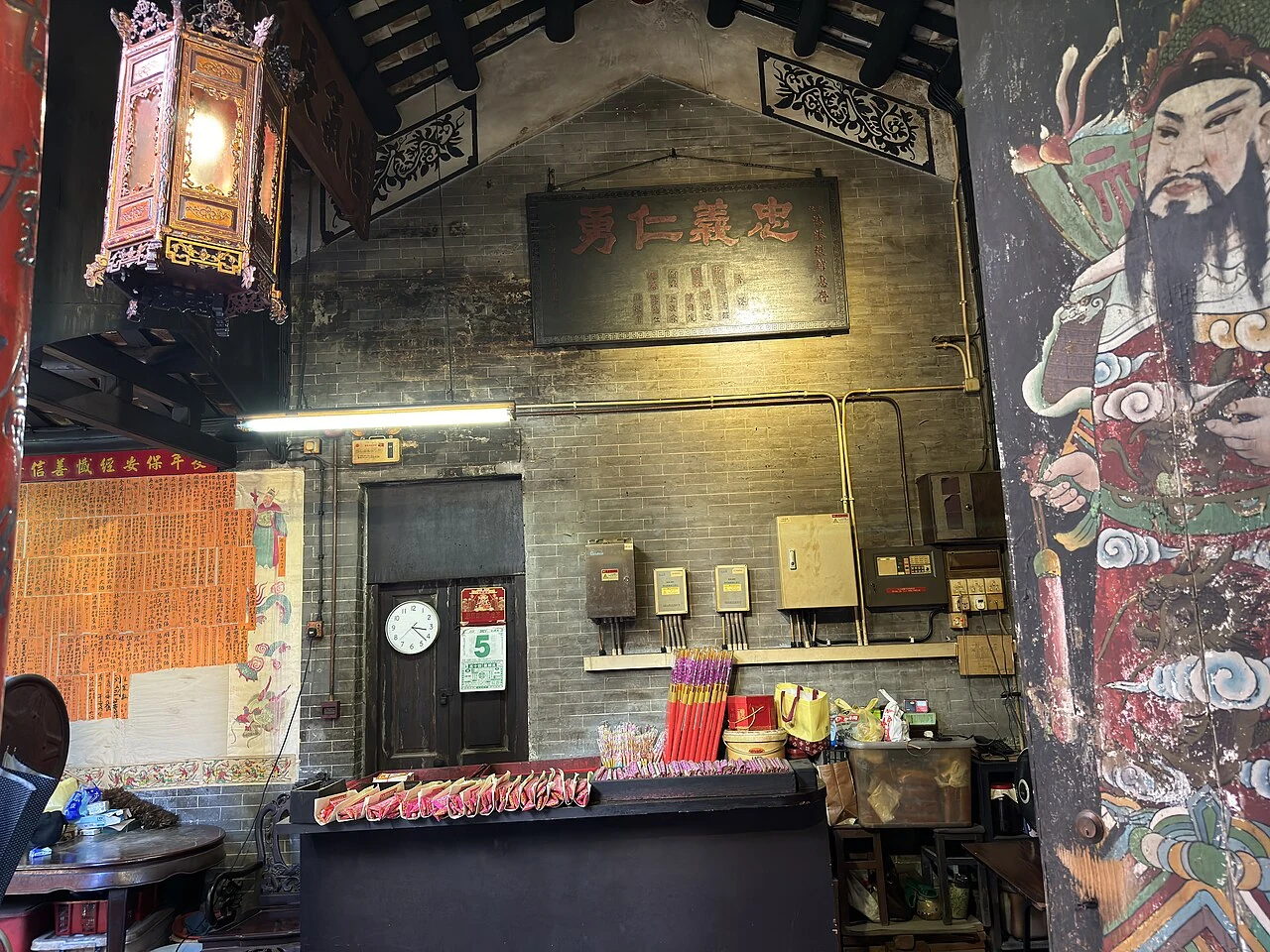
The altar and decorated interior of Sam Kai Vui Kun.
Continue exploring · Macao ↗
Photo credits and rights
  1. LN9267 / CC BY-SA 4.0 · CC BY-SA 4.0 Photo source ↗ Rights information ↗
  2. Sam Kai Vui Kun, the small Kuan Tai Temple in Macao’s former commercial district.shankar s. from Poona (pune), India, India / CC BY 2.0 · CC BY 2.0 Photo source ↗ Rights information ↗
  3. Sam Kai Vui Kun, the small Kuan Tai Temple in Macao’s former commercial district.LN9267 / CC BY-SA 4.0 · CC BY-SA 4.0 Photo source ↗ Rights information ↗
  4. The altar and decorated interior of Sam Kai Vui Kun.LN9267 / CC BY-SA 4.0 · CC BY-SA 4.0 Photo source ↗ Rights information ↗
  5. The altar and decorated interior of Sam Kai Vui Kun.LN9267 / CC BY-SA 4.0 · CC BY-SA 4.0 Photo source ↗ Rights information ↗
  6. The altar and decorated interior of Sam Kai Vui Kun.LN9267 / CC BY-SA 4.0 · CC BY-SA 4.0 Photo source ↗ Rights information ↗