From the journal

A chapel rebuilt in 1928

The site beside Eduardo Marques Square first housed a nursery run by the Canossian Sisters in 1904.

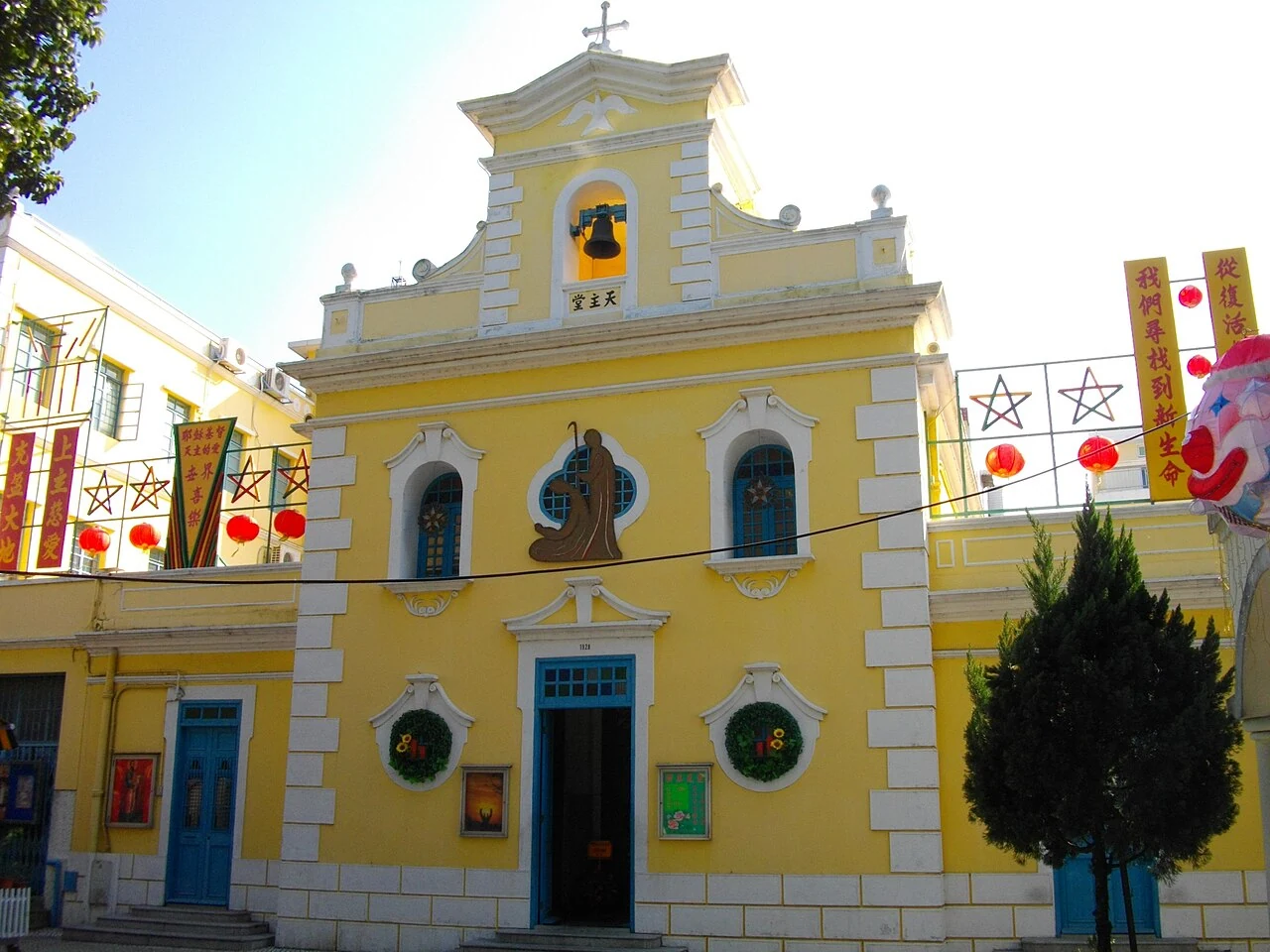
The yellow façade of St Francis Xavier’s Chapel in Coloane.

From a nursery to a church

The site beside Eduardo Marques Square first housed a nursery run by the Canossian Sisters in 1904. In 1928 it was rebuilt as the Church of St Francis Xavier, commemorating the Jesuit missionary. The present church is two storeys high, painted pale yellow, and topped by a bell tower on the façade; oval windows and side rooms give the compact building its distinctive profile.

The church’s setting keeps it close to the life of Coloane’s old centre. It is a place of worship, but also part of a square where residents move between streets and local businesses. Its scale is intimate: a small parish church whose architectural details can be read from the square rather than from a distant ceremonial approach.
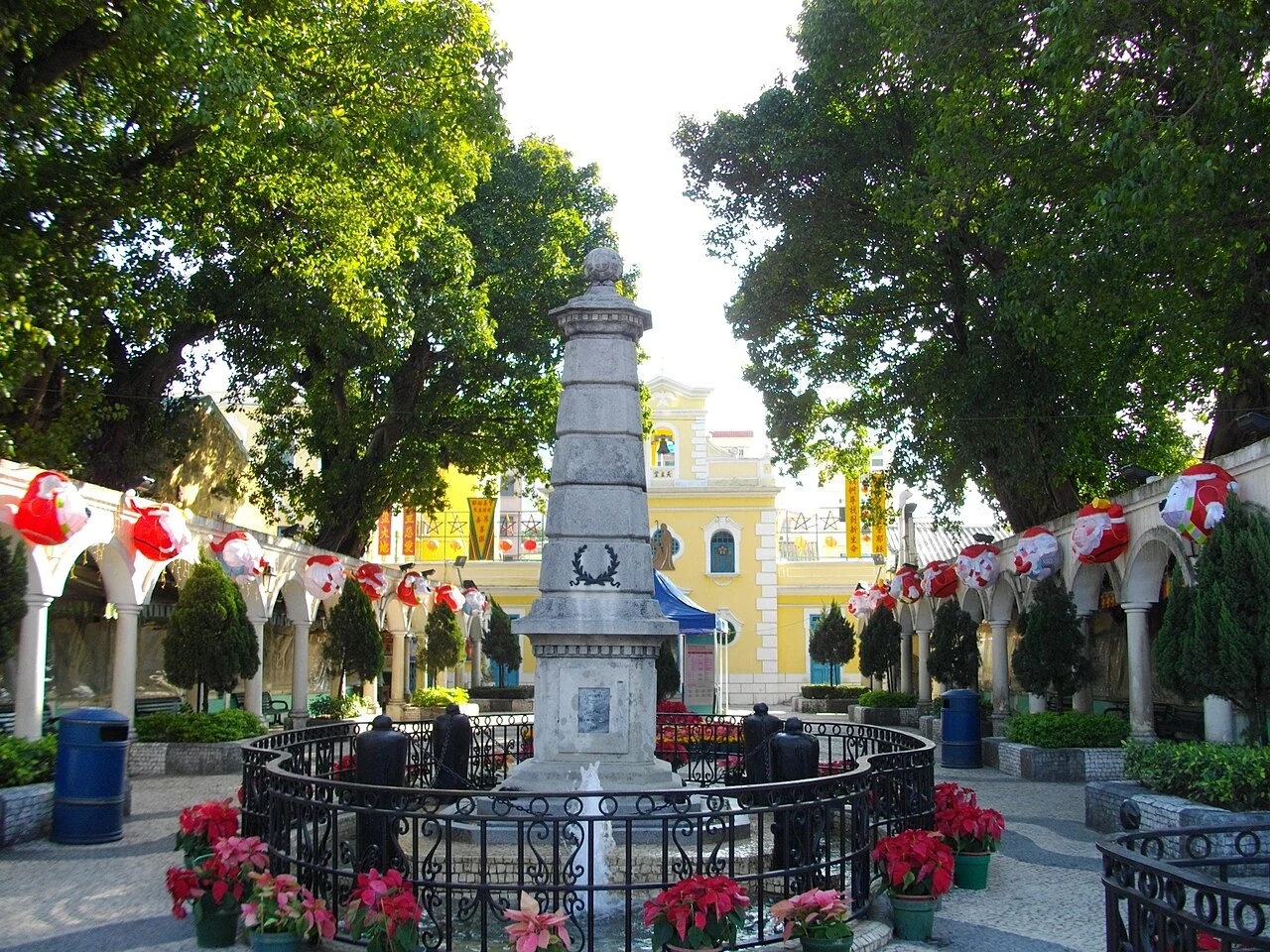
The monument and public square in front of St Francis Xavier’s Chapel in Coloane.
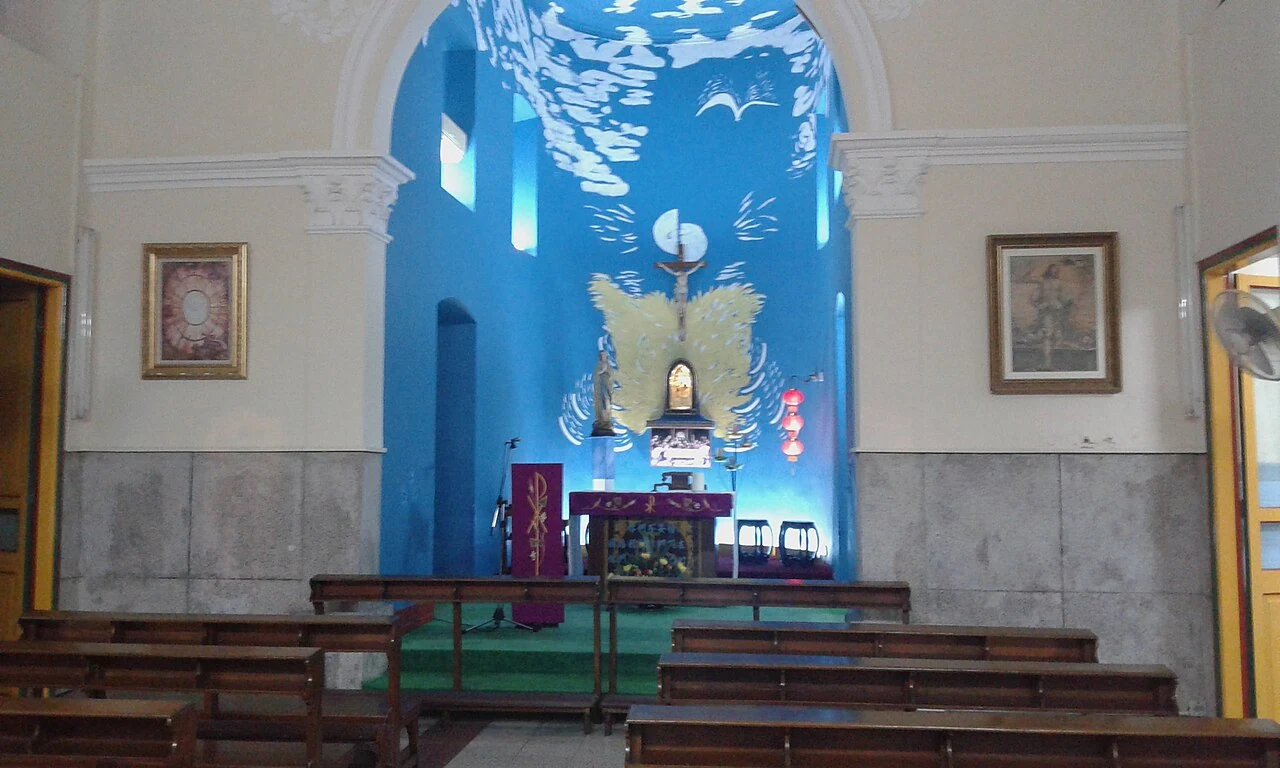
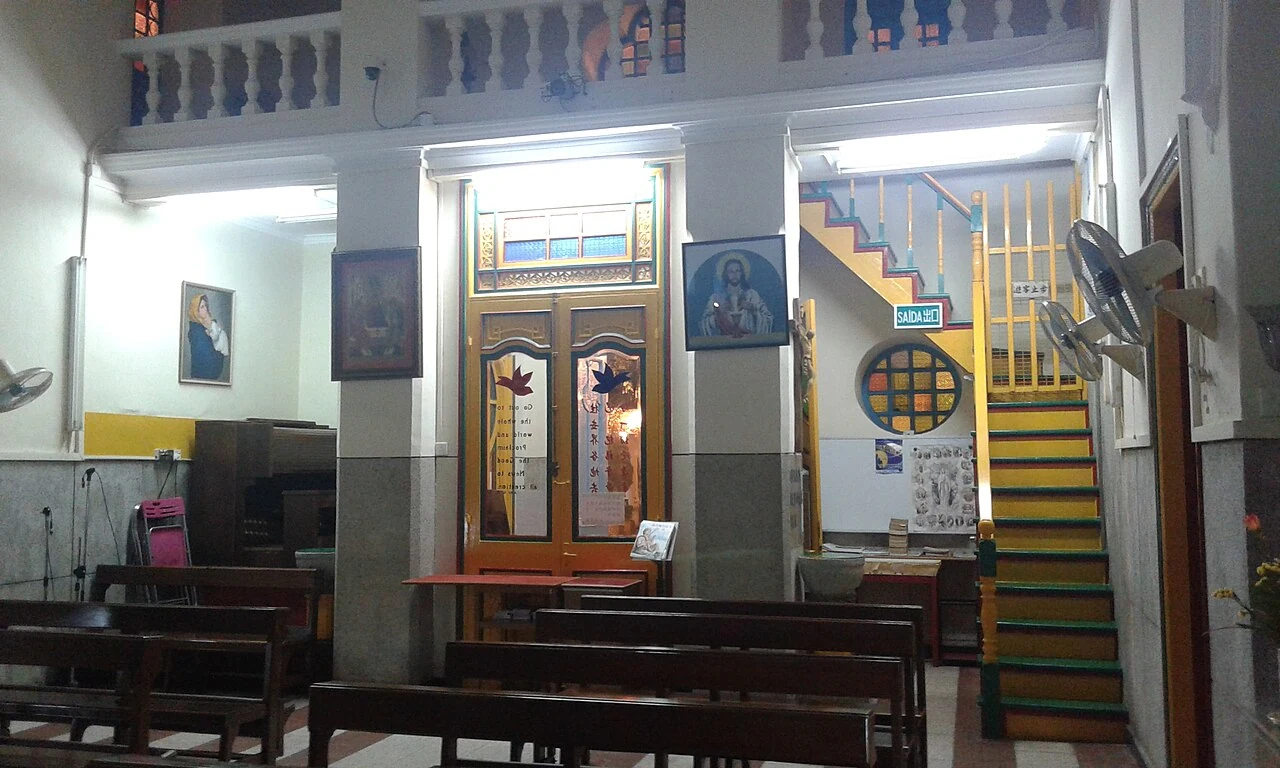
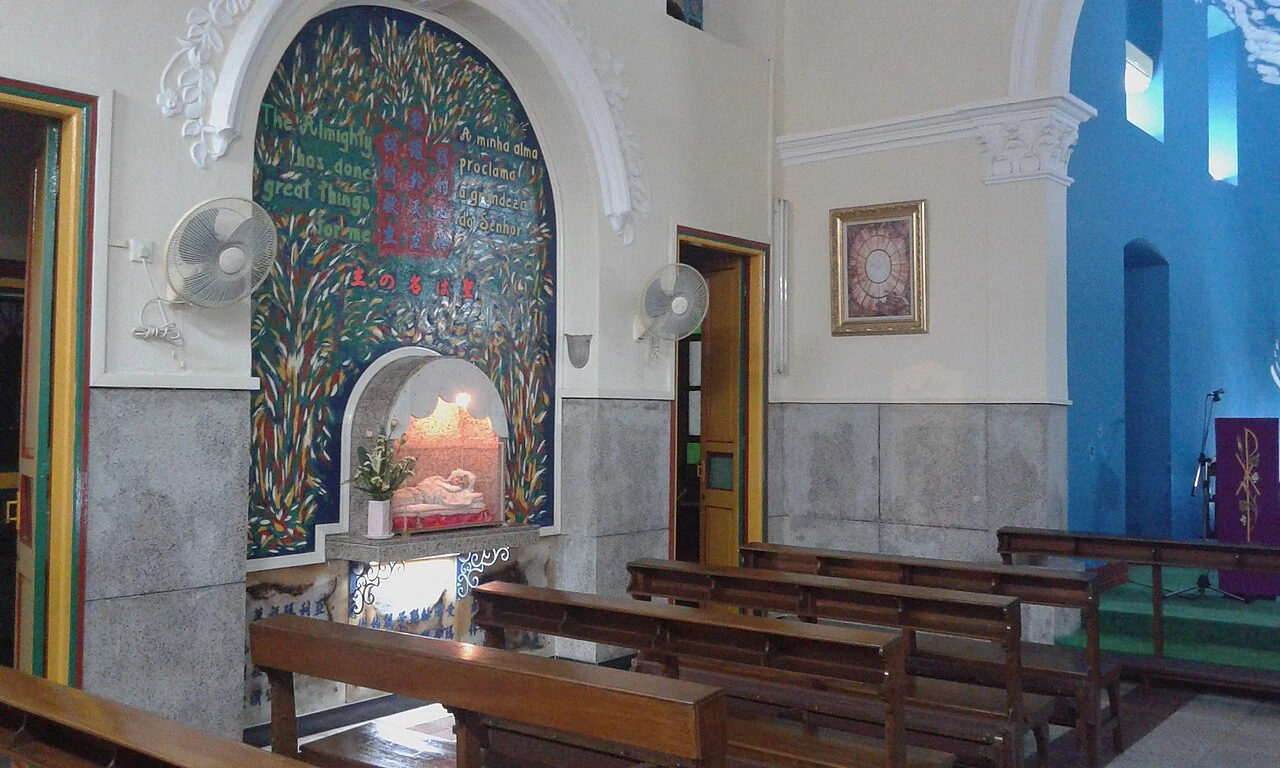
The interior and altar of St Francis Xavier’s Chapel in Coloane.

A Chinese-faced Madonna

Inside one side chapel hangs an image of the Virgin and Child with a Chinese appearance. The Cultural Affairs Bureau describes it as a sinicised Madonna, a detail that makes the church’s interior more than a reproduction of a European Catholic form. The image gives local artistic language a place within the church’s religious setting.

The church was also historically associated with a silver reliquary containing a relic of St Francis Xavier and remains connected with the 1835 fire at the Church of St Paul. The reliquary was later transferred to St Joseph’s Seminary, where it joined the church’s broader religious history. These objects belong to the church’s history, while the Chinese-faced Madonna remains a visible example of cultural forms meeting within the building.

The 1910 monument in the square

Outside, a monument beside the church commemorates a 1910 victory over pirates. The square therefore holds two different kinds of public memory: the church’s Catholic and educational history, and a civic marker of conflict on the coast. Both are encountered within the everyday village centre, beside homes, shops and the short lanes of Coloane.

The church moved from a nursery to a chapel, while the square and monument connect local history to the public realm. The compact setting is what makes the pair notable: a pale-yellow church, bell tower and memorial stand together in a small open space rather than in a separated institutional district. The place remains a working part of the village, not an isolated historical compound.

The interior and altar of St Francis Xavier’s Chapel in Coloane.
Continue exploring · Macao ↗
Photo credits and rights
  1. Abasaa / Public domain · Public domain Photo source ↗ Rights information ↗
  2. The monument and public square in front of St Francis Xavier’s Chapel in Coloane.Abasaa / Public domain · Public domain Photo source ↗ Rights information ↗
  3. The interior and altar of St Francis Xavier’s Chapel in Coloane.Underwaterbuffalo / CC BY-SA 3.0 · CC BY-SA 3.0 Photo source ↗ Rights information ↗
  4. The interior and altar of St Francis Xavier’s Chapel in Coloane.Underwaterbuffalo / CC BY-SA 3.0 · CC BY-SA 3.0 Photo source ↗ Rights information ↗
  5. The interior and altar of St Francis Xavier’s Chapel in Coloane.Underwaterbuffalo / CC BY-SA 3.0 · CC BY-SA 3.0 Photo source ↗ Rights information ↗