From the journal

Na Tcha Temple: A Small Shrine Beside a Monument

A compact temple stands beside the vast St. Paul’s ruins, carrying a neighborhood tradition in a different architectural and religious scale.

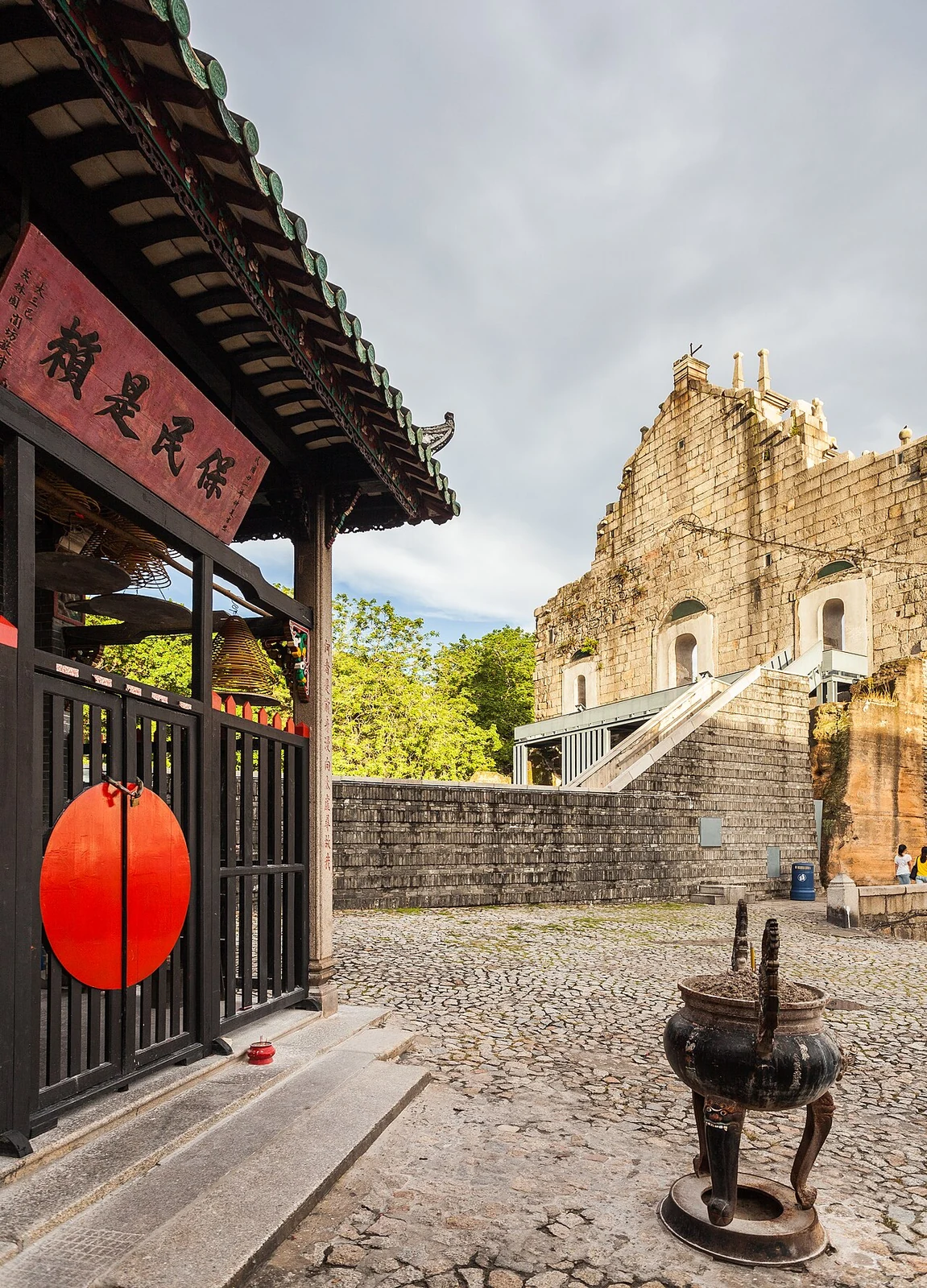
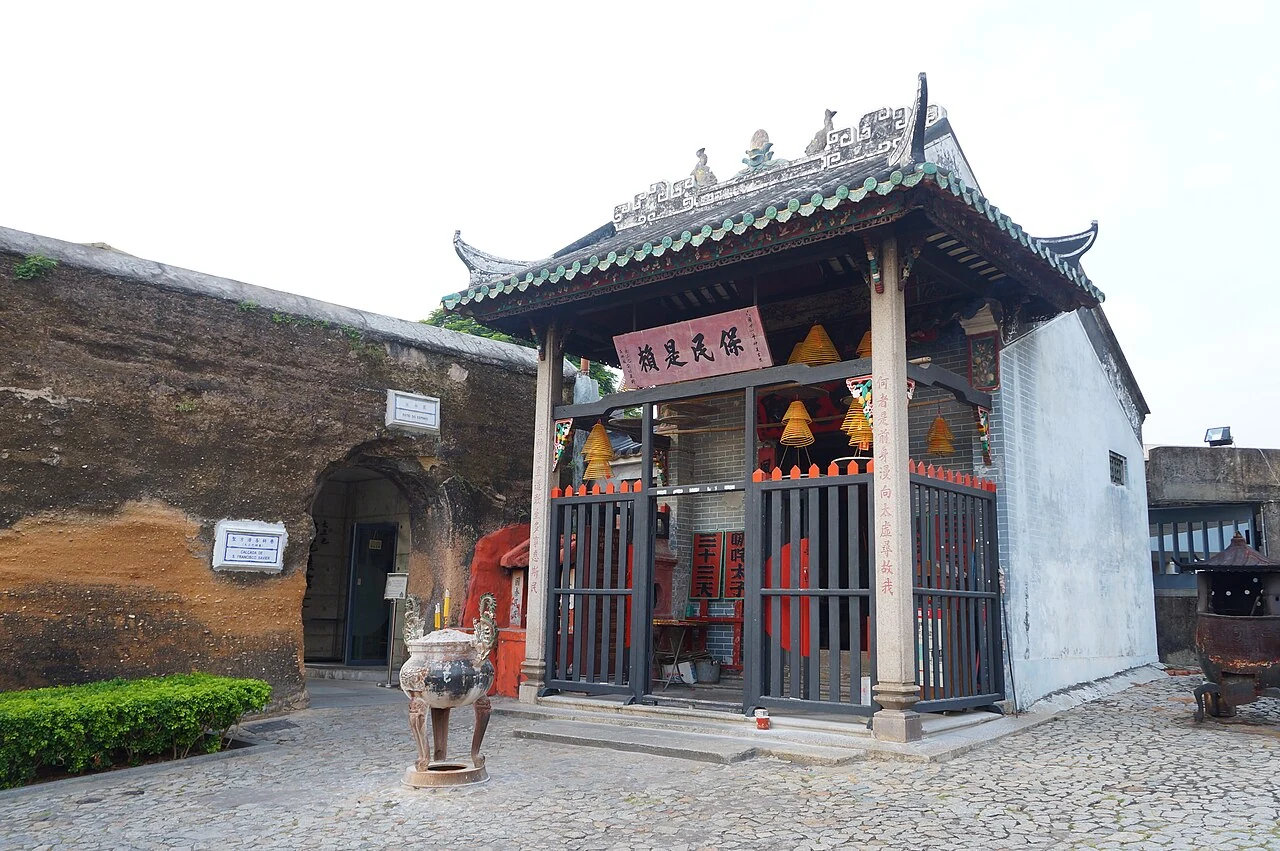
Na Tcha Temple beside the St Paul’s ruins, with its tiled roof and compact entrance.

A different scale beside the ruins

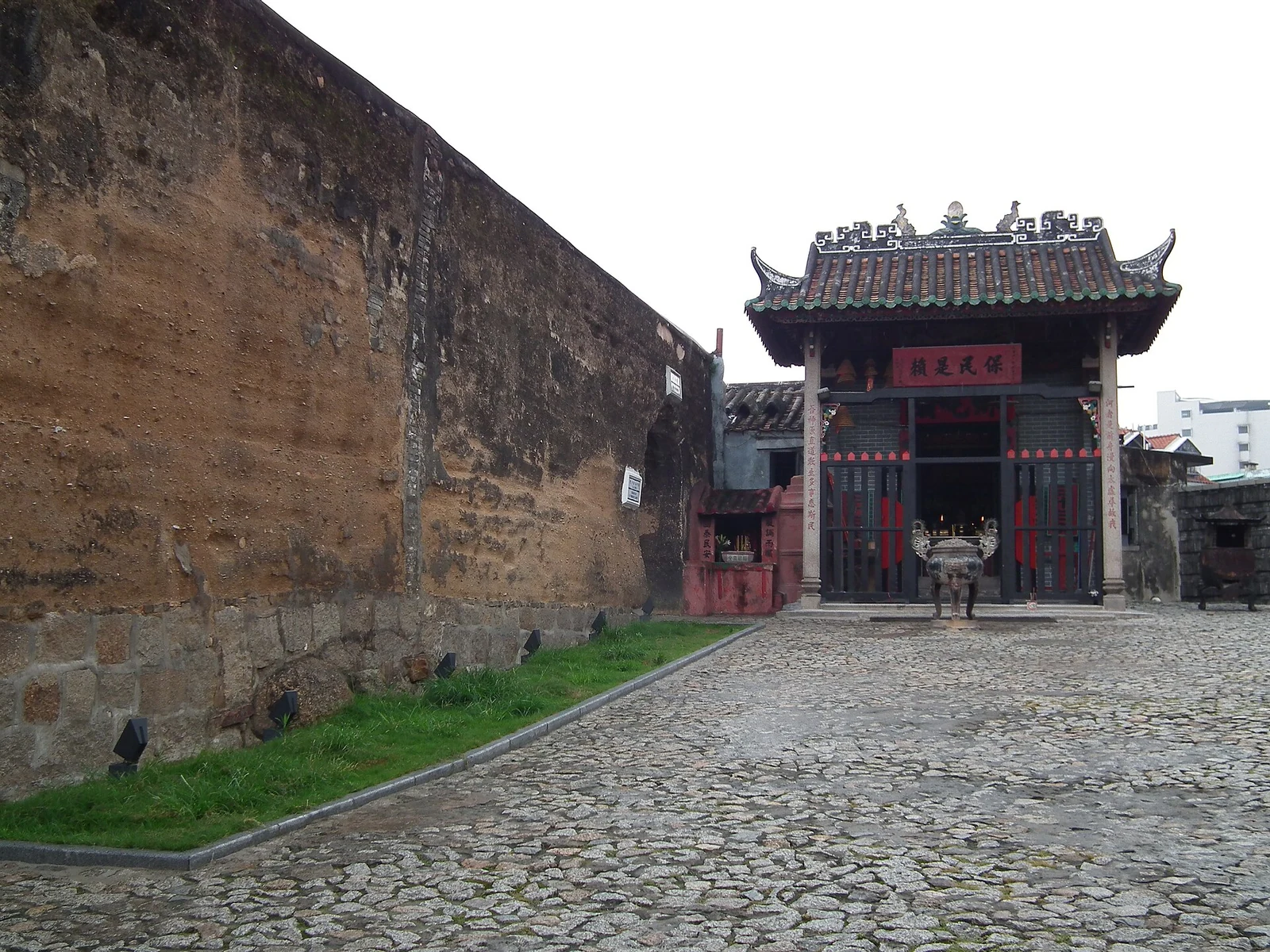
Behind and to the right of the Ruins of St. Paul’s stands a small temple dedicated to Na Tcha, a figure from Chinese mythology. The contrast is immediate: the immense church façade rises nearby, while the shrine keeps its attention close to the lane and neighborhood around it.

The temple dates to 1888 and was rebuilt in 1901. These dates place it long after the fire that left the church wall standing. Their closeness on the map does not make them one story: they represent distinct religious traditions sharing a dense urban neighborhood.
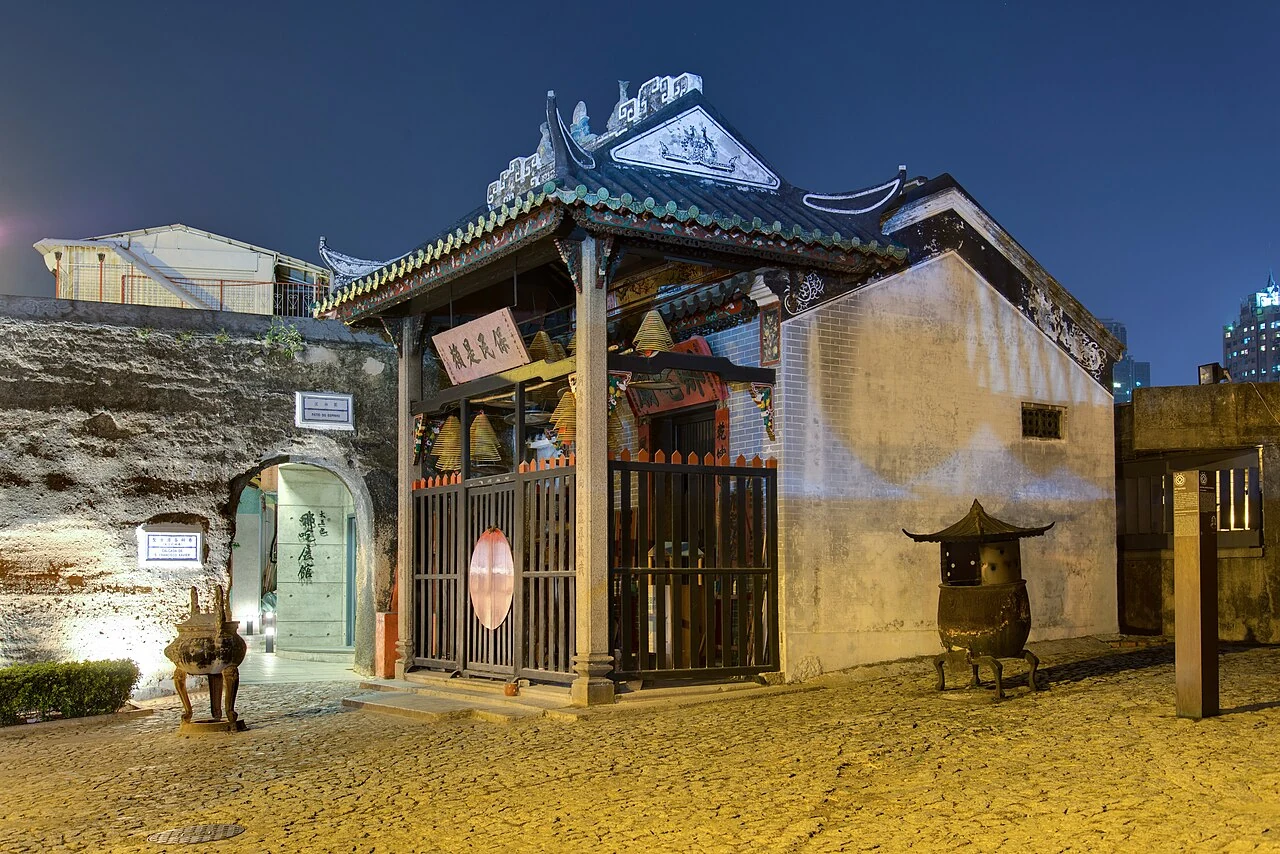
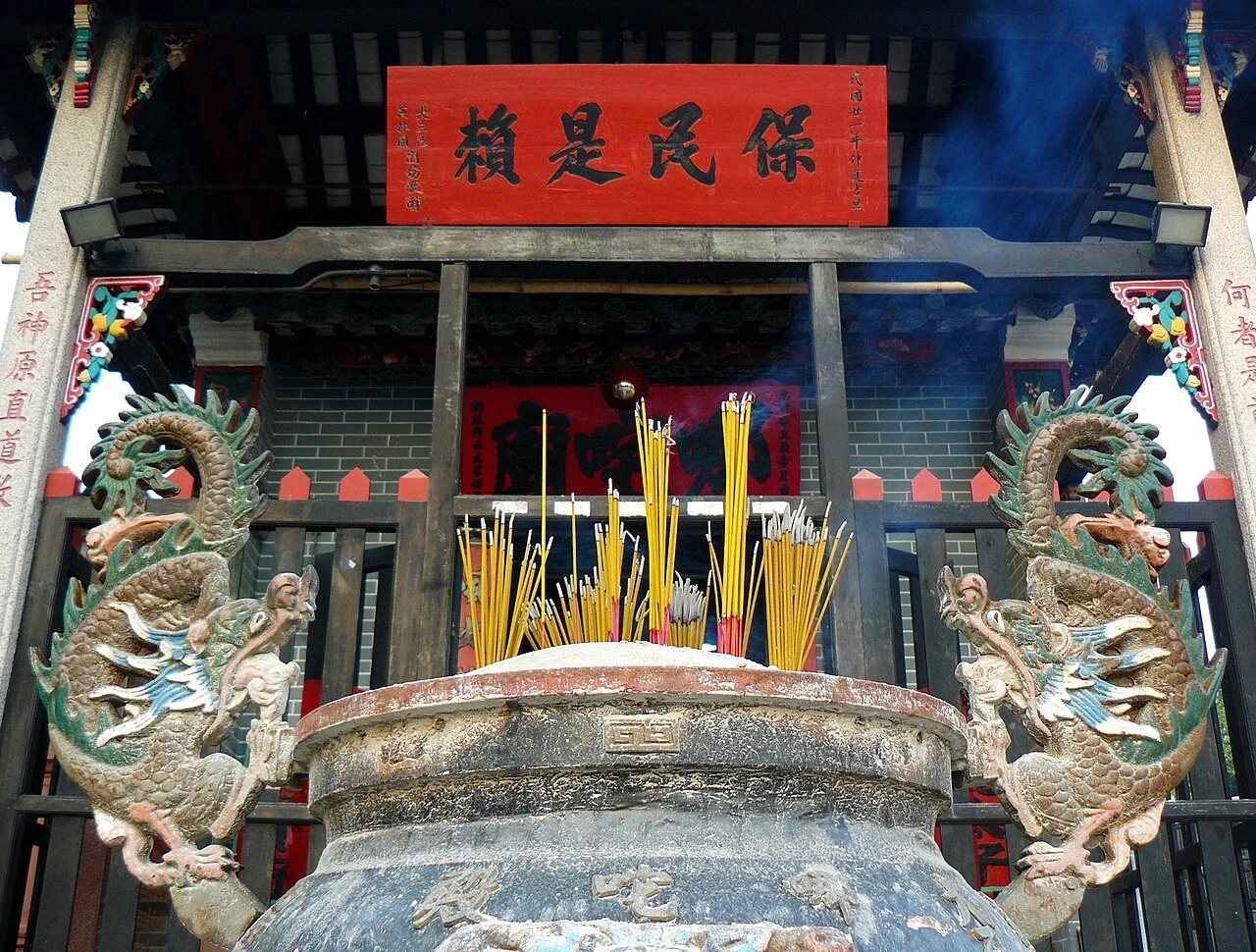
Na Tcha Temple beside the St Paul’s ruins, with its tiled roof and compact entrance.
The old earthen wall beside Na Tcha Temple and the St Paul’s ruins.

A compact interior

The temple is organized as two successive spaces, with no open courtyard between them. That gives the small building a continuous interior sequence: an entrance room leads toward the principal shrine. In a tightly built city block, the plan makes worship possible without a large open forecourt.

The main deity is Na Tcha, the third son of Li Jing, the Pagoda-Bearing Heavenly King. Its modest scale does not diminish its devotional purpose.

A tradition carried forward

Macao’s Na Tcha belief entered China’s national intangible cultural heritage list in 2014. The nearby exhibition opened in 2012 with support from the temple committee and neighborhood residents. Its objects include a Na Tcha seal, divination slips, a procession palanquin, banners, a lion-dance head and figures carried during firecracker celebrations.

The display follows the tradition beyond the temple walls. A palanquin and banners belong to the street procession; divination slips and the seal speak to devotional practice. The objects show how neighborhood belief is carried through both worship and a shared festival calendar.

Continue exploring · Macao ↗
Photo credits and rights
  1. Minghong / CC BY-SA 4.0 · CC BY-SA 4.0 Photo source ↗ Rights information ↗
  2. Na Tcha Temple beside the St Paul’s ruins, with its tiled roof and compact entrance.kewl / CC BY 2.0 · CC BY 2.0 Photo source ↗ Rights information ↗
  3. Na Tcha Temple beside the St Paul’s ruins, with its tiled roof and compact entrance.yeowatzup / CC BY 2.0 · CC BY 2.0 Photo source ↗ Rights information ↗
  4. Na Tcha Temple beside the St Paul’s ruins, with its tiled roof and compact entrance.Diego Delso / CC BY-SA 3.0 · CC BY-SA 3.0 Photo source ↗ Rights information ↗
  5. The old earthen wall beside Na Tcha Temple and the St Paul’s ruins.lienyuan lee / CC BY 3.0 · CC BY 3.0 Photo source ↗ Rights information ↗