From the journal

The Old City Wall: Earth, Memory and a Former Boundary

A surviving rammed-earth wall near St. Paul’s dates to a fortification tradition recorded from 1569 and is now monitored for moisture and weathering.

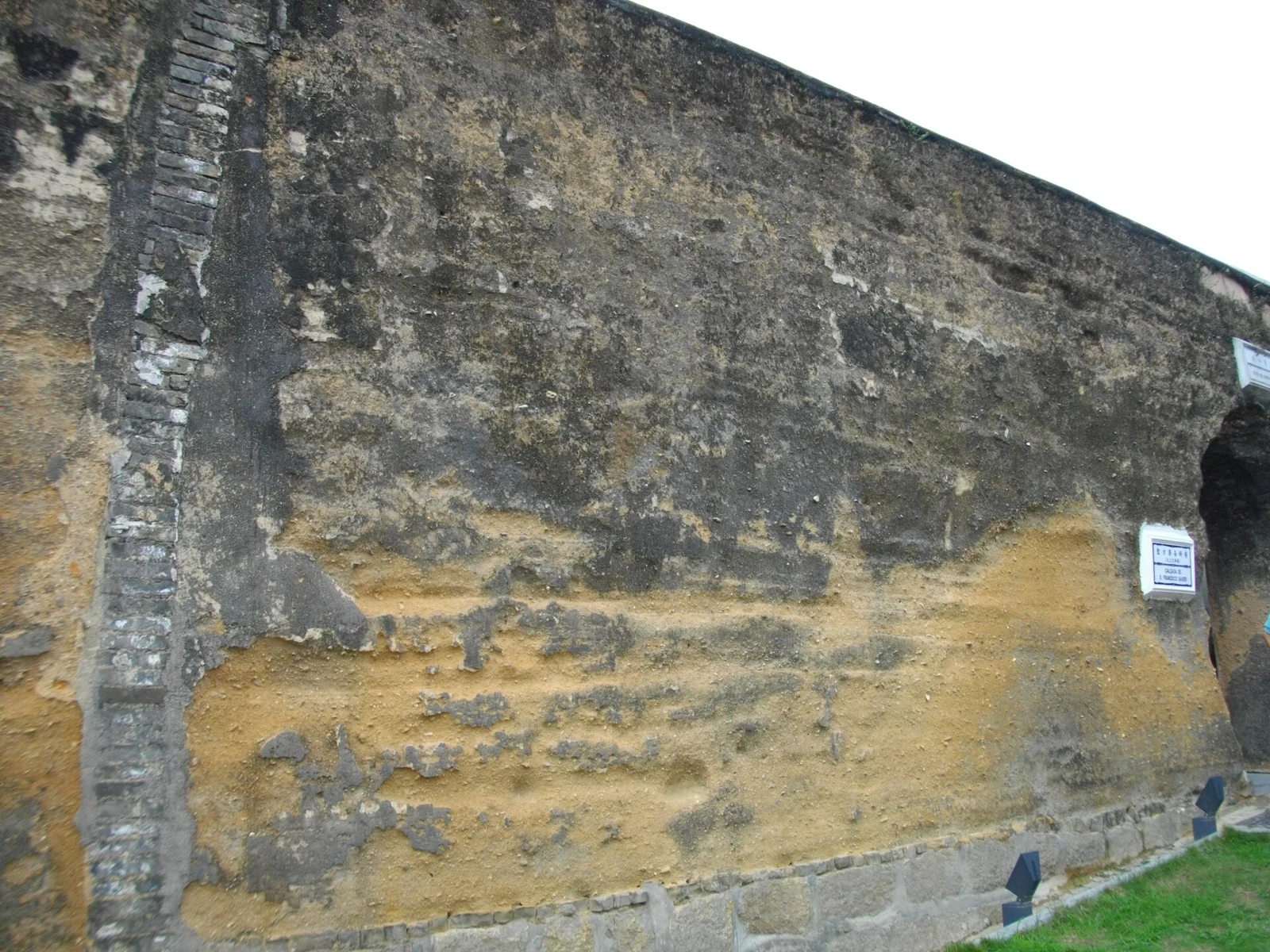
Layers and surface texture in the surviving old city wall.

A boundary reduced to one stretch

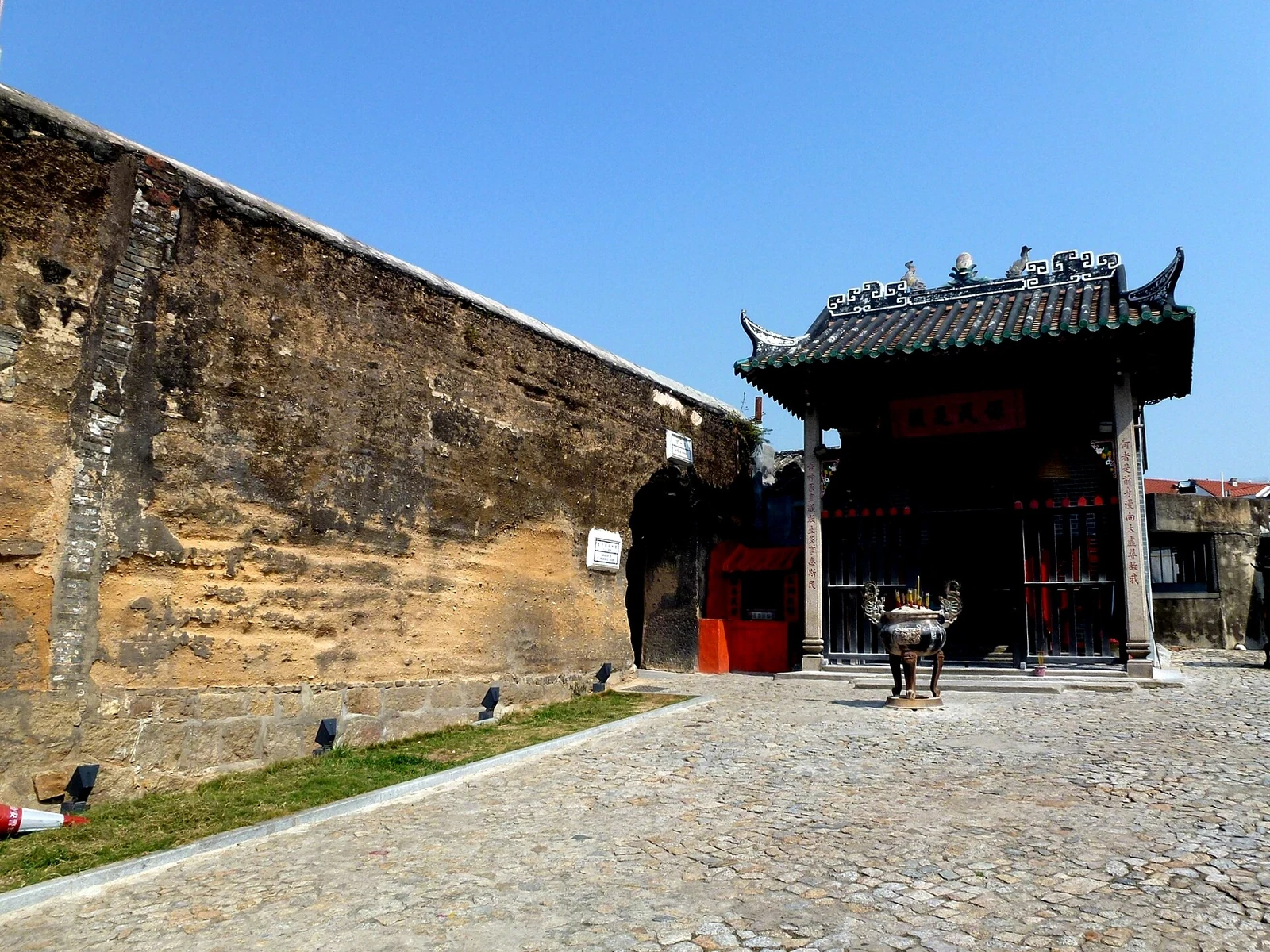
The earliest record of Portuguese wall-building in Macao reaches back to 1569. After repeated dismantling, the northern wall and batteries were rebuilt by 1632. At the time, walls and forts enclosed most of the city except for the western Inner Harbour. The surviving fragment on St. Francis Xavier’s Lane is one piece of that former boundary.

The wall stands to the left of the St. Paul’s church site and near Na Tcha Temple. It measures 18.5 metres long, 5.6 metres high and more than a metre thick, with a small brick-arched opening. Its location among later streets makes the old defensive line easier to imagine.
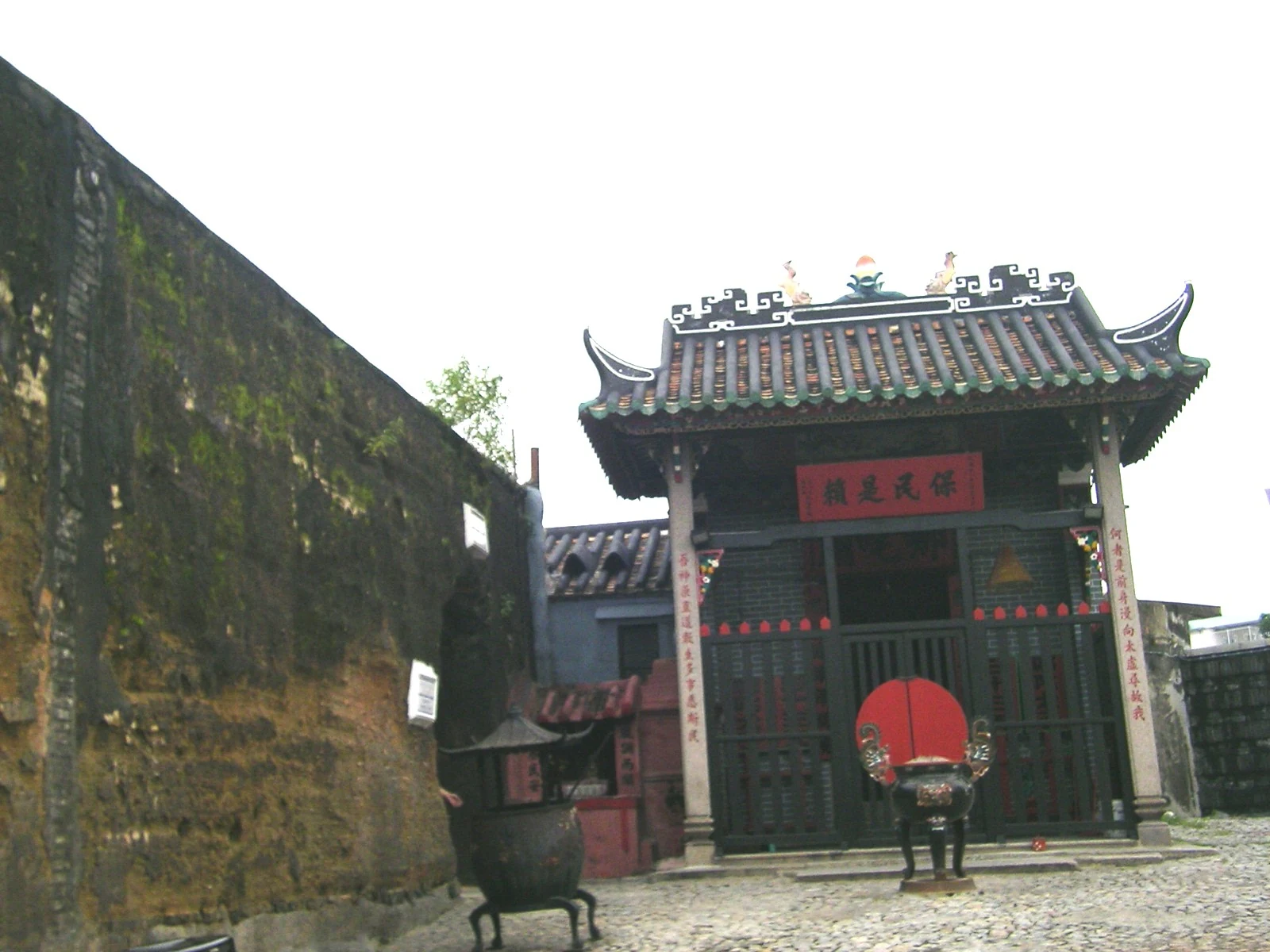
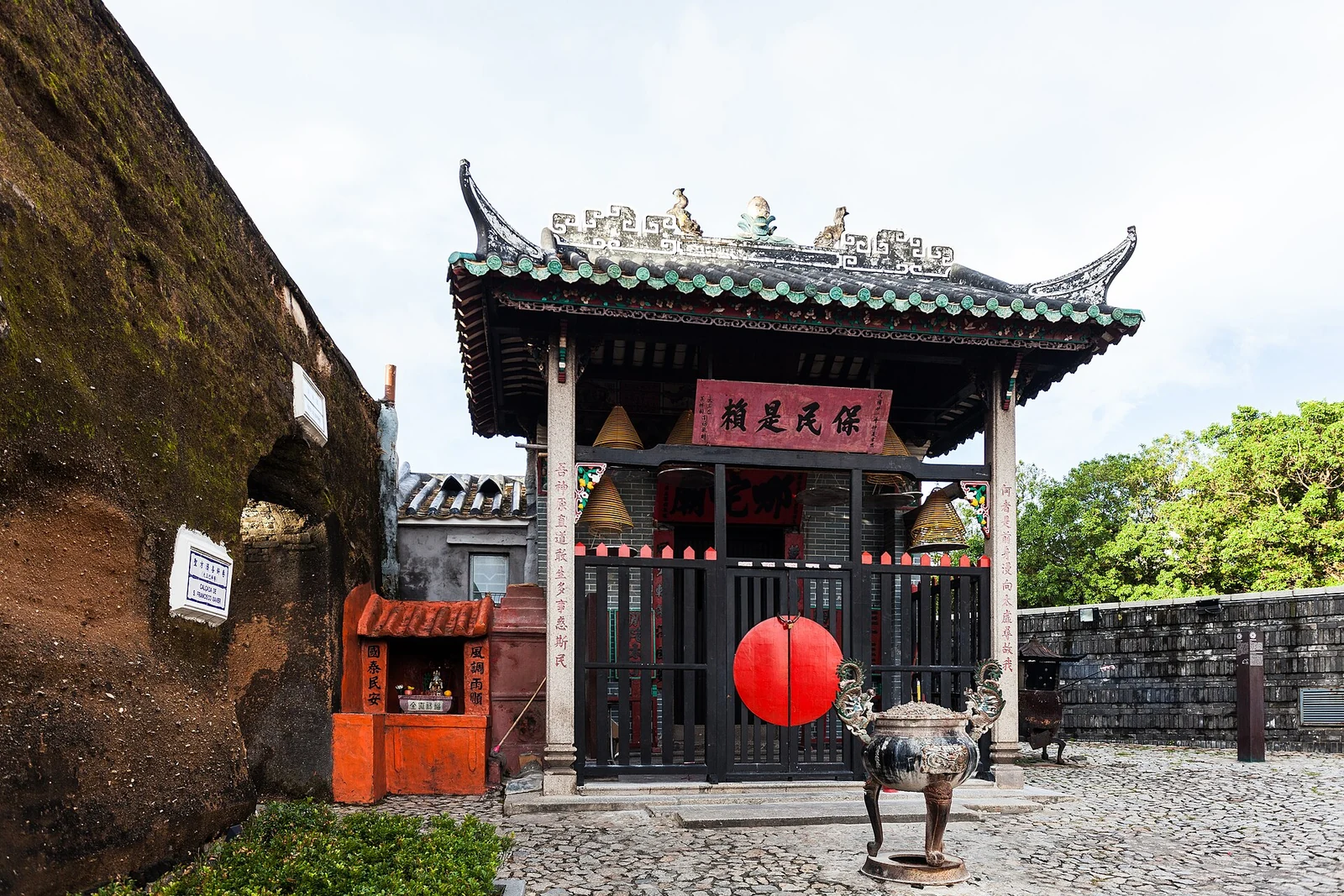
The old earthen wall beside Na Tcha Temple and the St Paul’s ruins.

A wall built in layers

The wall is made of rammed earth, a material formed from layers of earth and sand, small stones, straw and oyster-shell powder pressed together. The technique gives the fragment a different texture from the masonry churches and stone steps nearby. Its surface records how local building materials could be compacted into a durable structure.

The method also helps explain the wall’s vulnerability. Earth construction does not tolerate water as easily as stone, and the cultural-affairs bureau notes damage from humidity, typhoon rain, sunlight and weathering. Plants, cracks, hollow areas and flaking plaster can appear, making regular care necessary.

Keeping an early structure in view

The Cultural Affairs Bureau uses regular inspections and three-dimensional scans to track the condition of Macao’s rammed-earth remains. In 2022, specialists carried out environmental surveys, infrared imaging and laser scanning at this stretch and at two walls behind St. Paul’s, recording their condition and looking for early signs of damage.

Humidity, typhoon rain and long exposure to sunlight can encourage plants, cracks, hollow patches and surface loss. Maintenance begins with careful examination of each wall, because its materials and condition determine the repair approach. The surviving fragment is therefore protected through repeated measurement as well as occasional repair.

Continue exploring · Macao ↗
Photo credits and rights
  1. Abasaa / Public domain · Public domain Photo source ↗ Rights information ↗
  2. The old earthen wall beside Na Tcha Temple and the St Paul’s ruins.No machine-readable author provided. Macanese馬交人 assumed (based on copyright claims). / Public domain · Public domain Photo source ↗ Rights information ↗
  3. The old earthen wall beside Na Tcha Temple and the St Paul’s ruins.Diego Delso / CC BY-SA 3.0 · CC BY-SA 3.0 Photo source ↗ Rights information ↗
  4. The old earthen wall beside Na Tcha Temple and the St Paul’s ruins.Hiroki Ogawa / CC BY 3.0 · CC BY 3.0 Photo source ↗ Rights information ↗