From the journal

The Holy House of Mercy: Caregiving on the Main Square

Founded in 1569, the Holy House of Mercy established hospitals and care institutions in Macao, bringing charitable work to the edge of Senado Square.

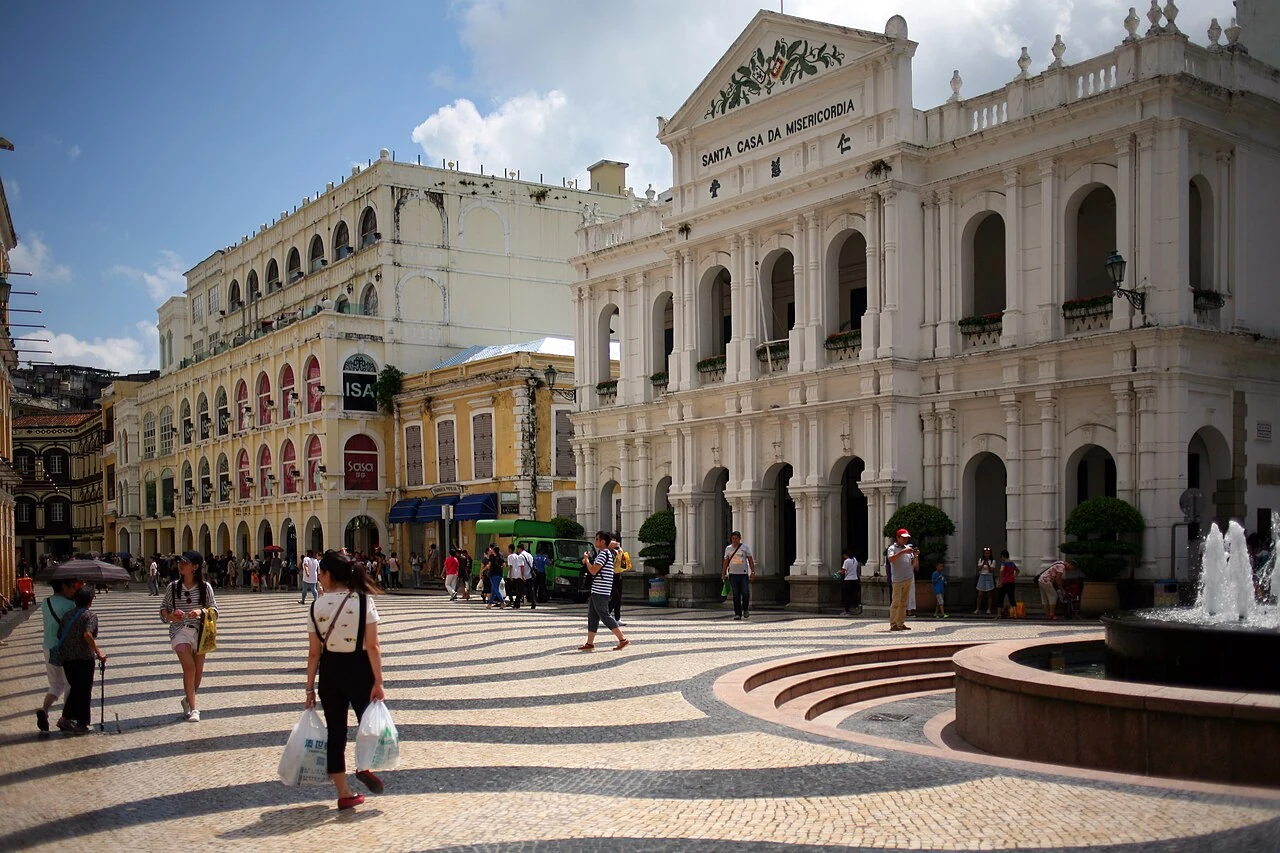
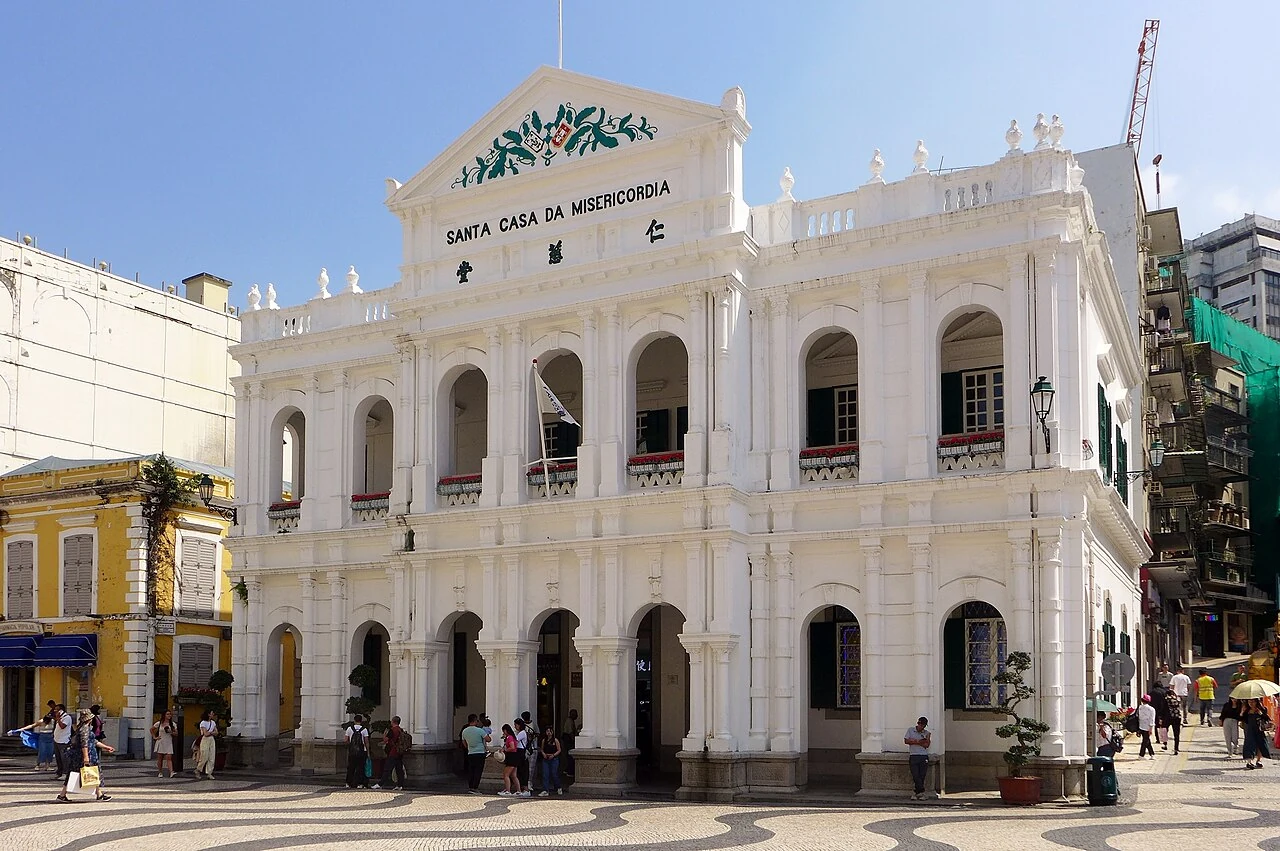
The white arcaded façade of the Holy House of Mercy beside Senado Square.

A charitable institution from 1569

The Holy House of Mercy was founded in 1569 by Macao’s first bishop, D. Belchior Carneiro. Its purpose was charitable relief, reflected in the institutions later operating under its care. “Mercy” describes an organized civic role, not merely a religious dedication.

The organization established the White Horse Street Hospital, described by China’s first Western-style hospital, as well as institutions for foundlings, people with leprosy, older people and orphans. This range shows a charitable body addressing different needs in a growing port city.
A civic presence beside the fountain

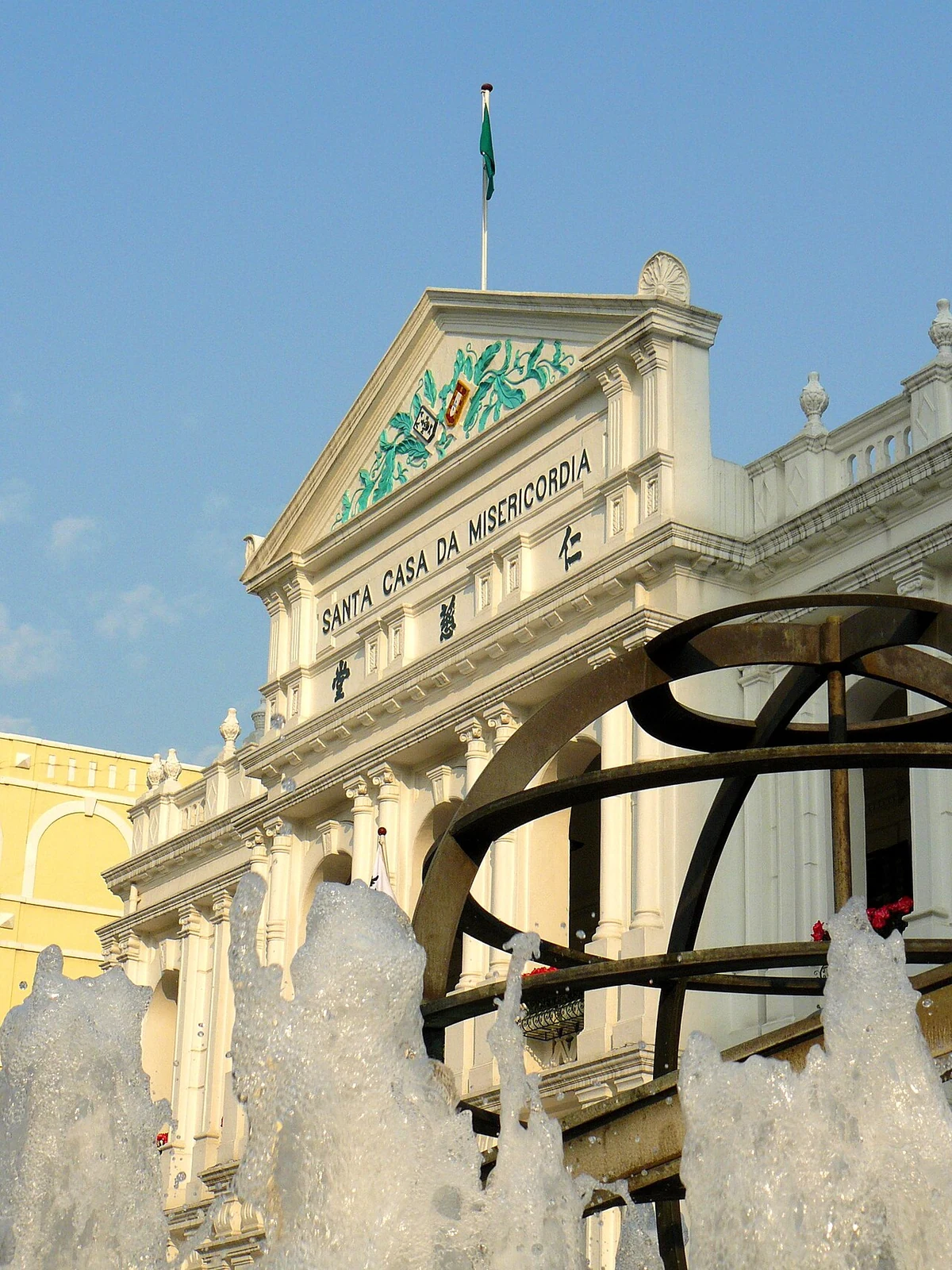
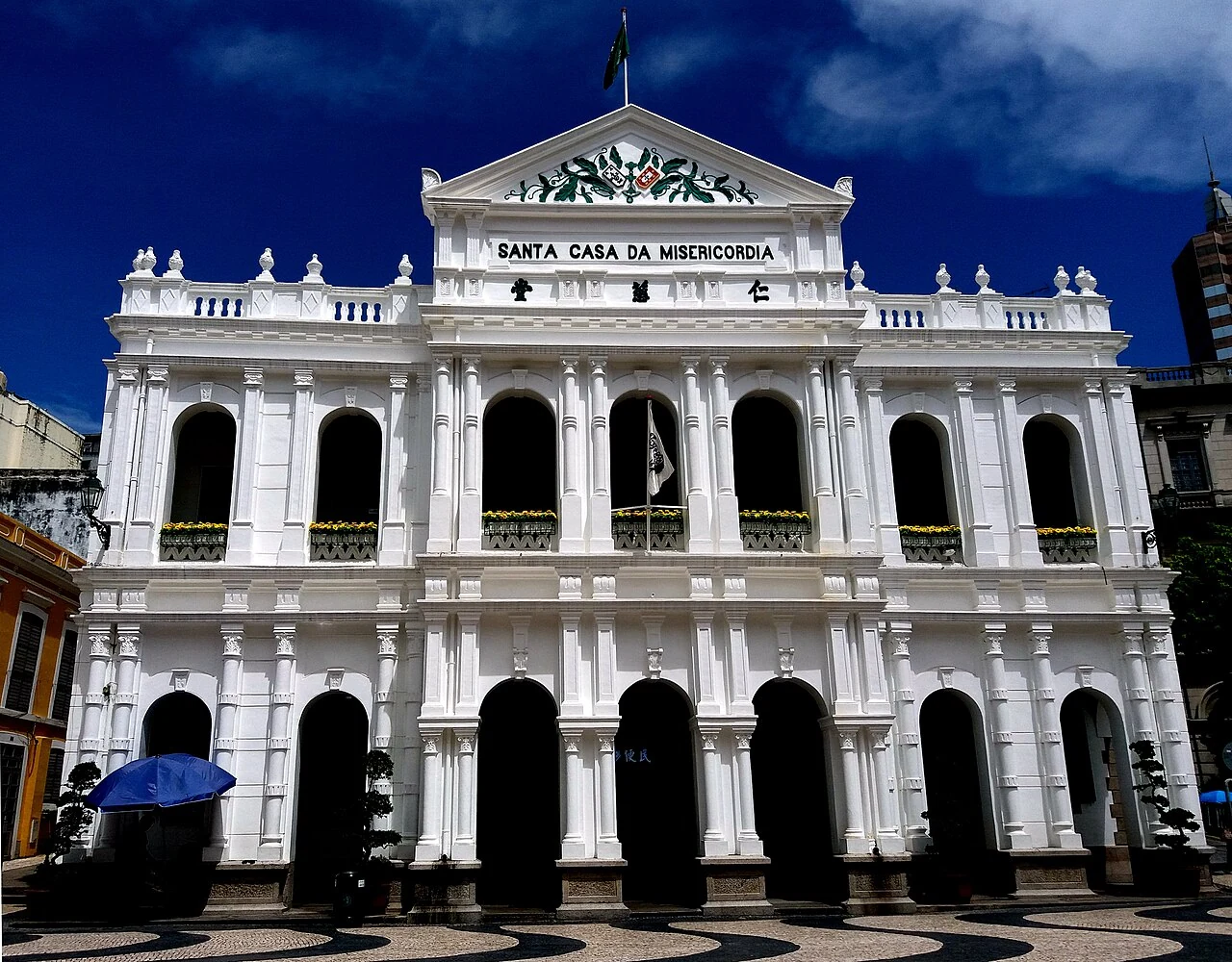
The Holy House of Mercy building was constructed in the mid-eighteenth century and acquired its present form by 1905. Two tiers of arcades gave the brick-and-stone structure a neoclassical appearance. Whitewashed walls rise above granite bases; repeated arches and columns make the façade feel open despite its considerable width.

The organization’s founding date and the building’s appearance belong to different timelines. A charitable institution can outlast the rooms where it first operated. The façade facing Senado Square reflects a later architectural moment, while the institution’s work began in 1569 with hospitals and care for people in need.

The work behind the façade

The Holy House of Mercy was founded in 1569 by Bishop Belchior Carneiro. Its early work included a hospital, identified as China’s first Western-style hospital, and other charitable institutions. The organization cared for people who were ill or in need within the growing port city.

The present building on Senado Square dates from the mid-eighteenth century and took its current form by 1905. Its neoclassical arcades face the public plaza, while the institution’s history reaches back to the first decades of Portuguese administration in Macao.

The white arcaded façade of the Holy House of Mercy beside Senado Square.
Continue exploring · Macao ↗
Photo credits and rights
  1. Bahnfrend / CC BY-SA 4.0 · CC BY-SA 4.0 Photo source ↗ Rights information ↗
  2. The white arcaded façade of the Holy House of Mercy beside Senado Square.yeowatzup / CC BY 2.0 · CC BY 2.0 Photo source ↗ Rights information ↗
  3. The white arcaded façade of the Holy House of Mercy beside Senado Square.Pauloleong2002 / CC BY-SA 4.0 · CC BY-SA 4.0 Photo source ↗ Rights information ↗
  4. The white arcaded façade of the Holy House of Mercy beside Senado Square.Paolobon140 / CC BY-SA 4.0 · CC BY-SA 4.0 Photo source ↗ Rights information ↗