From the journal

Azulejos in Macao’s Streets

Glazed azulejos appear on Macao’s alleys, schools, churches and courtyards, bringing blue, white and yellow colour into everyday architecture.

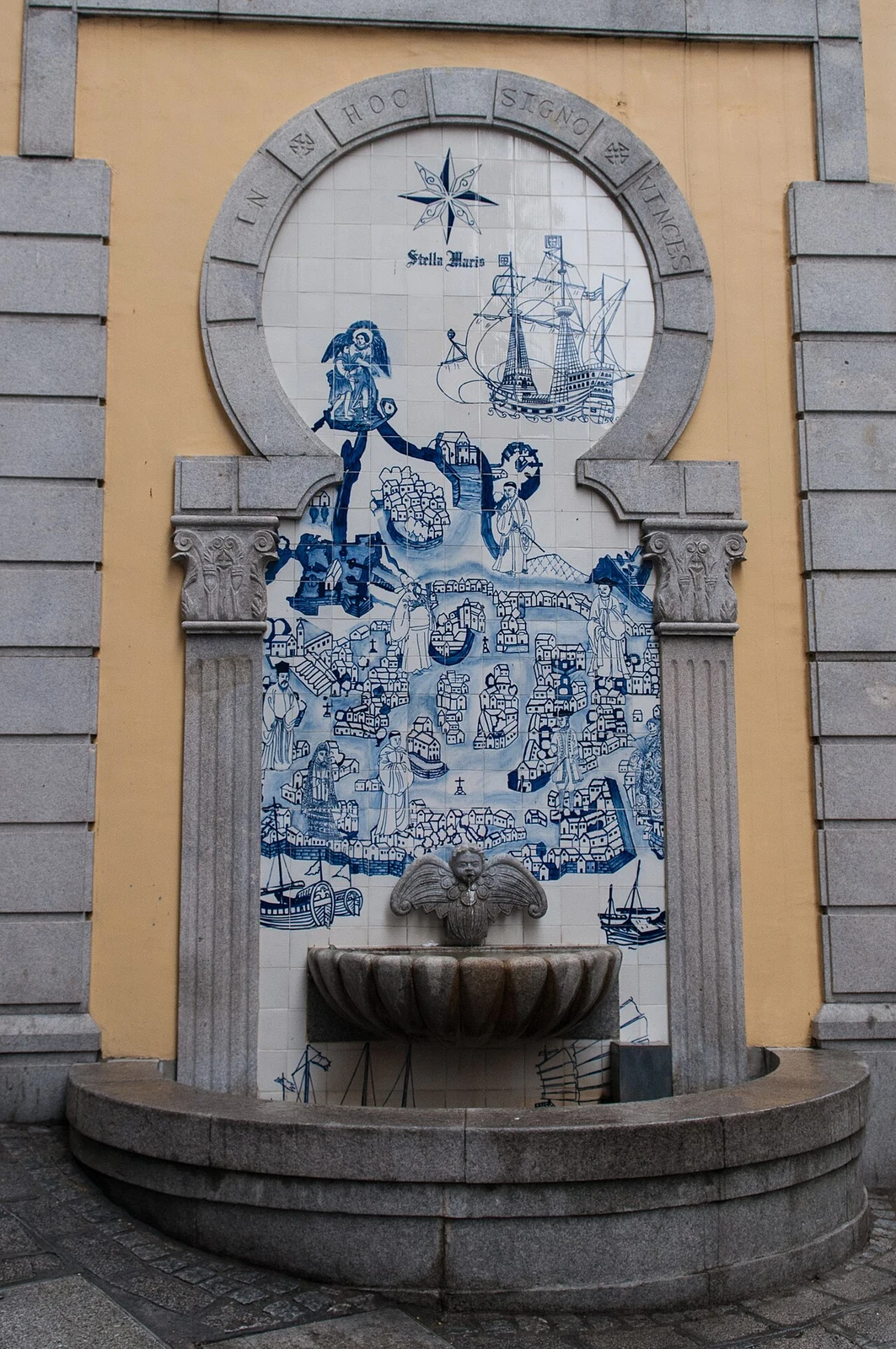
A blue-and-white tile panel on a public fountain in Macao.

Colour Along a Lane

Azulejos are glazed ceramic tiles found across Macao’s everyday architecture. A government feature points to them in alleyways, foundations, schools, churches and courtyards. They are not confined to a grand façade. A tiled wall may greet someone turning into a lane or frame a small garden behind a gate.

Blue and white are familiar, often joined by yellow. The tiles carry images of palm fronds, historical figures and biblical scenes. Their glaze catches light differently from plain plaster, giving a wall depth and colour. The subjects shift from place to place, allowing a school, church or courtyard to express its own setting through the surface.
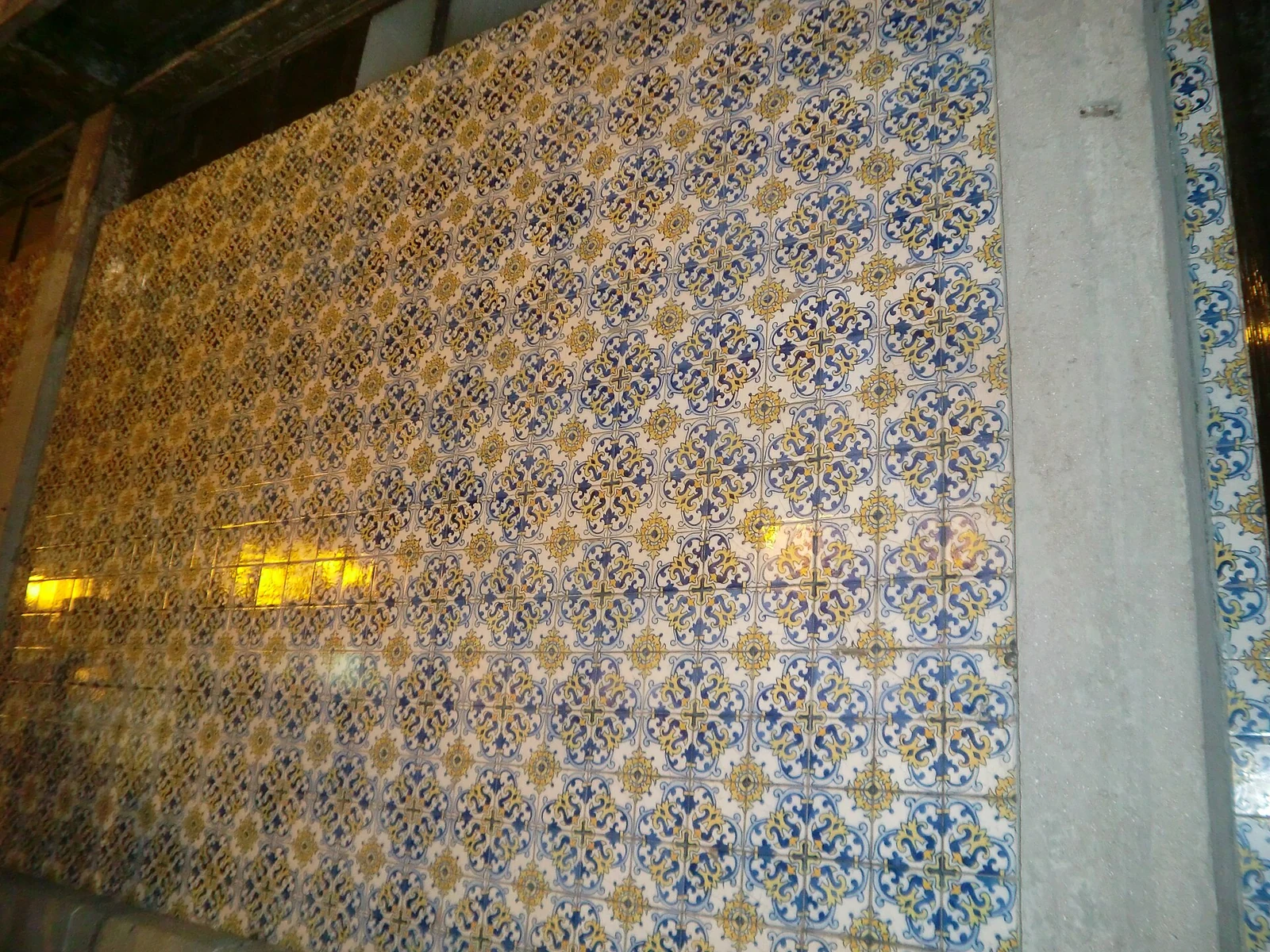
A wall of patterned glazed tiles in Macao.

A Tile Tradition with Long Routes

The Portuguese term azulejo is linked to an Arabic word for polished stone. The government feature traces the tile tradition through Mesopotamia, Spain and Portugal before its arrival in Macao. Portuguese builders introduced azulejos more than four hundred years ago; over time, the tiles became part of the city’s architectural vocabulary.

The history is visible on the walls of streets and buildings across Macao. A technique and decorative language travelled across regions, then settled into local architecture, where glazed colour became part of the city’s everyday visual landscape.

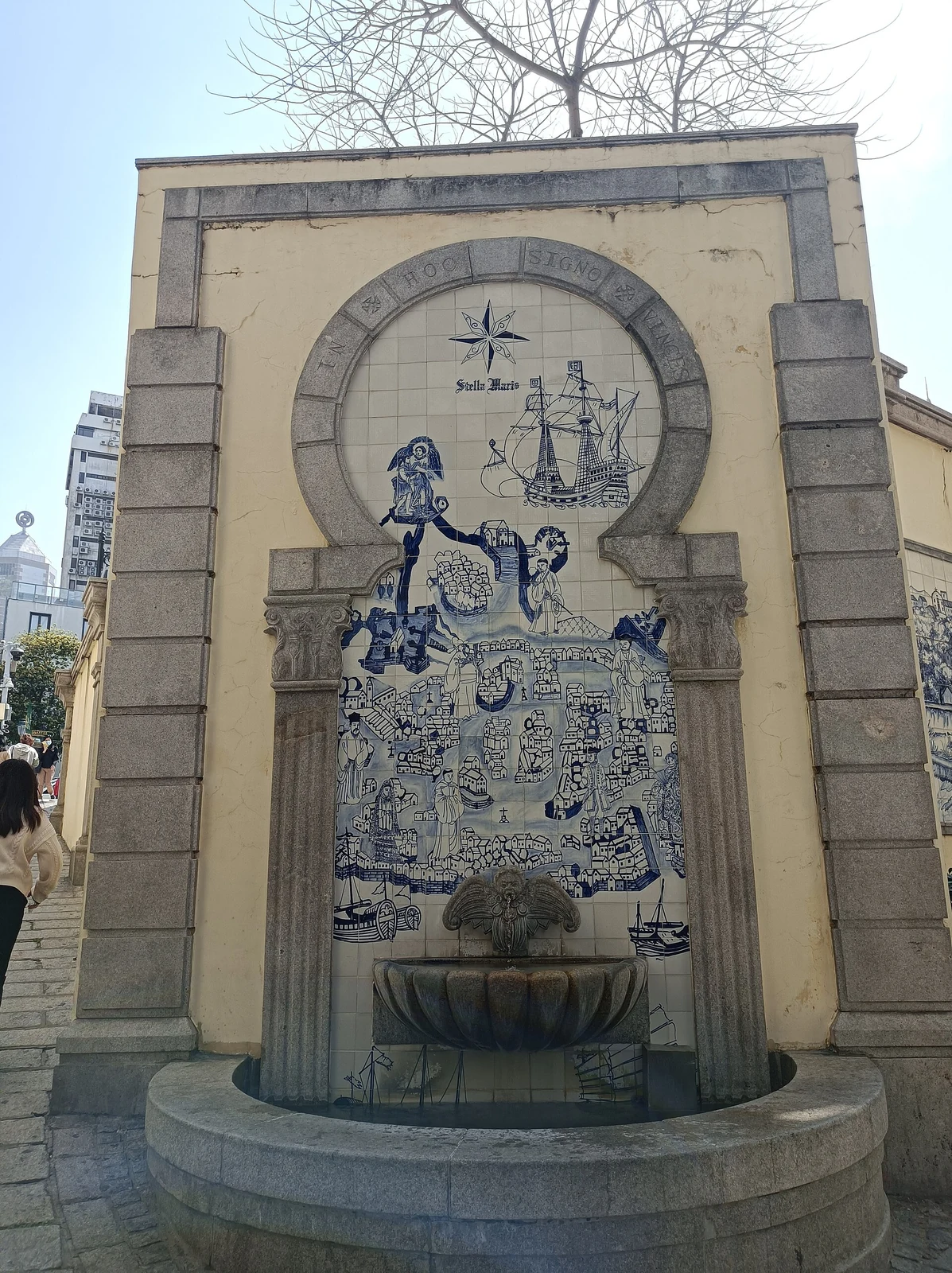
A fountain with a blue-and-white tile panel in Macao.

Painting Tiles Today

The tile tradition continues through workshops and contemporary makers. A government feature documents azulejo-painting classes at Casa de Portugal and artists who have practised for years. Their work keeps the medium in circulation beyond historic buildings, giving new participants a chance to learn how an image is transferred to a glazed surface.

In Macao, the old tiles and new workshops belong to the same ongoing story. One preserves the built trace of a technique; the other carries its making into the present. The city’s walls remain a place to encounter the finished work, while studios and classes keep the process visible to new generations.

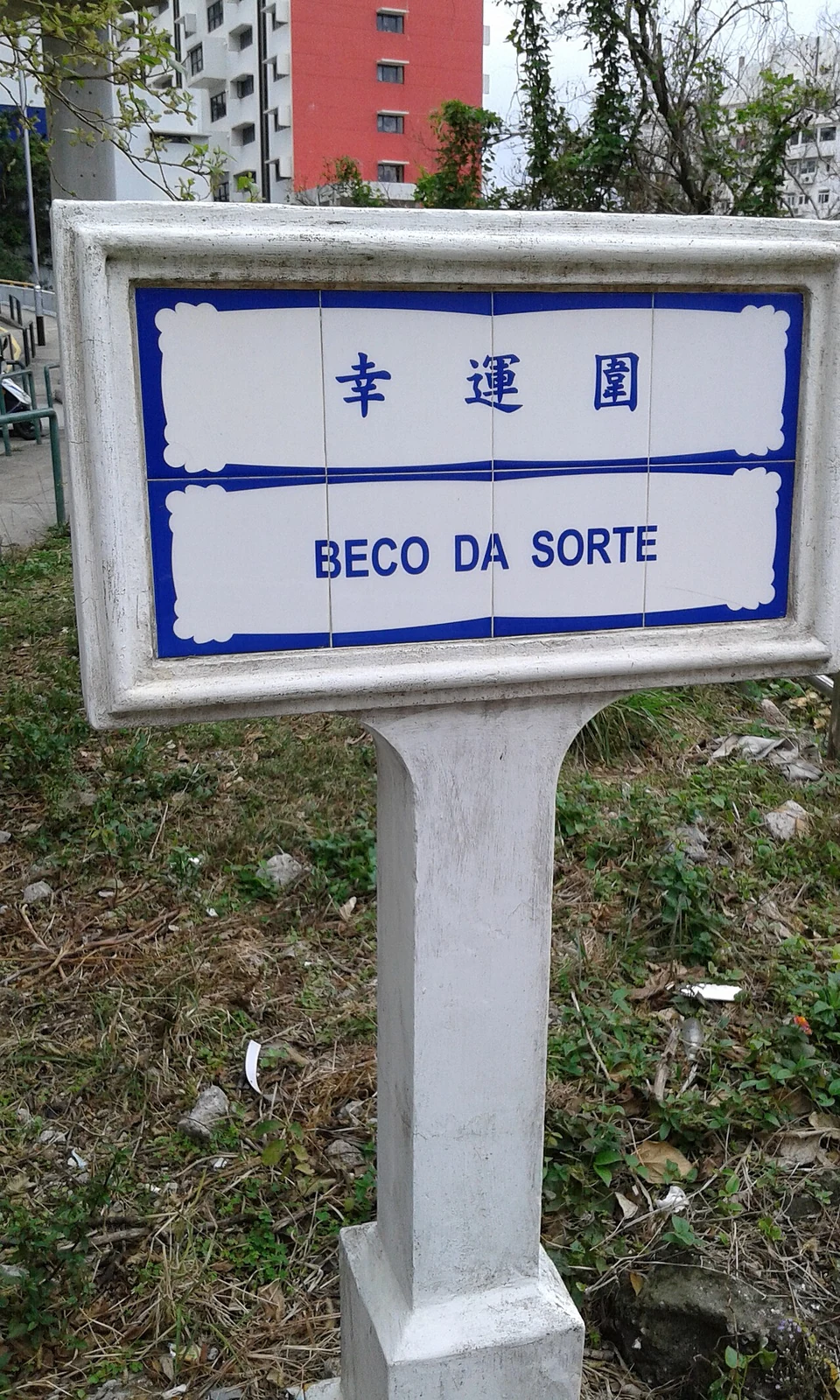
A blue-and-white bilingual street-name plaque in Macao.
Continue exploring · Macao ↗
Photo credits and rights
  1. Michal Osmenda from Brussels, Belgium / CC BY 2.0 · CC BY 2.0 Photo source ↗ Rights information ↗
  2. A wall of patterned glazed tiles in Macao.竹森聖 / CC BY 3.0 · CC BY 3.0 Photo source ↗ Rights information ↗
  3. A fountain with a blue-and-white tile panel in Macao.K.Y.K.Z.K. / CC BY-SA 4.0 · CC BY-SA 4.0 Photo source ↗ Rights information ↗
  4. A blue-and-white bilingual street-name plaque in Macao.Pauloleong2002 / CC BY-SA 4.0 · CC BY-SA 4.0 Photo source ↗ Rights information ↗