From the journal

The Moorish Barracks and Its Arcaded Walkways

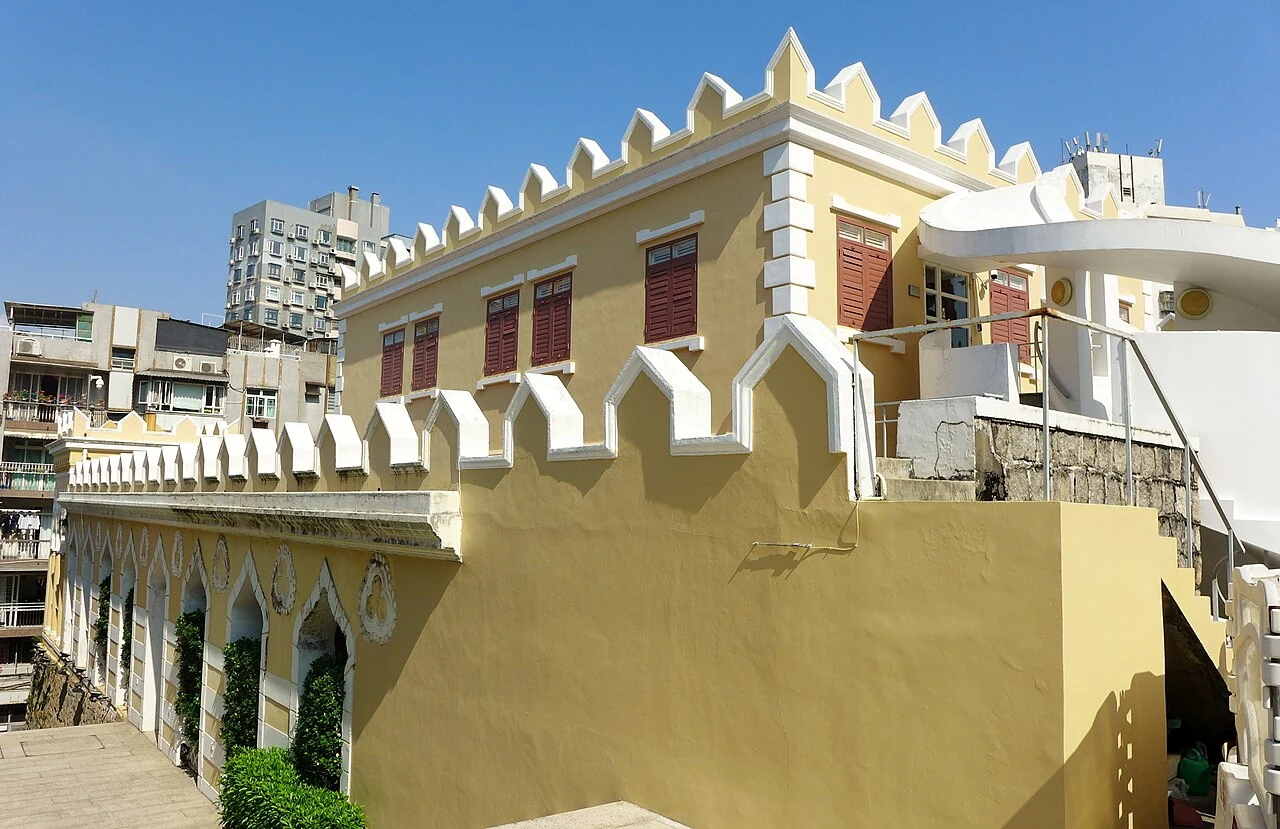
Designed by António Alexandrino de Melo and completed in 1874, the former barracks stands on a slope above the harbour with Arabic and Gothic influences.

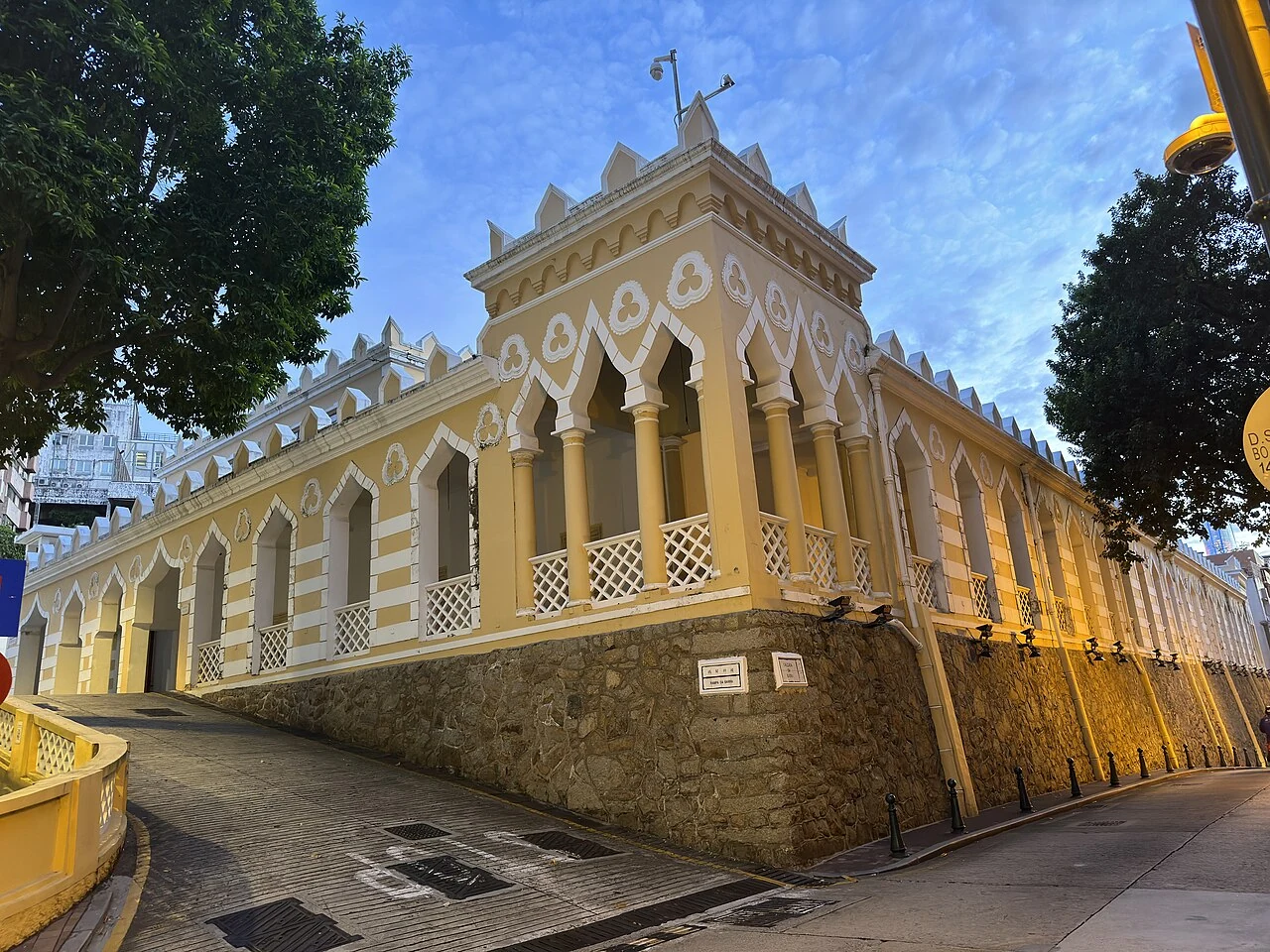
The arched verandas of the former Moorish Barracks, now the Marine and Water Bureau headquarters.

A building shaped by its site

On a rising street above the lower harbor district, the old Moorish Barracks steps into view beside Barra Hill. It is a brick-and-stone building influenced by Arabic and Gothic architecture, set on the slope beside Barra Hill. It is not a freestanding palace on level ground but a large structure fitted to a hillside street.

The building was designed by António Alexandrino de Melo and completed in 1874. It was originally called the Moorish Barracks, or Quartel dos Mouros, and also known as the Water Police Station. Those names point to changing institutional uses, while the masonry gives it a recognizable identity.
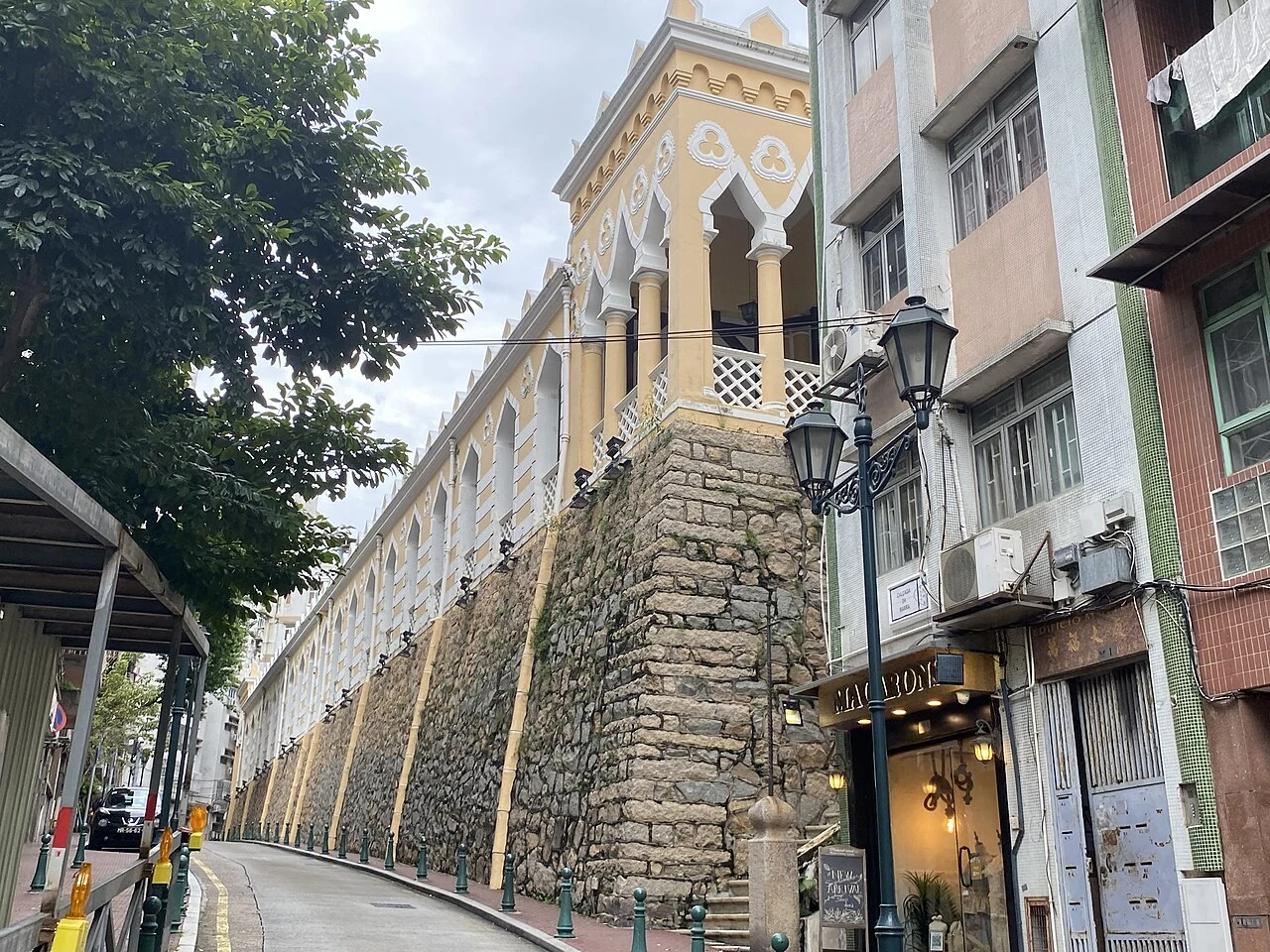
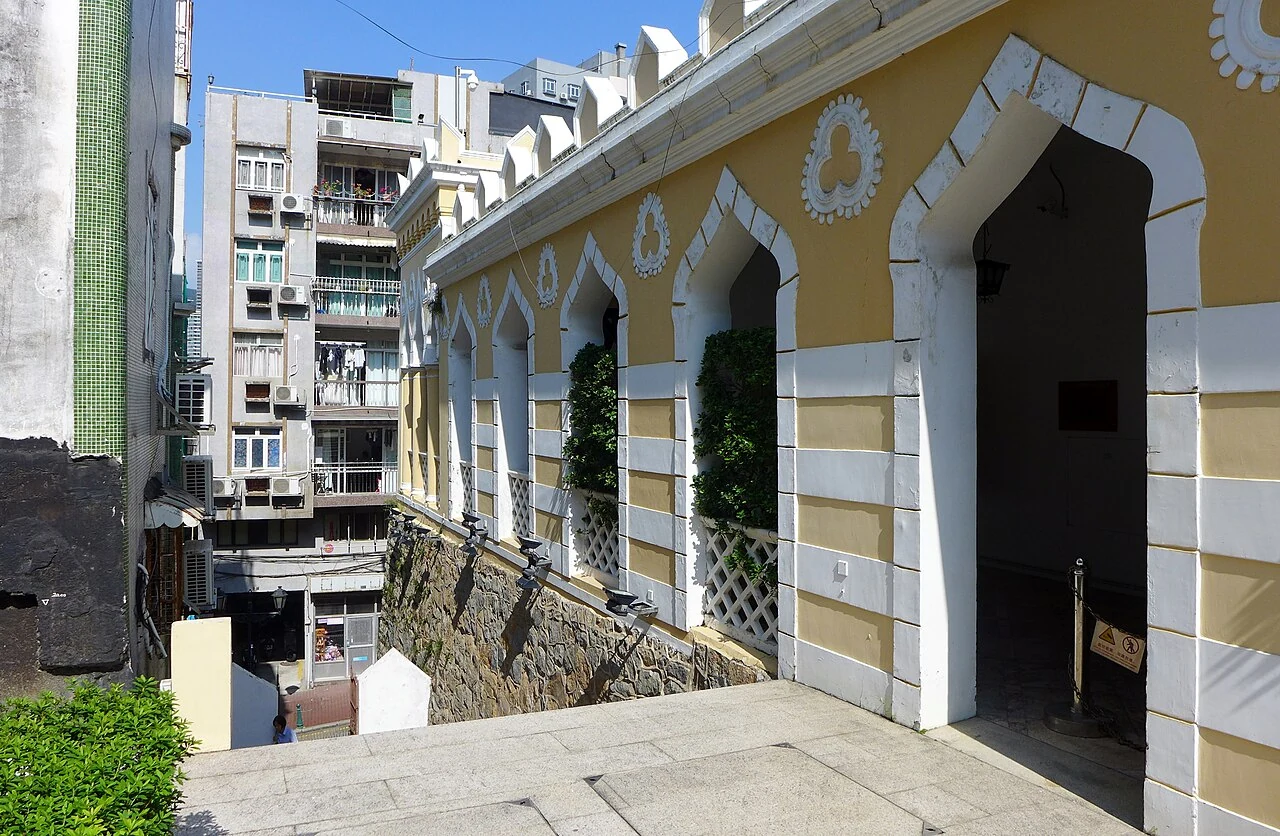
The arched verandas of the former Moorish Barracks, now the Marine and Water Bureau headquarters.

A vocabulary of arches

The exterior is built in brick and stone, with forms the heritage authority identifies as Arabic and Gothic influences. Pointed arches and repeated openings break the façade into a rhythm. Its character emerges through returning arches and the contrast between solid wall and open passage.

The name “Moorish” belongs to the building’s historical label, while its design is more specific: a nineteenth-century Macao structure shaped by an architect familiar with multiple architectural languages. Its arches sit within a local hillside setting and a civic history tied to the port.

From barracks to maritime administration

The old barracks later became associated with maritime administration, linking the building to governance of Macao’s waters and harbor. Its institutional history is visible in its name changes, even as the exterior preserves its nineteenth-century design.

Today the site is used by the Maritime and Water Bureau. From the sloping street, several kinds of history meet: the military name, the later maritime function and a building whose Arabic and Gothic references were adapted to a particular place. Its architecture is part of the city’s working history.

Continue exploring · Macao ↗
Photo credits and rights
  1. LN9267 / CC BY-SA 4.0 · CC BY-SA 4.0 Photo source ↗ Rights information ↗
  2. The arched verandas of the former Moorish Barracks, now the Marine and Water Bureau headquarters.LN9267 / CC BY-SA 4.0 · CC BY-SA 4.0 Photo source ↗ Rights information ↗
  3. The arched verandas of the former Moorish Barracks, now the Marine and Water Bureau headquarters.Bahnfrend / CC BY-SA 4.0 · CC BY-SA 4.0 Photo source ↗ Rights information ↗
  4. The arched verandas of the former Moorish Barracks, now the Marine and Water Bureau headquarters.Bahnfrend / CC BY-SA 4.0 · CC BY-SA 4.0 Photo source ↗ Rights information ↗