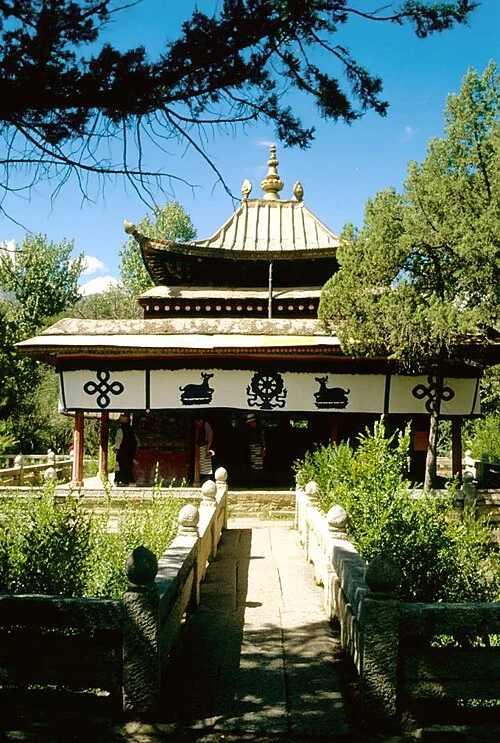
Trees and garden walls change the way a palace is encountered. At Norbulingka, the eye does not have to climb the steep architectural mass associated with the Potala. It moves across planted ground and among buildings set within it. A pavilion can be partly concealed by foliage; a path or a stretch of water becomes part of the approach.
Norbulingka developed as a summer residence for the Dalai Lamas on Lhasa’s western side. Its history therefore includes both seasonal change and the movement of institutions. The garden was not simply somewhere to escape official life: residence, ceremony and administrative work could move there together.