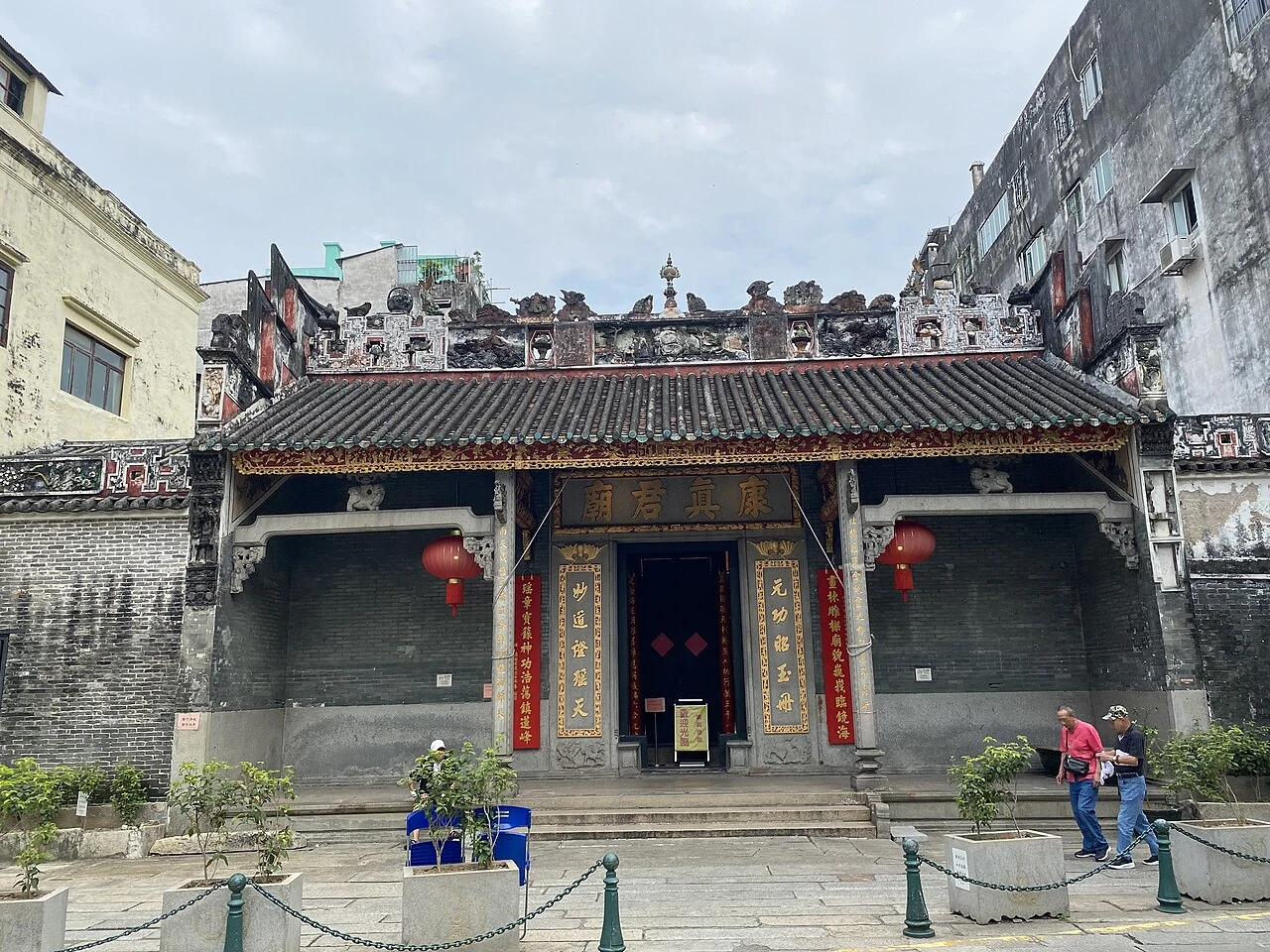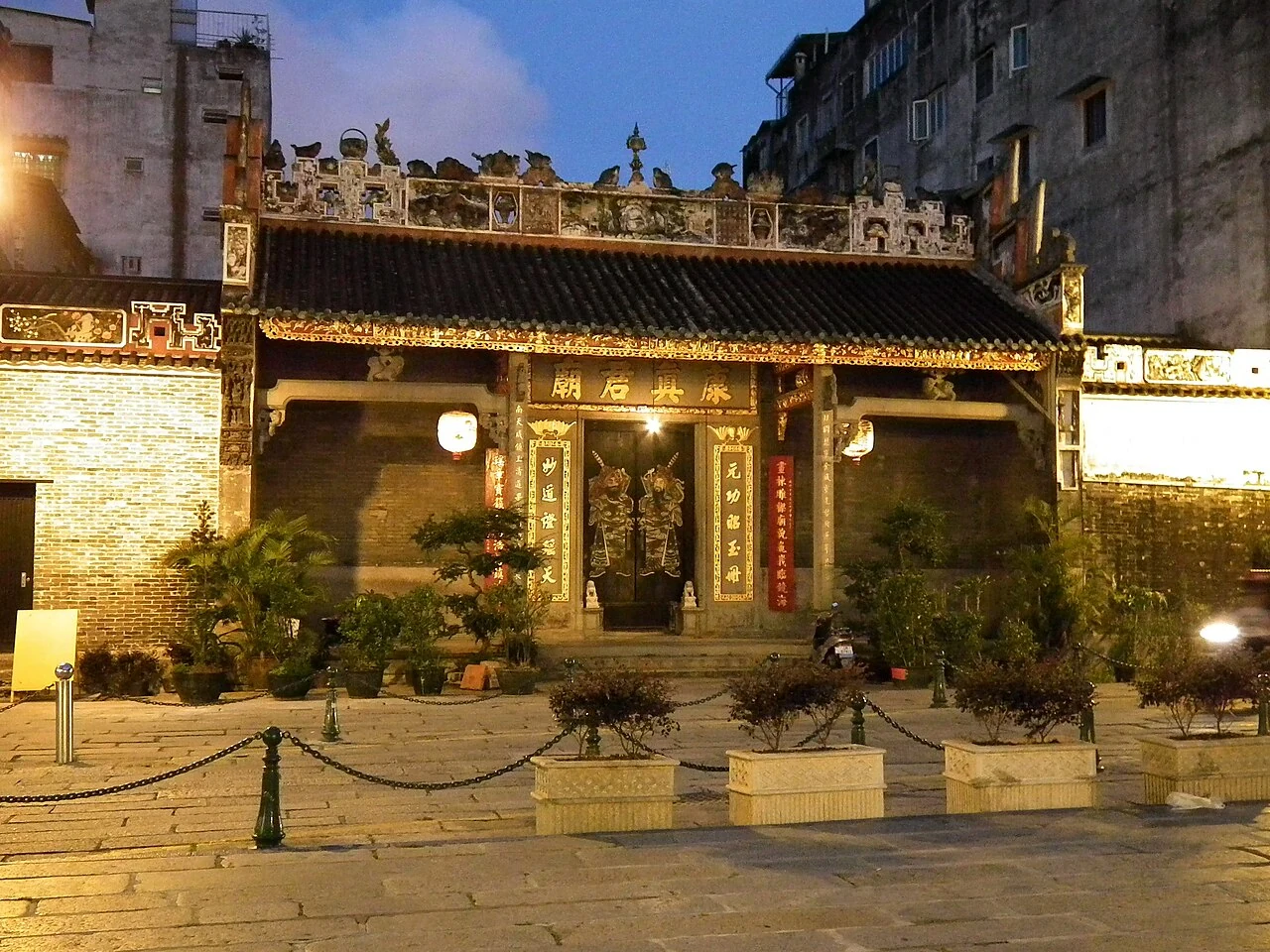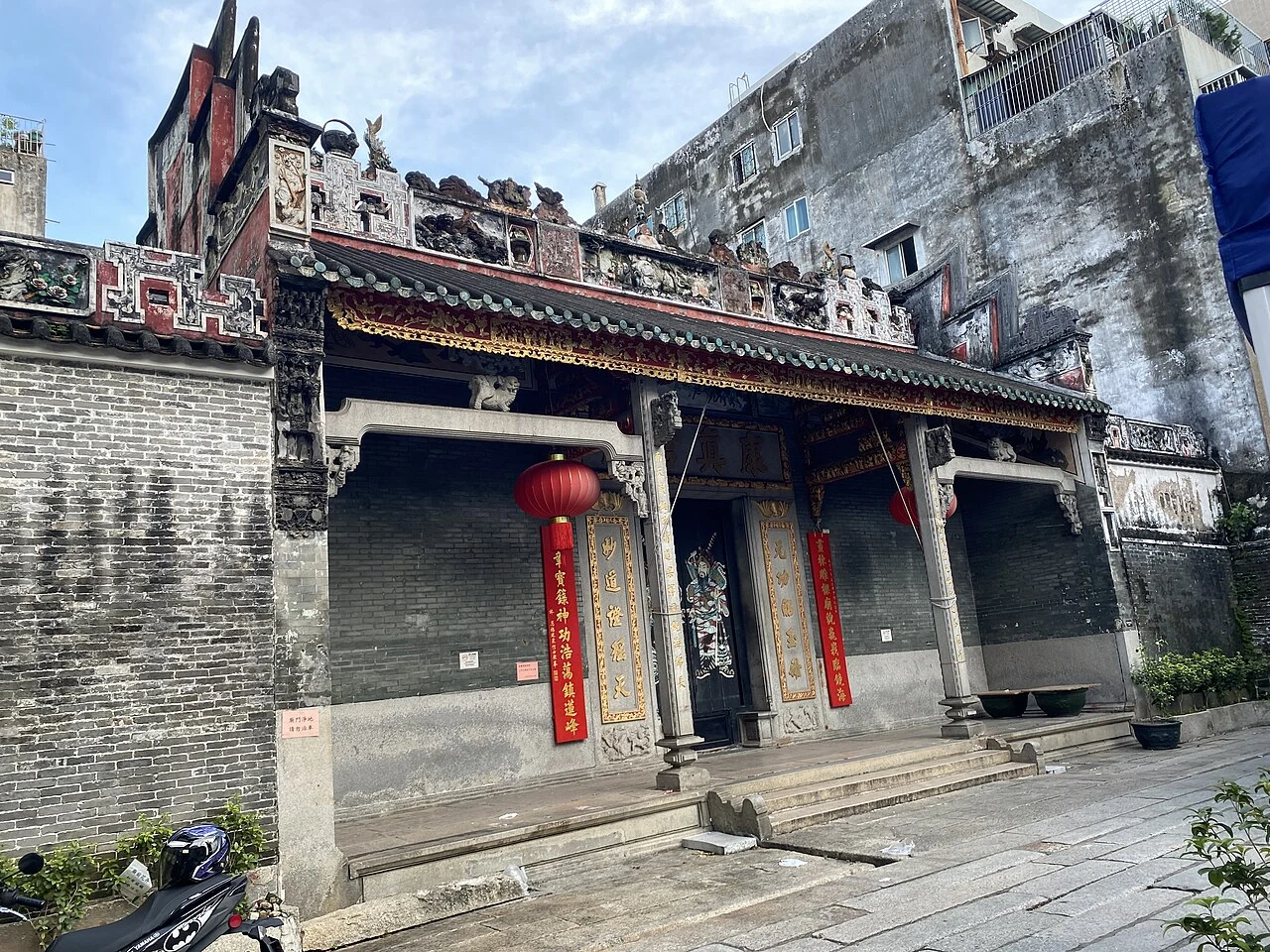
A Cultural Affairs Bureau study of Macao’s temples places Hong Kung Temple at the western end of Rua da Palha, on an open plot that had served as a market. This location puts the temple inside the peninsula’s older Chinese commercial quarter, where religious buildings, market activity and narrow streets were close companions. The study also distinguishes this Patane temple from another Hong Kung Temple in Mong Ha, preventing a common confusion of similarly named sites.
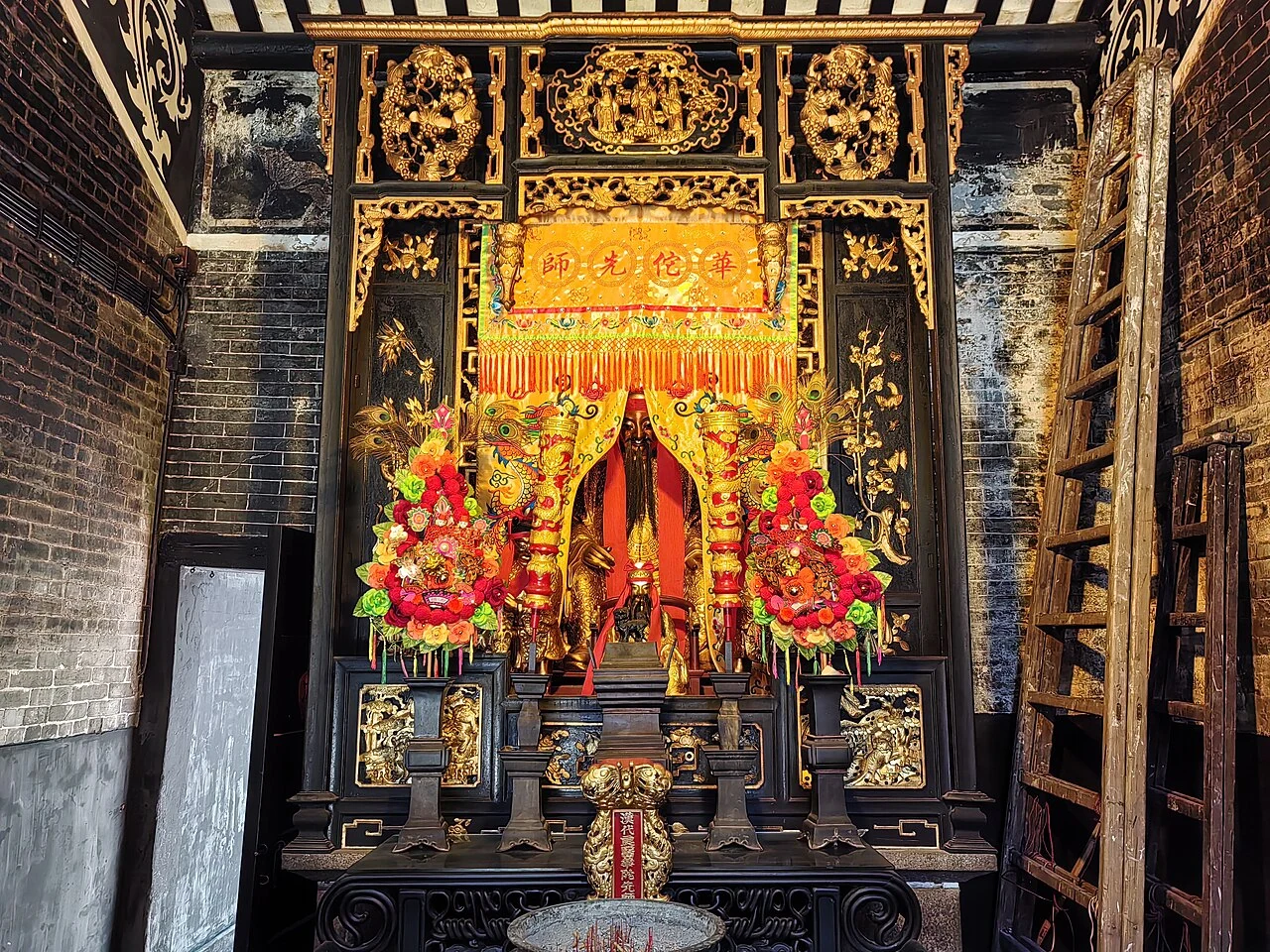
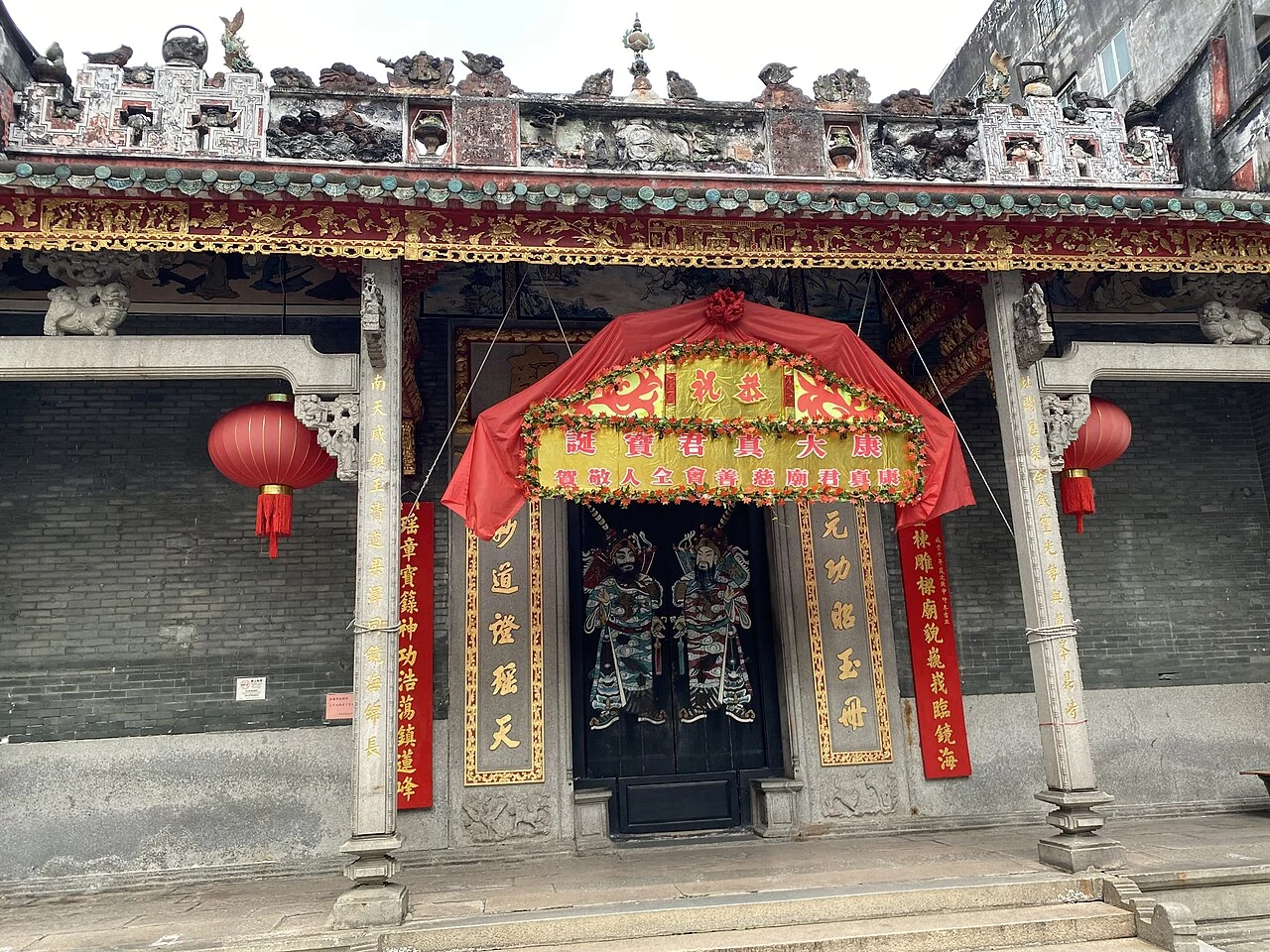
The building is described as a modest temple with a front hall and a main hall. Its plan is direct: a visitor passes inward from the street-facing entrance toward the principal altar. That arrangement gives the small structure a clear centre without separating it from the block around it.