From the journal

Tibetan Opera: A Mask within a Larger Performance

Masks are one part of a theatrical form that joins a narrator, enacted drama, singing, dance and an audience gathered around a shared space.

In the same city · Lhasa ↗

The mask is only one performer’s tool

A mask can make Tibetan opera immediately recognisable. Its strong shape and colour remain legible at a distance, giving the actor a face different from everyday appearance. Yet the performance depends just as much on voices and movement: folk song, narration, chant and dance belong to the same theatrical form.

UNESCO’s description places a single narrator at the heart of the drama, with actors enacting the story and groups supporting it through song and movement. The mask is therefore encountered in relation to an unfolding account. It gives visible form to a part whose meaning also develops through sound and action.
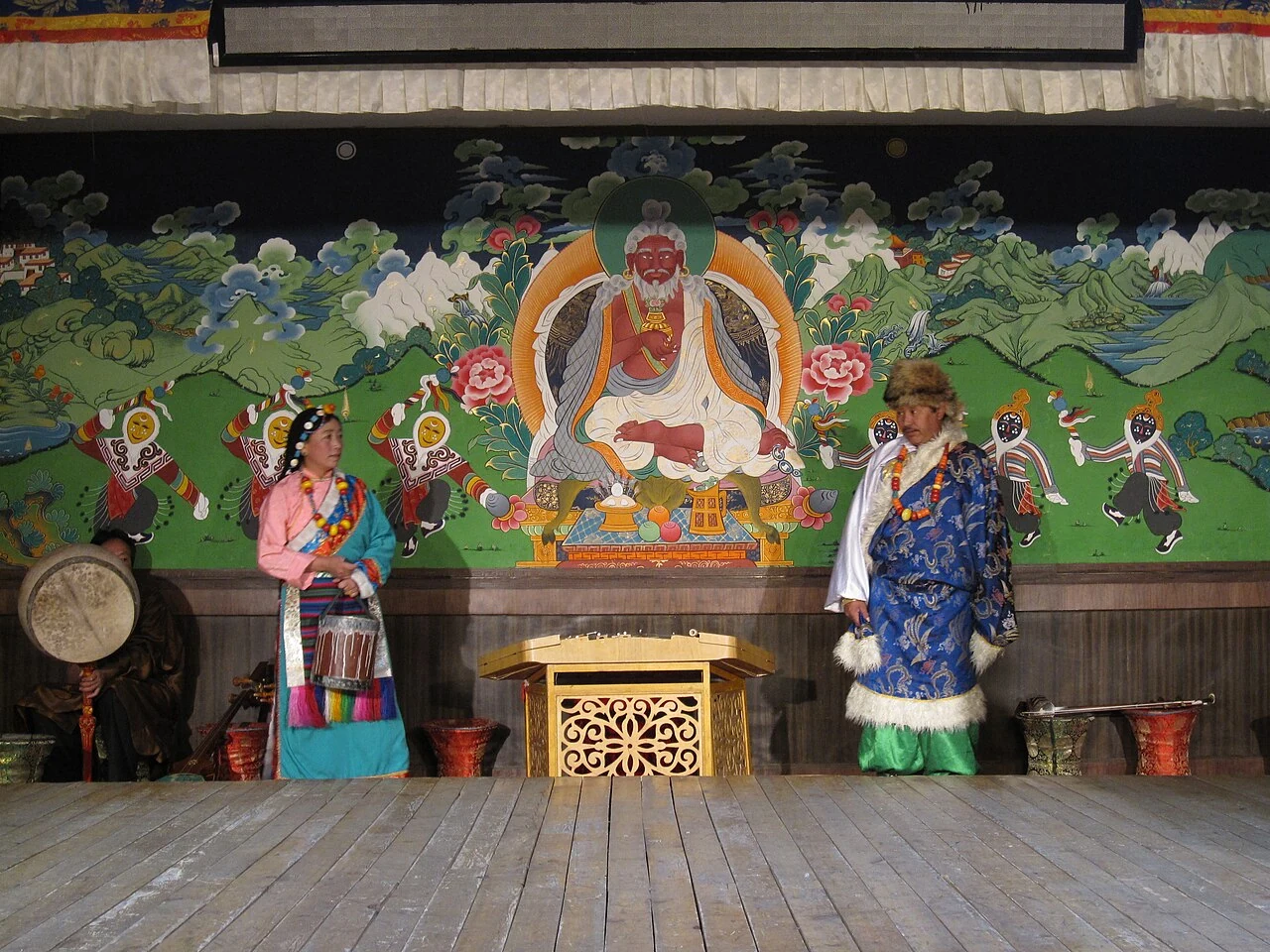
A theatre can begin with open ground

Performances have taken place in public squares and temples as well as on modern stages. The arrangement described by UNESCO marks the centre with a tree wrapped in coloured paper and places water and theatrical objects around it. A space is prepared and made recognisable as a setting for performance.

This form of theatre brings audience and performers into a relationship with a shared piece of ground. Opening and closing blessings frame the drama. The intervening story has its own characters and events, while the surrounding actions give the gathering a larger ceremonial structure.

Another view of the performers and their costumes.
Masks and dress are read within the changing action of a performance.

Narrative carries a social purpose

Stories rooted in Buddhist teachings recount moral choices, the success of good and the consequences of wrongdoing. Entertainment and instruction are closely related. A dramatic character can embody a difficult decision, while narration guides an audience through events that singing and gesture make memorable.

Lhasa’s Shoton season gives opera another setting, with performances linked to summer gatherings in the city. A brightly coloured mask may be the first detail a photograph captures, but the full art belongs to a duration of listening and watching. Costume, voice, prepared ground and a gathered audience all help bring the story into being.

Continue exploring · Tibetan Opera ↗
Photo credits and rights
  1. Masks and dress are read within the changing action of a performance.Bernt Rostad from Oslo, Norway · CC BY 2.0 Photo source ↗ Rights information ↗