From the journal

The Protestant Cemetery: Morrison Chapel and Early Visitors

Opened in 1821 and closed in 1857, the Protestant Cemetery preserves a distinct burial ground beside White Dove Square and its public park.

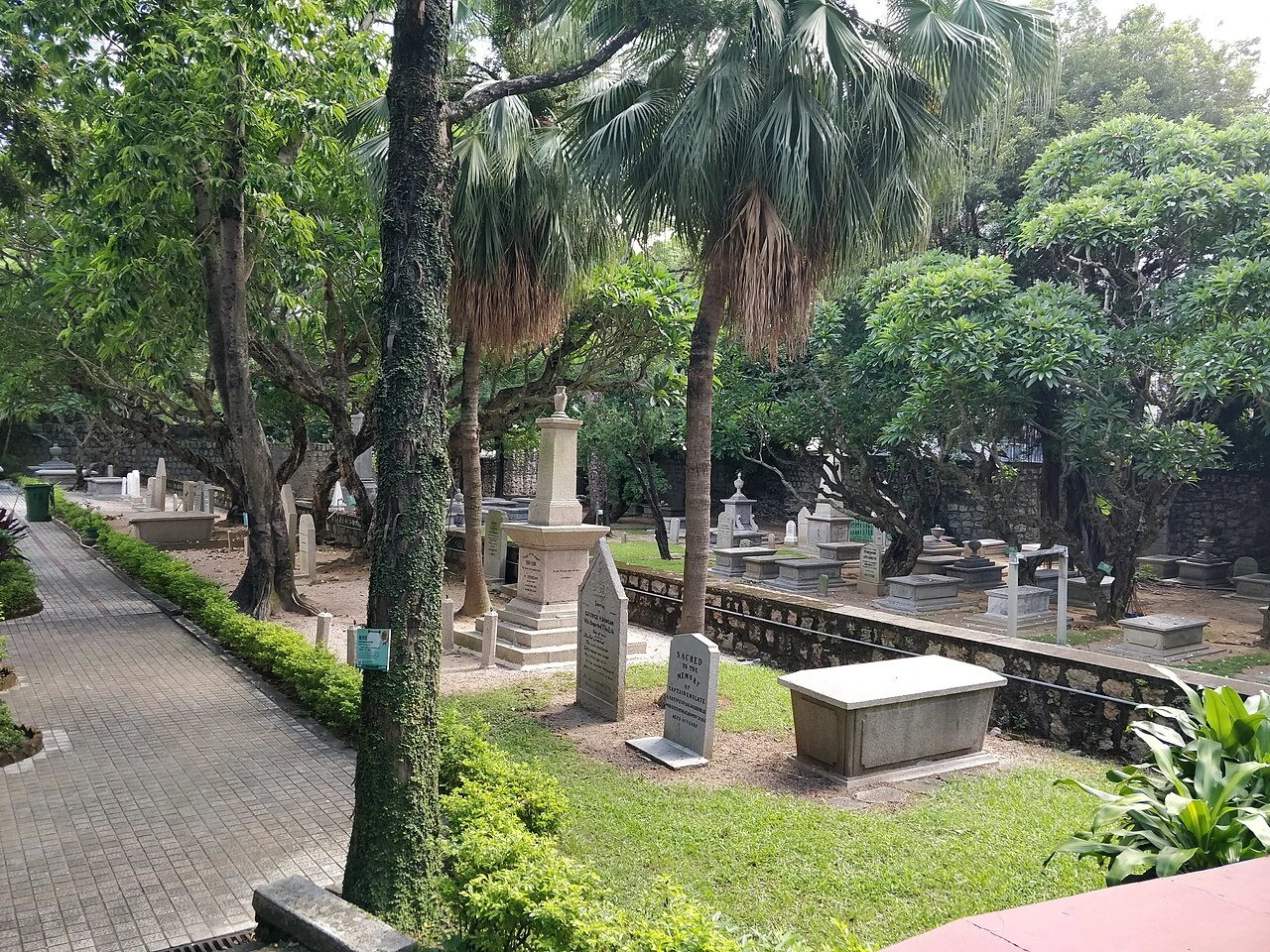
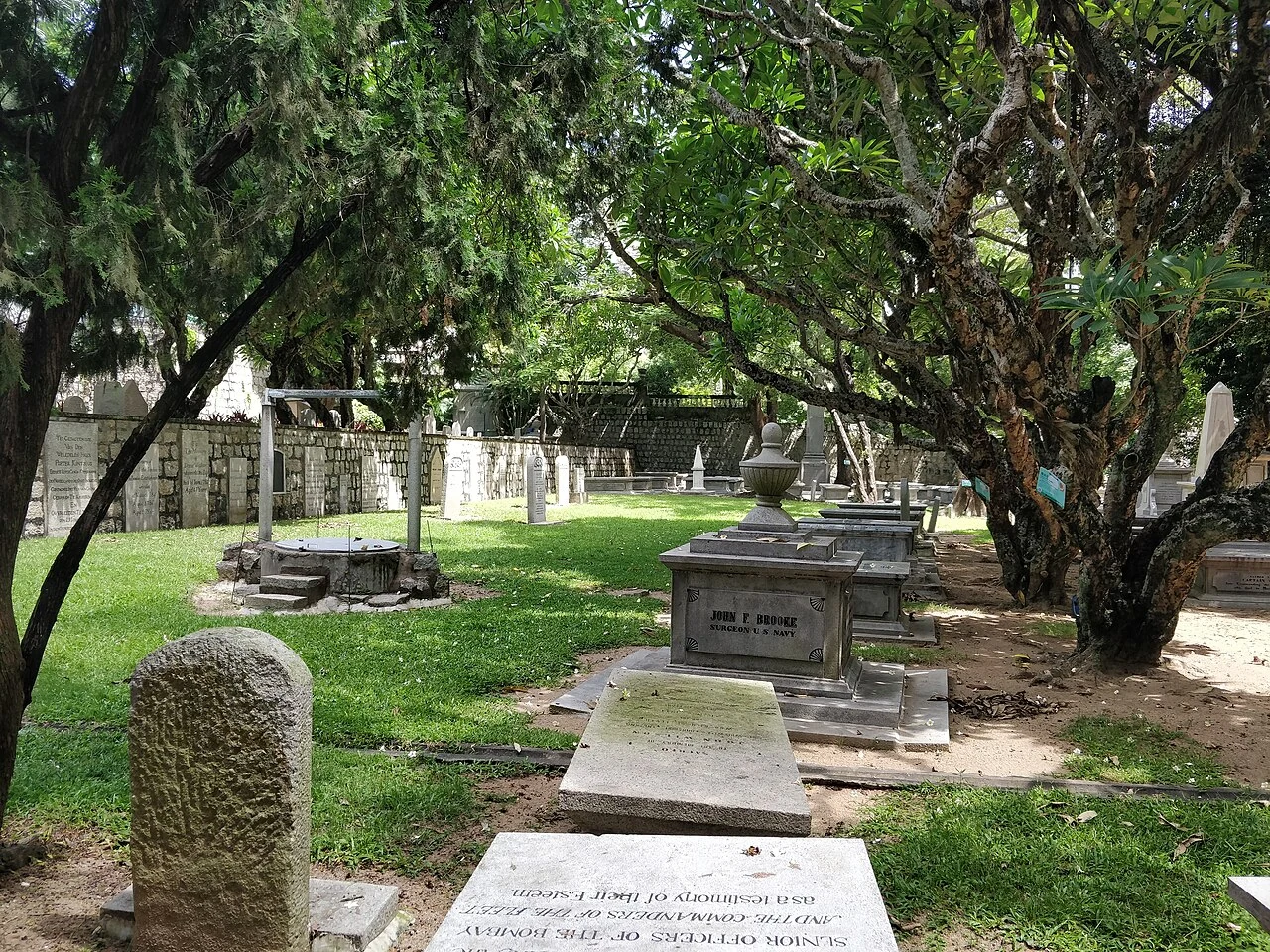
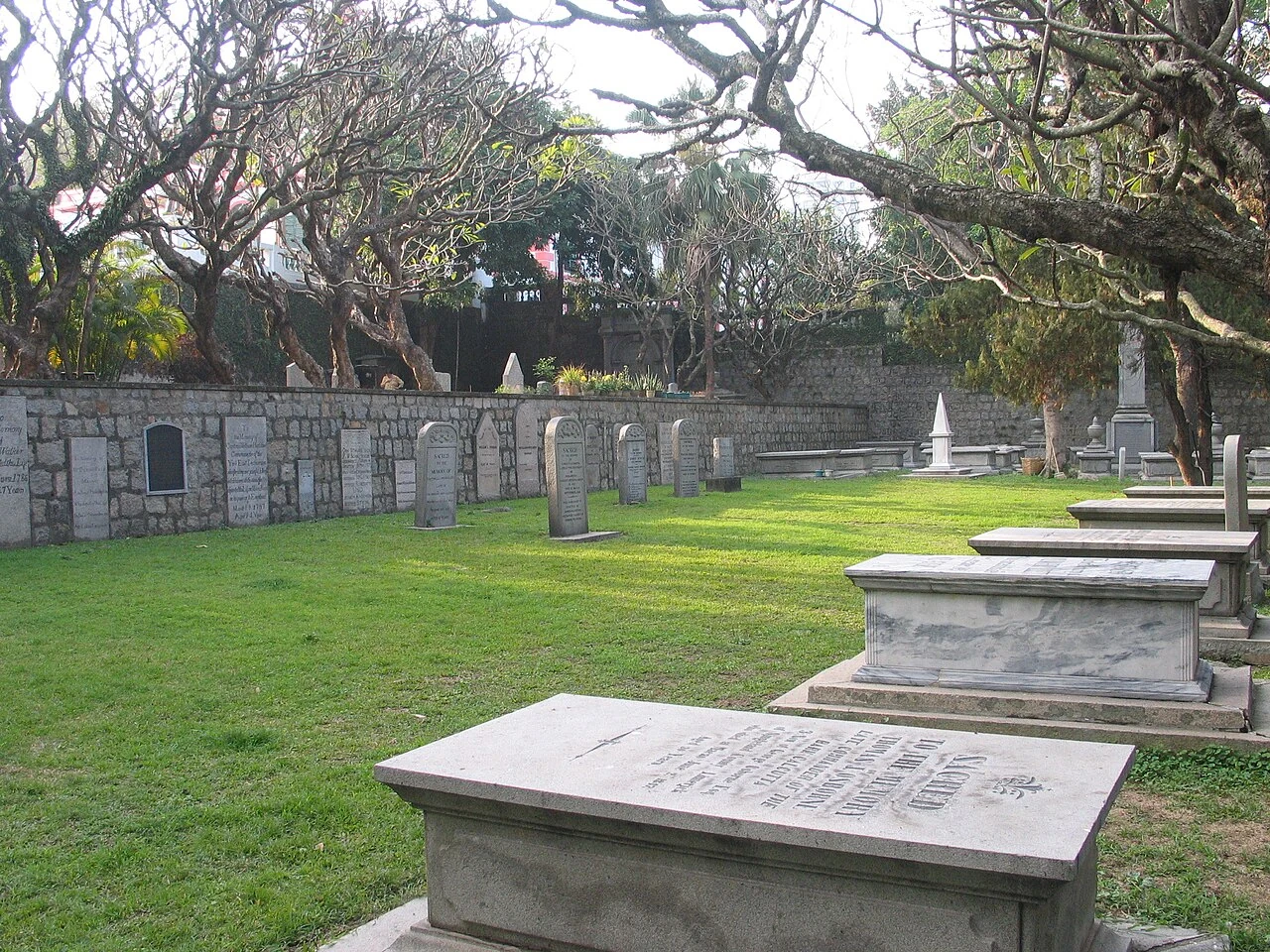
Tombs and trees in Macao’s Old Protestant Cemetery.

A burial ground opened in 1821

The Protestant Cemetery opened in 1821 and was first called the East India Company Cemetery. Robert Morrison, the first Protestant missionary to China, asked the Company to petition the Macao authorities after his wife died in the city that year. The new burial ground became the first Protestant cemetery in Macao.

The municipal government prohibited burial within the urban area in 1857, and the cemetery closed. Its grounds have remained intact. The dates distinguish a living burial place from the preserved site visible today, while the first name recalls the commercial institution that helped establish it.
A cemetery within a lived neighborhood

Morrison Chapel stands at the front of the cemetery. Built with the burial ground, it was Macao’s first Protestant preaching place and was rebuilt in 1922 in a Romanesque style. Its whitewashed walls, buttresses and timber roof mark the entrance.

Behind the chapel are the graves of British merchants, officials and Protestant missionaries. The painter George Chinnery and missionary Robert Morrison are buried here. The chapel faces the street; the burial ground continues behind it.

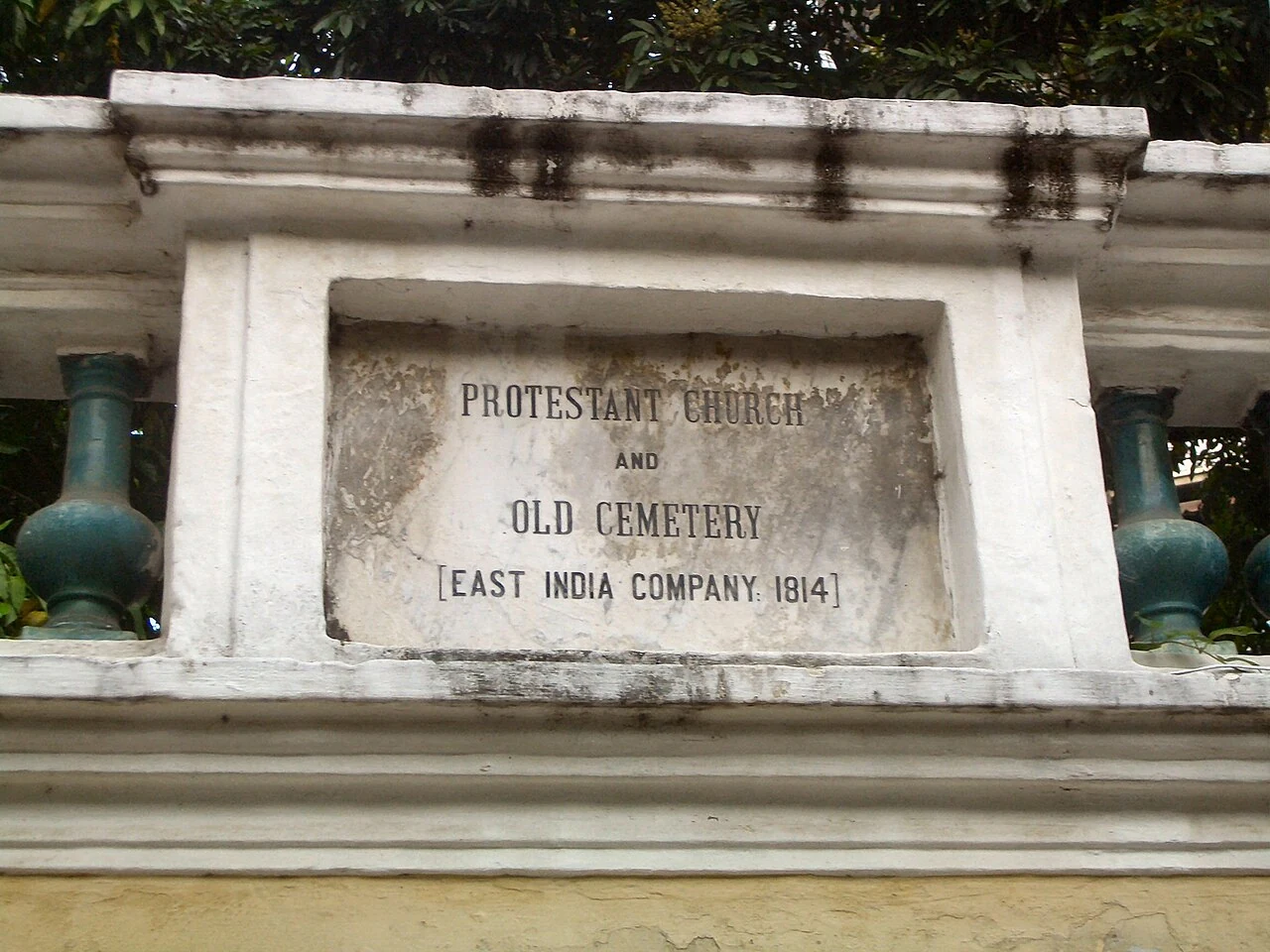
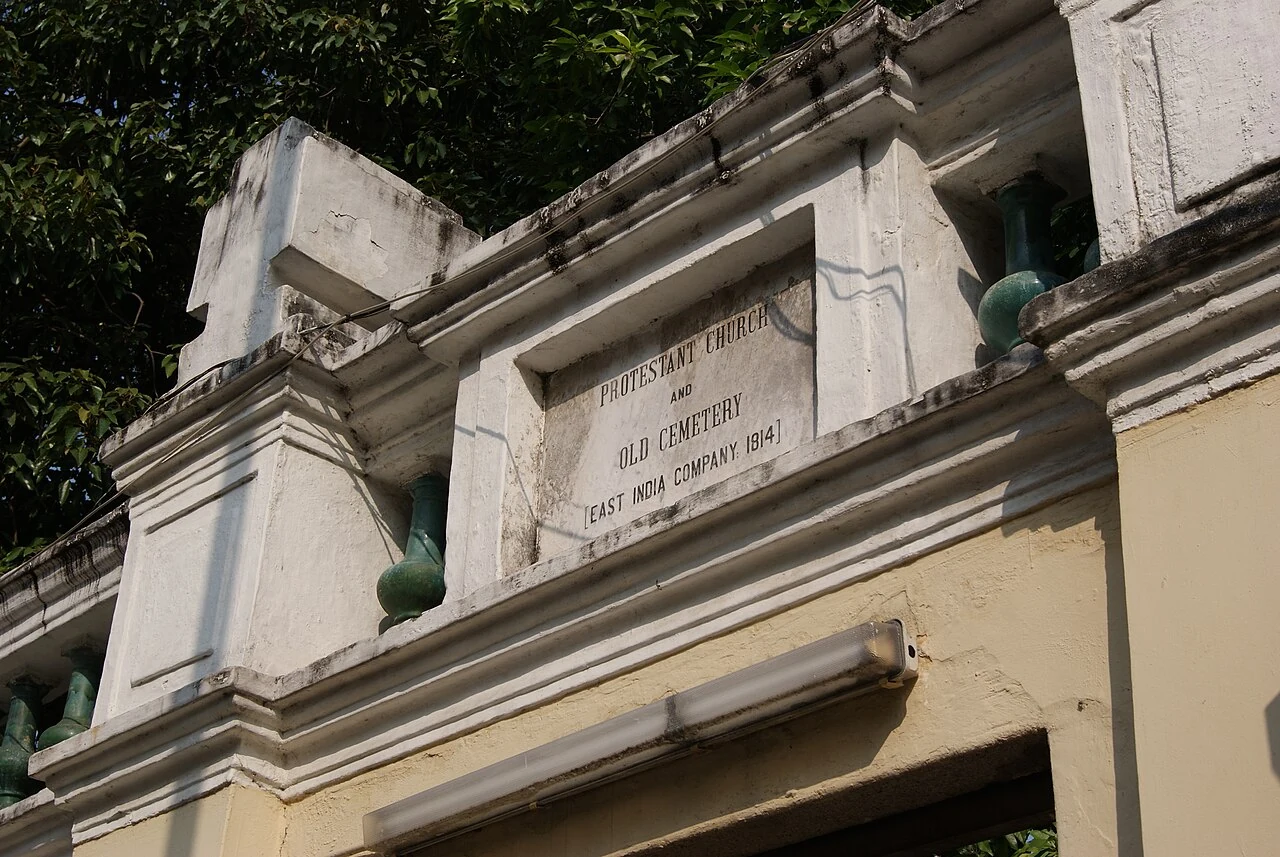
The entrance sign of the Old Protestant Cemetery.
Tombs and trees in Macao’s Old Protestant Cemetery.
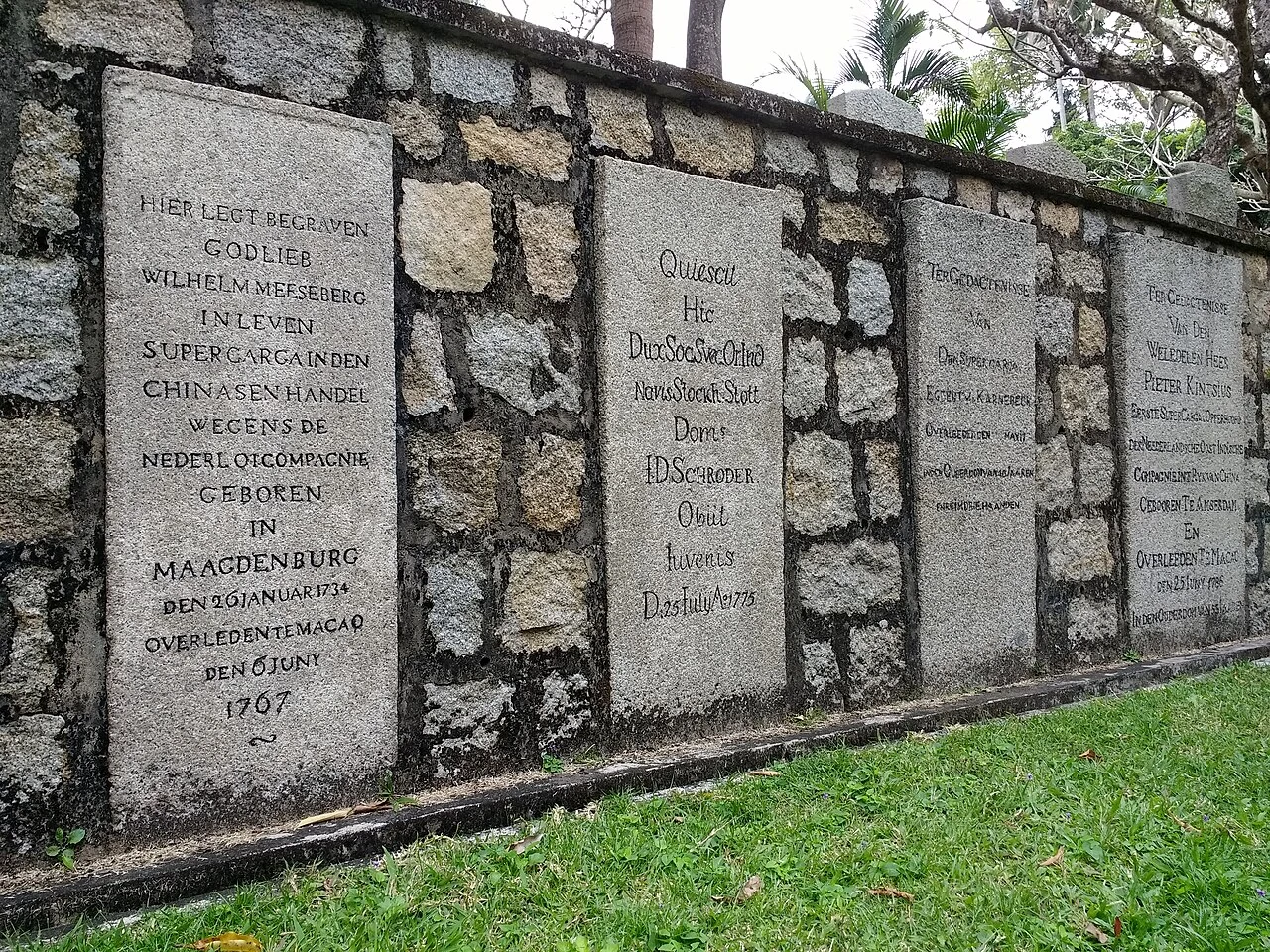
Memorial plaques inside the Old Protestant Cemetery.

Chapel and remembrance

White Dove Square links the cemetery to the park and former villa nearby. Together, these places show different ways a city remembers: a preserved burial ground, a public space still used by residents and a reused residence now serving a cultural foundation. Their proximity is the story’s strongest and most verifiable thread.

Continue exploring · Macao ↗
Photo credits and rights
  1. No machine-readable author provided. Glio~commonswiki assumed (based on copyright claims). / Public domain · Public domain Photo source ↗ Rights information ↗
  2. The entrance sign of the Old Protestant Cemetery.Doctor Boogaloo at English Wikipedia . / Public domain · Public domain Photo source ↗ Rights information ↗
  3. The entrance sign of the Old Protestant Cemetery.Jacklee . / CC BY-SA 3.0 · CC BY-SA 3.0 Photo source ↗ Rights information ↗
  4. Tombs and trees in Macao’s Old Protestant Cemetery.Roundtheworld / CC BY-SA 4.0 · CC BY-SA 4.0 Photo source ↗ Rights information ↗
  5. Tombs and trees in Macao’s Old Protestant Cemetery.Roundtheworld / CC BY-SA 4.0 · CC BY-SA 4.0 Photo source ↗ Rights information ↗
  6. Memorial plaques inside the Old Protestant Cemetery.Mx. Granger / CC0 · CC0 Photo source ↗ Rights information ↗