From the journal

Shoton: Opera, Yoghurt and Time in the Garden

Lhasa’s summer festival connects a large religious image at Drepung with the more intimate pleasures of opera and picnics in planted grounds.

In the same city · Lhasa ↗

The festival moves between places

Shoton belongs to Lhasa’s summer season, but its gatherings have more than one scale. Drepung is associated with the unfurling of a large religious image on the hillside. Norbulingka offers a garden setting for performance and social visits. The festival connects these different places through a shared period of attention.

A city report describes eating yoghurt, watching Tibetan opera and going to a lingka—planted grounds used for an outing or picnic. Each practice brings the festival into a different relationship with daily life. A large crowd can gather before an image, while a smaller group shares food and time beneath trees.
A garden makes room for company

“Going to the lingka” is about occupying a place together. Food has to be prepared and carried, and a stretch of open ground becomes a temporary setting for a group. The occasion depends on company as much as on the meal itself. Yoghurt is one of the foods closely associated with the festival.

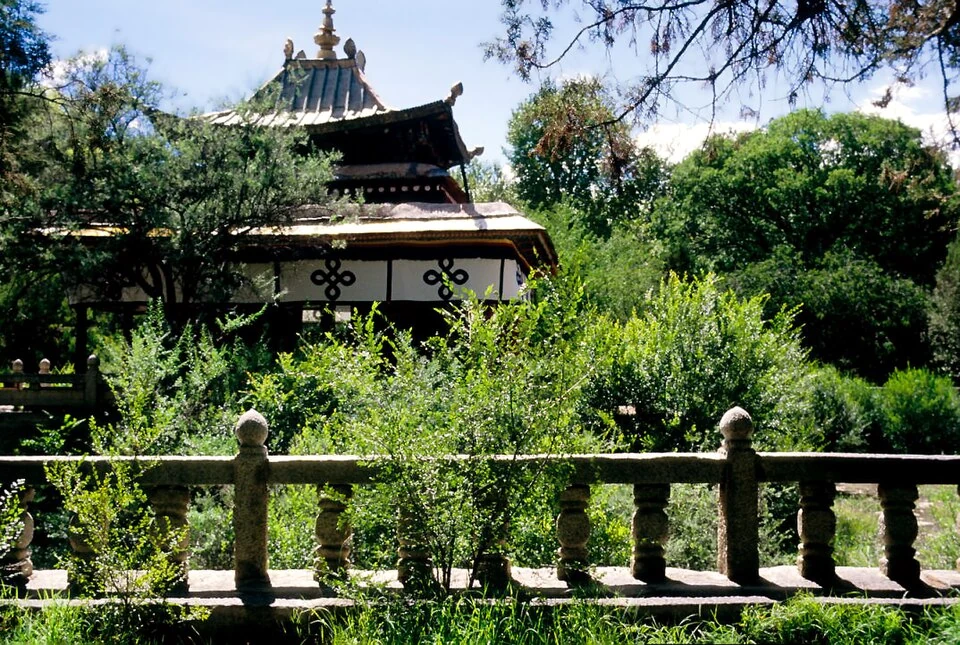
Norbulingka’s planted grounds and dispersed buildings give this social use a distinctive setting. The former summer residence contains layers of ceremony, government and performance history, but the garden also allows people to gather at a more informal scale. A festival outing adds another way of inhabiting that landscape.

Trees and buildings form the garden setting of Norbulingka.
Norbulingka’s planted grounds in 1999 provide historical context for the garden setting.

Opera asks for a different kind of attention

Tibetan opera gives the season a narrative dimension. A performance combines a speaker’s account with acting, song and dance, moving through a story that asks an audience to listen as well as watch. Its duration offers a different rhythm from the brief encounter with a spectacular image or a single photographic moment.

The festival’s richness lies in the relationship between these experiences. Religious observance, a shared meal, a garden visit and a dramatic story each gather people differently. Taken together, they make Shoton part of Lhasa’s cultural calendar and part of the smaller histories of families, friends and performers.

Continue exploring · Shoton Festival ↗
Photo credits and rights
  1. Norbulingka’s planted grounds in 1999 provide historical context for the garden setting.LBM1948 · CC BY-SA 4.0 Photo source ↗ Rights information ↗