From the journal

Basum Tso: Island Monastery and Lakeside Villages

At Basum Tso, Tsozong Gongba Monastery on Tashi Island and the villages of Jeba and Cuogao turn a mountain lake into a lived cultural landscape.

In the same city · Nyingchi ↗

A lake within Gongbo country

Basum Tso lies in Gongbo’gyamda County, among the mountains of Nyingchi. Its wooded slopes and water are often the first things visitors notice, but the shoreline also belongs to villages and paths. County descriptions place Jeba Village within the scenic area and name Cuogao among the settlements around the lake. These places give the broad view a human scale: homes and village routes share the lake’s edge with forest and water.

A photograph from 2015 records one settlement beside the lake, with wooded mountains rising behind it. Seen alongside the village names, that dated view presents Basum Tso as both a mountain lake and a place where people live.
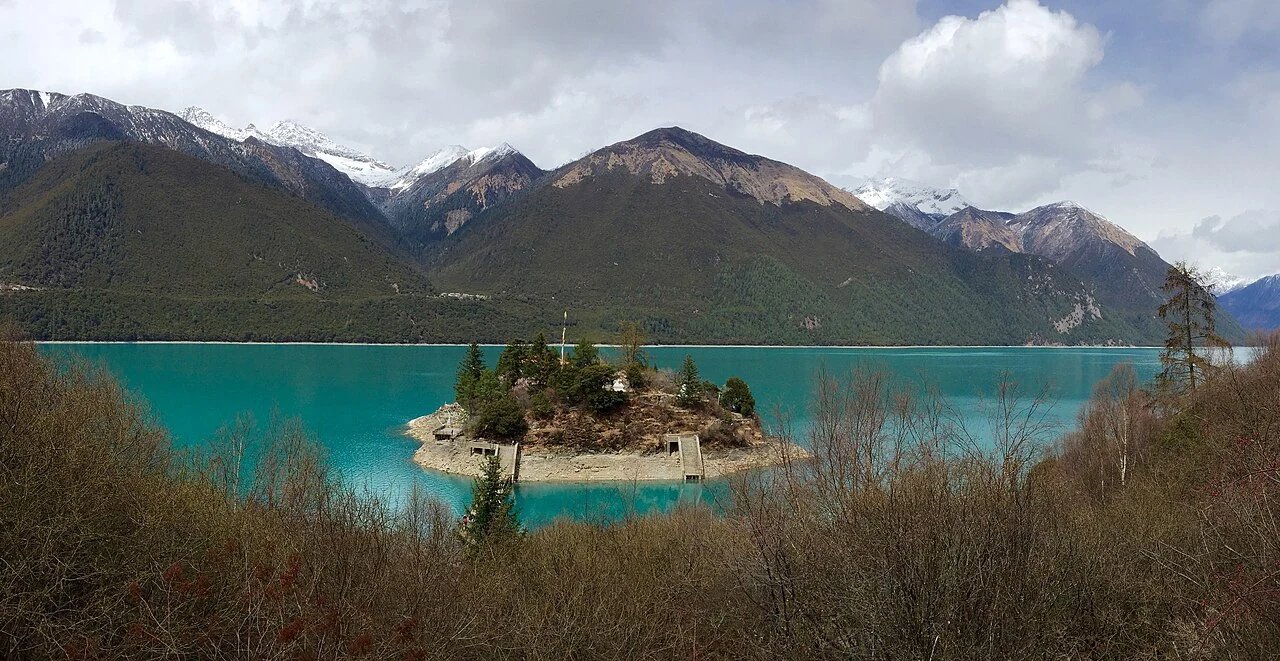
A small island in turquoise Basum Tso, with the wooded mountain shore beyond
A small island and wooded shoreline at Gongbo'gyamda, photographed 11 April 2015. Photo: ping lin, CC BY-SA 3.0.

Tashi Island and its monastery

Near the middle of the lake, Tashi Island holds Tsozong Gongba Monastery. The island setting makes water part of the monastery’s geography: it surrounds the site and shapes the approach. Tourism records identify the monastery on the island, while county descriptions include it among the area’s heritage sites.

The relationship between building and water distinguishes Tsozong Gongba from a temple set on a distant ridge. Here, religious architecture occupies a wooded island within the lake basin. The island, monastery and surrounding water form a compact landscape in which the sacred site is inseparable from its setting.

Villages are part of the view

Jeba and Cuogao appear in local descriptions of the Basum Tso area. A 2011 preservation report gives a close view of Cuogao, on the lake’s northern shore: houses were built of stone and timber, livestock stayed on the lower level, and living rooms sat above. An attic between the upper floor and roof was used to store fodder and food. The arrangement made the house serve several needs under one roof.

These details belong to Cuogao as described in that report, rather than to every lakeside home. Set beside Tashi Island and the wooded basin, the village brings another scale into view: the materials and practical organization of everyday architecture. Basum Tso is not only an expanse of water and forest. Its named settlements and island monastery make the shoreline part of a wider cultural landscape.

Continue exploring · Basum Tso ↗
Photo credits and rights
  1. A small island and wooded shoreline at Gongbo'gyamda, photographed 11 April 2015. Photo: ping lin, CC BY-SA 3.0.ping lin · CC BY-SA 3.0 Photo source ↗ Rights information ↗